Data may be outdated
Last updated: 7 months ago — Click refresh to get the latest statistics.
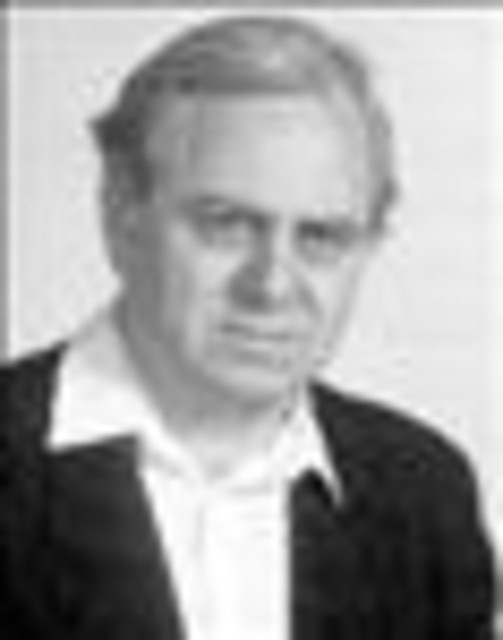
László Dobszay was one of the leading Hungarian conductors of chant and early Christian church music, in particular music associated with the Roman Catholic liturgy. He was also one of the foremost Hungarian scholars in chant, as well as modern liturgical music. In addition, Dobszay was regarded as one of the leading authorities on Hungarian and Transylvanian folk music, having studied and collected melodies from these ethnic sources at the behest of his teacher, <a href="spotify:artist:7MjAFDEchgyC28I0asclTE">Zoltán Kodály</a>. Between 1978 and his death Dobszay made numerous recordings of chant, sacred and folk music, all of them with the choral ensemble <a href="spotify:artist:1lVucd2Y7hbsMWlSX9OX6a">Schola Hungarica</a>, which he co-founded. While Dobszay conducted music by a fairly large number of familiar composers, including <a href="spotify:artist:5aIqB5nVVvmFsvSdExz408">J.S. Bach</a>, <a href="spotify:artist:0kLNgrvMXHTm4yWGrfMuLc">Dufay</a>, and <a href="spotify:artist:5zyNXVd952fWOjkdGHCvPd">Bartók</a>, most of his repertory, whether chant or folk music, was from anonymous (early church) sources. Dobszay's recordings are available largely from <a href="spotify:search:label%3A%22Hungaroton%22">Hungaroton</a>, with a few scattered efforts on <a href="spotify:search:label%3A%22Naxos%22">Naxos</a>, <a href="spotify:search:label%3A%22Harmonia+Mundi%22">Harmonia Mundi</a>, and <a href="spotify:search:label%3A%22Budapest+Music+Center%22">Budapest Music Center</a>.
László Dobszay was born in Szeged, Hungary, in 1935. He studied music at the Franz Liszt Academy of Music in Budapest, where his most important teachers were János Viski (composition), <a href="spotify:artist:7MjAFDEchgyC28I0asclTE">Kodály</a> (folk music studies), and Iván Engel. Dobszay also developed a deep knowledge of literature and history, having studied them at the Lóránd Eötvös University in Budapest.
During his early years Dobszay was active as a composer and, from 1956-1966, involved in the movement concerned with reforms in Hungarian music education. Dobszay joined the Folk Music Research Group at the Hungarian Academy of Sciences in 1966, on recommendation from <a href="spotify:artist:7MjAFDEchgyC28I0asclTE">Kodály</a>. 1970 was a pivotal year for Dobszay: he joined the faculty at the Franz Liszt Academy and, with <a href="spotify:artist:2YxWE25yV3nSikIuHA7O0h">Janka Szendrei</a> and Benjamin Rajeczky, founded the <a href="spotify:artist:1lVucd2Y7hbsMWlSX9OX6a">Schola Hungarica</a>. Dobszay and <a href="spotify:artist:2YxWE25yV3nSikIuHA7O0h">Szendrei</a> led this ensemble in numerous concerts and recordings. The unique-sounding group is made up of men, women, and children singers.
In 1976 Dobszay accepted the post of director of the early music department at the Hungarian Academy of Sciences' Institute for Musicology. Throughout the 1980s and '90s Dobszay led the <a href="spotify:artist:1lVucd2Y7hbsMWlSX9OX6a">Schola Hungarica</a> in numerous concerts and recordings, among them the acclaimed 1995 <a href="spotify:search:label%3A%22Hungaroton%22">Hungaroton</a> CD of <a href="spotify:artist:5zyNXVd952fWOjkdGHCvPd">Bartók</a>'s 27 Two- and Three-Part Choruses. Dobszay's controversial book on the Roman Catholic liturgy, The Bugnini Liturgy and the Reform of the Reform, was published in 2003 and drew broad international attention. Among Dobszay's later recordings is the 2008 <a href="spotify:search:label%3A%22Budapest+Music+Center%22">Budapest Music Center</a> CD Delectamentum, a collection of anonymous and <a href="spotify:artist:0kLNgrvMXHTm4yWGrfMuLc">Dufay</a> chants.
László Dobszay was born in Szeged, Hungary, in 1935. He studied music at the Franz Liszt Academy of Music in Budapest, where his most important teachers were János Viski (composition), <a href="spotify:artist:7MjAFDEchgyC28I0asclTE">Kodály</a> (folk music studies), and Iván Engel. Dobszay also developed a deep knowledge of literature and history, having studied them at the Lóránd Eötvös University in Budapest.
During his early years Dobszay was active as a composer and, from 1956-1966, involved in the movement concerned with reforms in Hungarian music education. Dobszay joined the Folk Music Research Group at the Hungarian Academy of Sciences in 1966, on recommendation from <a href="spotify:artist:7MjAFDEchgyC28I0asclTE">Kodály</a>. 1970 was a pivotal year for Dobszay: he joined the faculty at the Franz Liszt Academy and, with <a href="spotify:artist:2YxWE25yV3nSikIuHA7O0h">Janka Szendrei</a> and Benjamin Rajeczky, founded the <a href="spotify:artist:1lVucd2Y7hbsMWlSX9OX6a">Schola Hungarica</a>. Dobszay and <a href="spotify:artist:2YxWE25yV3nSikIuHA7O0h">Szendrei</a> led this ensemble in numerous concerts and recordings. The unique-sounding group is made up of men, women, and children singers.
In 1976 Dobszay accepted the post of director of the early music department at the Hungarian Academy of Sciences' Institute for Musicology. Throughout the 1980s and '90s Dobszay led the <a href="spotify:artist:1lVucd2Y7hbsMWlSX9OX6a">Schola Hungarica</a> in numerous concerts and recordings, among them the acclaimed 1995 <a href="spotify:search:label%3A%22Hungaroton%22">Hungaroton</a> CD of <a href="spotify:artist:5zyNXVd952fWOjkdGHCvPd">Bartók</a>'s 27 Two- and Three-Part Choruses. Dobszay's controversial book on the Roman Catholic liturgy, The Bugnini Liturgy and the Reform of the Reform, was published in 2003 and drew broad international attention. Among Dobszay's later recordings is the 2008 <a href="spotify:search:label%3A%22Budapest+Music+Center%22">Budapest Music Center</a> CD Delectamentum, a collection of anonymous and <a href="spotify:artist:0kLNgrvMXHTm4yWGrfMuLc">Dufay</a> chants.
Monthly Listeners
7,526
Monthly Listeners History
Track the evolution of monthly listeners over the last 28 days.
Followers
169
Followers History
Track the evolution of followers over the last 28 days.
Top Cities
767 listeners

142 listeners

55 listeners

50 listeners
49 listeners

Related Artists

Chœur des Moines de l'Abbaye Saint-Pierre de Solesmes

Schola Gregoriana Pragensis

Psallentes

Schola Sanctae Sunnivae

Anonymous

Chœur des moniales Bénédictines de l'abbaye Notre-Dame d'Argentan
Etienne de Liège

Gregoriana
Ensemble Discantus
Capella Antiqua München

Cistercian Nuns Of Mount Saint Mary's Abbey

Amici Cantores
Early Music New York

William Lyons

The Nuns of Stanbrook Abbey
The Monks of Prinknash

Stephen Smith
Schola Antiqua of Chicago
anon

Gregorian Chant Schola of Saint Meinrad Archabbey

Benjamin Bagby

The Monks of Clear Creek

Schola Gregoriana Mediolanensis & Giovanni Vianini

Jacobus Gallus
Ensemble Corund

Chœur des Moines de l'Abbaye Saint-Pierre de Solesmes

Benedictine Monks of St. Wandrillede Fontonelle
Anonyme
Choeur des moines de l'abbaye Saint Benoit du lac