Data may be outdated
Last updated: 8 months ago — Click refresh to get the latest statistics.
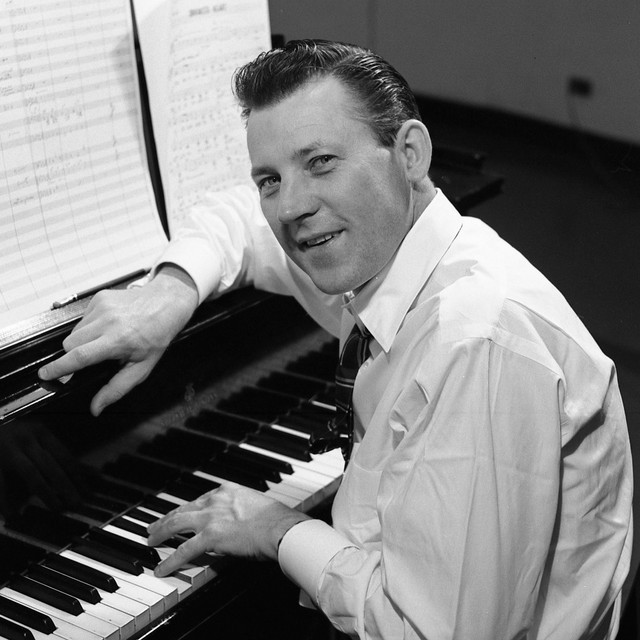
Best remembered for "The Syncopated Clock" and the holiday classic "Sleigh Ride," Leroy Anderson was one of America's most popular composers of light, melodic orchestral music. A talented conductor and arranger to boot, he had a particular knack for creating humorous sound effects with standard orchestral instruments and percussion.
Anderson was born June 29, 1908, in Cambridge, Massachusetts, into a family of Swedish immigrants. His mother played the organ in church, and gave her young son lessons; starting at age 11, he studied piano at the New England Conservatory of Music, and also took private lessons on the double bass. He entered Harvard in 1925 to study music, playing both trombone and double bass in the orchestra; he also sang in the glee club and joined the marching band as drum major and arranger (some of his arrangements of collegiate songs are still performed at Harvard). After graduation, Anderson stayed around to earn his master's degree, then took a teaching post at Radcliffe College. He also directed the marching band from 1931 to 1935, performed as a freelance organist and bassist, and continued his graduate studies in German and Scandinavian languages.
In 1935, Anderson quit his teaching job to become a full-time freelancer. The following year, he was tapped by the <a href="spotify:artist:7CIcEIOiWaZcEH35cpsdZq">Boston Pops Orchestra</a> to arrange and conduct a medley of his Harvard song arrangements. Director <a href="spotify:artist:2JQBcP1ceEAdwHM6cvSCv8">Arthur Fiedler</a> liked his work so well that <a href="spotify:artist:2JQBcP1ceEAdwHM6cvSCv8">Fiedler</a> requested an original composition, which Anderson delivered in the form of "Jazz Pizzicato." Premiered in 1938, "Jazz Pizzicato" was a hit with audiences, leading to a follow-up called "Jazz Legato" and a full-time position for Anderson as the <a href="spotify:artist:7CIcEIOiWaZcEH35cpsdZq">Boston Pops</a>' arranger and orchestrator. That engagement was interrupted in 1942 by military service; Anderson spent much of World War II working in the Scandinavian intelligence division, and was eventually transferred back to Washington as he rose through the ranks. While working at the Pentagon in 1945, he composed one of his best-known tunes, "The Syncopated Clock"; he premiered it with the <a href="spotify:artist:7CIcEIOiWaZcEH35cpsdZq">Boston Pops</a> that year, along with "Promenade." When World War II ended, Anderson turned down a full-time intelligence post in Stockholm to return to music. He rejoined the <a href="spotify:artist:7CIcEIOiWaZcEH35cpsdZq">Boston Pops</a> as orchestrator/arranger from 1946 to 1950, settling in Woodbury, Connecticut.
During that period, "The Syncopated Clock" was catching on with orchestras and bands across the country. Anderson began to compose more prolifically, coming up with another popular piece in 1947's "Fiddle-Faddle," and also arranging a well-received medley of traditional Irish tunes, "The Irish Suite." In the middle of a particularly hot 1946 summer, he began work on the piece that would become "Sleigh Ride." Finally completed in early 1948, the tune would become a Christmas classic thanks to Anderson's imaginative sound effects (sleigh bells, clopping hooves, cracking whips, neighing trumpets, etc.).
In 1950, Anderson was offered the chance to lead his own 55-piece studio orchestra by <a href="spotify:search:label%3A%22Decca+Records%22">Decca Records</a>. His recording of "The Syncopated Clock" was soon adopted by <a href="spotify:search:label%3A%22CBS%22">CBS</a> as the theme song to its long-lived Late Show movie program, thus ensuring its immortality. That year also brought two whimsical new hits in "The Typewriter" and "The Waltzing Cat," both laden with evocative sound effects. 1951 was an even bigger year; "Belle of the Ball" and "Plink! Plank! Plunk!" took their place in the Anderson canon, but the key item was "Blue Tango," a more exotic piece that topped the charts and, over 1951 to 1952, became one of the first instrumentals to sell one million copies.
In 1953, Anderson debuted a more serious, extended classical composition, "Concerto in C for Piano and Orchestra," with performances in Chicago and Cleveland. He withdrew the work in order to revise the first part, but never completed the intended changes. His family later published the concerto in its original form. More popular compositions followed in 1954, including "Bugler's Holiday," "Sandpaper Ballet" (another effects-oriented piece), and "Forgotten Dreams." In 1958, Anderson wrote his first and only Broadway musical, Goldilocks, in collaboration with writers/lyricists Walter and Jean Kerr.
He recorded for <a href="spotify:search:label%3A%22Decca%22">Decca</a> through 1962, and remained active as a conductor and composer (the latter still primarily for the <a href="spotify:artist:7CIcEIOiWaZcEH35cpsdZq">Boston Pops</a>) into the early '70s. In 1972, he was the guest of honor on a <a href="spotify:artist:7CIcEIOiWaZcEH35cpsdZq">Pops</a> PBS special devoted to his works. He passed away on May 18, 1975. Thirteen years later, he was elected to the Songwriters Hall of Fame. Orchestras across America made Anderson's catalog one of the most performed in the country during his heyday; what was more, Anderson wrote different arrangements of his works for musicians of all different skill levels, helping ensure their accessibility and permanence in the orchestral/band repertoire. ~ Steve Huey, Rovi
Anderson was born June 29, 1908, in Cambridge, Massachusetts, into a family of Swedish immigrants. His mother played the organ in church, and gave her young son lessons; starting at age 11, he studied piano at the New England Conservatory of Music, and also took private lessons on the double bass. He entered Harvard in 1925 to study music, playing both trombone and double bass in the orchestra; he also sang in the glee club and joined the marching band as drum major and arranger (some of his arrangements of collegiate songs are still performed at Harvard). After graduation, Anderson stayed around to earn his master's degree, then took a teaching post at Radcliffe College. He also directed the marching band from 1931 to 1935, performed as a freelance organist and bassist, and continued his graduate studies in German and Scandinavian languages.
In 1935, Anderson quit his teaching job to become a full-time freelancer. The following year, he was tapped by the <a href="spotify:artist:7CIcEIOiWaZcEH35cpsdZq">Boston Pops Orchestra</a> to arrange and conduct a medley of his Harvard song arrangements. Director <a href="spotify:artist:2JQBcP1ceEAdwHM6cvSCv8">Arthur Fiedler</a> liked his work so well that <a href="spotify:artist:2JQBcP1ceEAdwHM6cvSCv8">Fiedler</a> requested an original composition, which Anderson delivered in the form of "Jazz Pizzicato." Premiered in 1938, "Jazz Pizzicato" was a hit with audiences, leading to a follow-up called "Jazz Legato" and a full-time position for Anderson as the <a href="spotify:artist:7CIcEIOiWaZcEH35cpsdZq">Boston Pops</a>' arranger and orchestrator. That engagement was interrupted in 1942 by military service; Anderson spent much of World War II working in the Scandinavian intelligence division, and was eventually transferred back to Washington as he rose through the ranks. While working at the Pentagon in 1945, he composed one of his best-known tunes, "The Syncopated Clock"; he premiered it with the <a href="spotify:artist:7CIcEIOiWaZcEH35cpsdZq">Boston Pops</a> that year, along with "Promenade." When World War II ended, Anderson turned down a full-time intelligence post in Stockholm to return to music. He rejoined the <a href="spotify:artist:7CIcEIOiWaZcEH35cpsdZq">Boston Pops</a> as orchestrator/arranger from 1946 to 1950, settling in Woodbury, Connecticut.
During that period, "The Syncopated Clock" was catching on with orchestras and bands across the country. Anderson began to compose more prolifically, coming up with another popular piece in 1947's "Fiddle-Faddle," and also arranging a well-received medley of traditional Irish tunes, "The Irish Suite." In the middle of a particularly hot 1946 summer, he began work on the piece that would become "Sleigh Ride." Finally completed in early 1948, the tune would become a Christmas classic thanks to Anderson's imaginative sound effects (sleigh bells, clopping hooves, cracking whips, neighing trumpets, etc.).
In 1950, Anderson was offered the chance to lead his own 55-piece studio orchestra by <a href="spotify:search:label%3A%22Decca+Records%22">Decca Records</a>. His recording of "The Syncopated Clock" was soon adopted by <a href="spotify:search:label%3A%22CBS%22">CBS</a> as the theme song to its long-lived Late Show movie program, thus ensuring its immortality. That year also brought two whimsical new hits in "The Typewriter" and "The Waltzing Cat," both laden with evocative sound effects. 1951 was an even bigger year; "Belle of the Ball" and "Plink! Plank! Plunk!" took their place in the Anderson canon, but the key item was "Blue Tango," a more exotic piece that topped the charts and, over 1951 to 1952, became one of the first instrumentals to sell one million copies.
In 1953, Anderson debuted a more serious, extended classical composition, "Concerto in C for Piano and Orchestra," with performances in Chicago and Cleveland. He withdrew the work in order to revise the first part, but never completed the intended changes. His family later published the concerto in its original form. More popular compositions followed in 1954, including "Bugler's Holiday," "Sandpaper Ballet" (another effects-oriented piece), and "Forgotten Dreams." In 1958, Anderson wrote his first and only Broadway musical, Goldilocks, in collaboration with writers/lyricists Walter and Jean Kerr.
He recorded for <a href="spotify:search:label%3A%22Decca%22">Decca</a> through 1962, and remained active as a conductor and composer (the latter still primarily for the <a href="spotify:artist:7CIcEIOiWaZcEH35cpsdZq">Boston Pops</a>) into the early '70s. In 1972, he was the guest of honor on a <a href="spotify:artist:7CIcEIOiWaZcEH35cpsdZq">Pops</a> PBS special devoted to his works. He passed away on May 18, 1975. Thirteen years later, he was elected to the Songwriters Hall of Fame. Orchestras across America made Anderson's catalog one of the most performed in the country during his heyday; what was more, Anderson wrote different arrangements of his works for musicians of all different skill levels, helping ensure their accessibility and permanence in the orchestral/band repertoire. ~ Steve Huey, Rovi
Monthly Listeners
2.3 million
Monthly Listeners History
Track the evolution of monthly listeners over the last 28 days.
Followers
17,823
Followers History
Track the evolution of followers over the last 28 days.
Top Cities




Related Artists

Harry Simeone Chorale