Data may be outdated
Last updated: 9 months ago — Click refresh to get the latest statistics.
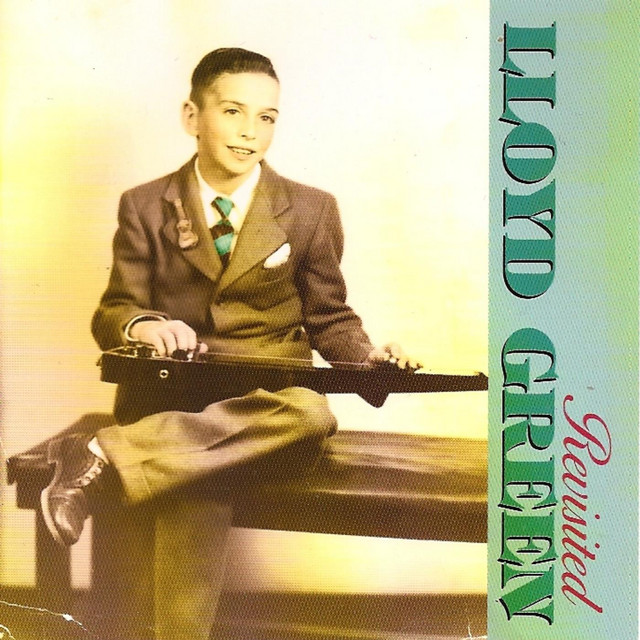
Lloyd Green was born on October 4, 1937, in Leaf, MS, but moved to Mobile as a young boy and began taking music lessons there. He graduated from high school in 1955 and went on to attend the University of Southern Mississippi. Green landed in Nashville after college and soon found steady work as a road musician supporting artists like <a href="spotify:artist:0szj7Sxtyluyjc2Arj0njB">Ferlin Husky</a> and <a href="spotify:artist:6uvq6FeVsmhOWfJHxVNeBL">Faron Young</a>. He stayed with <a href="spotify:artist:6uvq6FeVsmhOWfJHxVNeBL">Young</a>'s band for 18 months and then left to be with his new wife in Mobile. During those months, he appeared on one <a href="spotify:artist:2OpqcUtj10HHvGG6h9VYC5">George Jones</a> side, "Too Much Water Runs Under the Bridge" (1957). While in Mobile, Green played in numerous clubs and managed to save enough money to return to Nashville nine months later. But the touring life wasn't for him, and neither was the low pay or the lack of steady gigs. He left the music business for a job in retail, but returned when <a href="spotify:artist:37Ah4cSE4iD0VeTrGytkqx">Fred Rose</a>'s wife paid his union dues and secured him work as a supporting musician at the Grand Ole Opry. In 1964 he began working as a part-time assistant at the SESAC office for <a href="spotify:artist:76ODQBEHQvAbQIUbALYkyi">Roy Drusky</a>. Although the pay was low, the gig was steady and did give Green the opportunity to make his own demos. He remained with SESAC for three years, and soon was earning good money from his session work. Green worked with pop musicians as well, including <a href="spotify:artist:2rJkmlVHePMo2gk0InTZRS">Vera Lynn</a>, <a href="spotify:artist:4STHEaNw4mPZ2tzheohgXB">Paul McCartney</a>, and <a href="spotify:artist:6DbJi8AcN5ANdtvJcwBSw8">Ringo Starr</a>, as well as on <a href="spotify:artist:1PCZpxHJz7WAMF8EEq8bfc">the Byrds</a>' seminal Sweetheart of the Rodeo. He had just a handful of solo chart hits, including instrumental versions of the pop tunes "I Can See Clearly Now" and "Here Comes the Sun" in the early '70s. He also made the charts singing "You and Me." During the 1980s an ear infection forced him to stop working, but Green eventually returned to session work, and did perform the occasional concert on dobro or steel guitar. ~ Johnny Loftus, Rovi
Monthly Listeners
7,299
Monthly Listeners History
Track the evolution of monthly listeners over the last 28 days.
Followers
2,649
Followers History
Track the evolution of followers over the last 28 days.
Top Cities
93 listeners
84 listeners
79 listeners
73 listeners
72 listeners
Related Artists



Tom Brumley And The Buckaroos
Roy Wiggins

Curly Chalker
Chet Atkins and his Guitar Pickers

Weldon Myrick

Billy Hayden
Phil Baugh

Tennessee Guitars


JayDee Maness

Gary “Bud” Smith
Stoney Edwards
Chet Atkins & The All-Star Hillbillies

Ray Price's Cherokee Cowboys

Hal Rugg

Bashful Brother Oswald