Data may be outdated
Last updated: 8 months ago — Click refresh to get the latest statistics.
The Locke Brass Consort has gone through several remarkable transformations since its 1966 founding. The group spawned a larger brass and percussion ensemble in 1975, while also retaining its original chamber size for some of its concerts; then, owing largely to funding woes, the LBC shed its larger, symphonic counterpart, retreating solely to the world of chamber music, from whence it came. The group also rose for obscurity in its early years to become one of the better known British brass ensembles only to fade from the public eye, from about the early '90s. Though the group has not made a new recording in years, several of its more popular early efforts have been reissued in the 2000s. These recordings are available on several labels, including Chandos and CRD.
The Locke Brass Consort was founded in London, England, in 1966 by Leslie Lake. Lake has played the bass trombone in the English National Opera Orchestra since 1965. Initially, Lake brought together four other brass players to form a quintet, and the group typically gave concerts in schools and music organizations.
For about a decade the ensemble enjoyed modest success but remained relatively little known, especially beyond British borders. In 1975 the LBC took on additional personnel to function, for certain concerts, as a symphonic brass and percussion ensemble.
The conductor was James Stobart, who would go on to lead the larger group in numerous concerts in Queen Elizabeth Hall and other major venues in England. Often he conducted -- and later recorded -- famous symphonic works, like the Grand March from <a href="spotify:artist:1JOQXgYdQV2yfrhewqx96o">Verdi</a>'s Aida and the March of the Priests from <a href="spotify:artist:4NJhFmfw43RLBLjQvxDuRS">Mozart</a>'s Die Zauberflöte, in arrangements by Lake.
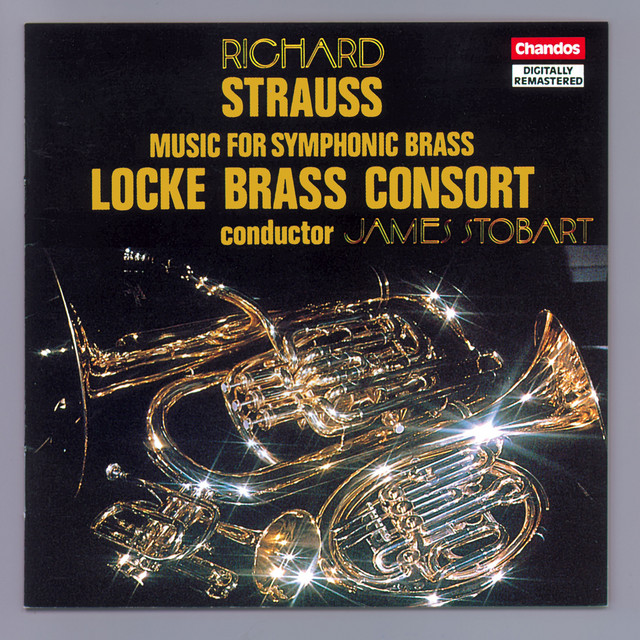
In 1977 the group appeared on its first major recording, Fanfare: British Music for Symphonic Brass Ensemble, on the Chandos label. It contained music by <a href="spotify:artist:430byzy0c5bPn5opiu0SRd">Elgar</a>, Bliss, <a href="spotify:artist:0hW5OU8cM6ANp2gTi5WR2P">Tippett</a>, <a href="spotify:artist:6RsX7qYw5KVKiOjS8BxjL5">Walton</a>, <a href="spotify:artist:2sYcO2wGoXqERSAEI0EcxD">Simpson</a>, and other popular British composers. Additional recordings followed, including Jubilant Brass (1980) and Richard Strauss: Music for Symphonic Brass (1988), which included the previously unrecorded Festmusik der Stadt Wien. (It should be noted that the group is called Locke Brass Ensemble on some of its recordings.) From about 1990 the LBC began to fade, the larger group becoming defunct. The quintet, however, remained active and is still led by its founder Leslie Lake. One of the larger group's signature recordings, Symphonic Marches for Concert Brass, was reissued in 2009 on the CRD label.
The Locke Brass Consort was founded in London, England, in 1966 by Leslie Lake. Lake has played the bass trombone in the English National Opera Orchestra since 1965. Initially, Lake brought together four other brass players to form a quintet, and the group typically gave concerts in schools and music organizations.
For about a decade the ensemble enjoyed modest success but remained relatively little known, especially beyond British borders. In 1975 the LBC took on additional personnel to function, for certain concerts, as a symphonic brass and percussion ensemble.
The conductor was James Stobart, who would go on to lead the larger group in numerous concerts in Queen Elizabeth Hall and other major venues in England. Often he conducted -- and later recorded -- famous symphonic works, like the Grand March from <a href="spotify:artist:1JOQXgYdQV2yfrhewqx96o">Verdi</a>'s Aida and the March of the Priests from <a href="spotify:artist:4NJhFmfw43RLBLjQvxDuRS">Mozart</a>'s Die Zauberflöte, in arrangements by Lake.
In 1977 the group appeared on its first major recording, Fanfare: British Music for Symphonic Brass Ensemble, on the Chandos label. It contained music by <a href="spotify:artist:430byzy0c5bPn5opiu0SRd">Elgar</a>, Bliss, <a href="spotify:artist:0hW5OU8cM6ANp2gTi5WR2P">Tippett</a>, <a href="spotify:artist:6RsX7qYw5KVKiOjS8BxjL5">Walton</a>, <a href="spotify:artist:2sYcO2wGoXqERSAEI0EcxD">Simpson</a>, and other popular British composers. Additional recordings followed, including Jubilant Brass (1980) and Richard Strauss: Music for Symphonic Brass (1988), which included the previously unrecorded Festmusik der Stadt Wien. (It should be noted that the group is called Locke Brass Ensemble on some of its recordings.) From about 1990 the LBC began to fade, the larger group becoming defunct. The quintet, however, remained active and is still led by its founder Leslie Lake. One of the larger group's signature recordings, Symphonic Marches for Concert Brass, was reissued in 2009 on the CRD label.
Monthly Listeners
916
Monthly Listeners History
Track the evolution of monthly listeners over the last 28 days.
Followers
90
Followers History
Track the evolution of followers over the last 28 days.
Top Cities


Related Artists
Stadtmusikkapelle Landeck
Thomas Doss
-
Derek Ashmore

Corps Philharmonique de Chatillon
Polizeiorchester Bayern

Bürgerkapelle St. Michael Eppan

Mathias Wehr

Jugendmusik Kreuzlingen

Thomas Doss
Stabsadj Philipp Rütsche

Various / Amrywiol
Hardy Mertens

Fine Arts Brass Ensemble
Léon Böllmann

Erik Janssen


Royal Danish Brass

Jugendblasorchester Thurgau
