Data may be outdated
Last updated: 9 months ago — Click refresh to get the latest statistics.
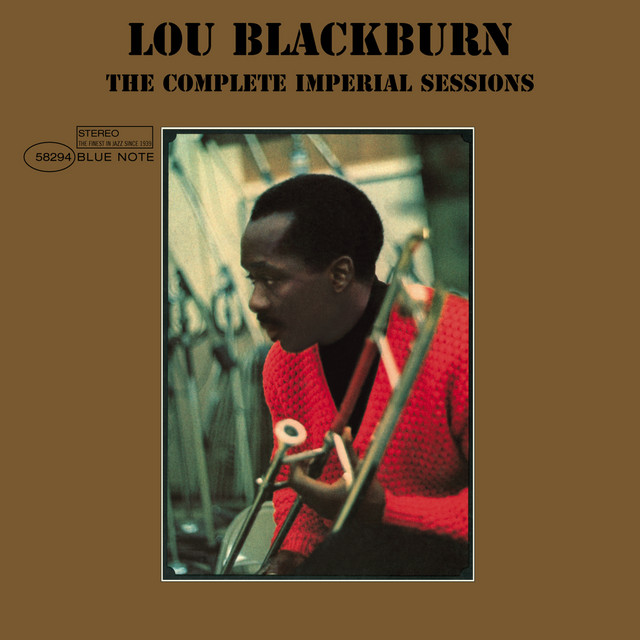
With some musicians, their career represents an actual odyssey or travel through musical situations both geographical and aesthetic, and trombonist Lou Blackburn is a perfect example. It is too easy just to dismiss him as another mainstream jazz trombonist gone Afro-pop, when his actual personal voyage, from his native Pittsburgh to the life of an expatriate jazz player in Europe, from mainstream jazz to Mombassa, is an inspiring example of self-realization through trombone solos.
Blackburn became passionate about music early in life, using it to help get through both the disciplined lifestyles of college and the army. Getting out of the services in 1956, he began gigging with <a href="spotify:artist:6ivz1LSbG04pV8AQUFaY53">Charlie Ventura</a>, immediately establishing a connection with the West Coast scene that never went away. Blackburn did more than catch sun rays in California; if a really happening jazz event was taking place, he tended to be more than just on the sidelines. Mingus at Monterey is one classic recording of modern jazz on which Blackburn appears as part of an expanded group of hornmen tackling the difficult and profound "Meditations on Integration" chart, including trumpeters <a href="spotify:artist:26hwDu8AvbR31I8tLqY1Ub">Bobby Bryant</a> and Melvin Moore, <a href="spotify:artist:25l7ALS0IGoUzvsfYtcIRi">Red Callender</a> on tuba, and <a href="spotify:artist:1ZsOY6yOMW2n8M7mzKuTpR">Buddy Collette</a> on alto sax and flute. Blackburn also cut sessions on his own with <a href="spotify:artist:0Oe2Yqemm6pHTT7YlToE7u">Horace Tapscott</a> sitting in the piano chair, the reissue of which has been a great opportunity to study the latter unique musician's evolving style.
Blackburn was already a veteran himself when he became involved with <a href="spotify:artist:0Oe2Yqemm6pHTT7YlToE7u">Tapscott</a>, and had spent the late '50s honing his trombone chops on tour with <a href="spotify:artist:2PjgZkwAEk7UTin4jP6HLP">Lionel Hampton</a>, a heavily booked group that did long stretches of one-nighters throughout Europe and North Africa. In 1960, Blackburn joined the band of trumpeter <a href="spotify:artist:4RwKOgFBu2p7gQPTi0WkNZ">Cat Anderson</a>, a trail that led back to the classic big band of <a href="spotify:artist:4F7Q5NV6h5TSwCainz8S5A">Duke Ellington</a>, with whom the trombonist wound up working for eight months of 1961, some of which time was spent toiling in the Columbia recording studios. From here he went to California, where he began working in film studios, also tainting the slide of his trombone with the allure of pop music.
Blackburn's credits lurch into another dimension at this stage of the game, perhaps the fifth, with appearances on recordings by <a href="spotify:artist:2VIoWte1HPDbZ2WqHd2La7">the Turtles</a>, <a href="spotify:artist:4b0WsB47XCa9F83BmwQ7WX">the Righteous Brothers</a>, and <a href="spotify:artist:3oDbviiivRWhXwIE8hxkVV">the Beach Boys</a>, in the latter case admittedly doing naught with his trombone that might distract from the sounds of the theremin on "Good Vibrations." There were also incredibly creative projects, such as the <a href="spotify:artist:5Y06eyyhkTB9GGdiJvGSfs">David Amram</a> recording session for the paranoid masterpiece film The Manchurian Candidate, for which the composer assembled a first-rate orchestra from the ranks of symphony soloists, chamber music players, Latin performers; with such jazz artists as reed player and flautist <a href="spotify:artist:1LI9iEq0loU9cdIa1dxVDj">Paul Horn</a> (basically helpless unless he is playing in a monument such as one of the great pyramids), big-toned tenor continent <a href="spotify:artist:1jcPgyzUoFrMSI5jloL3LD">Harold Land</a>, low-end reed guy <a href="spotify:artist:5GVuYG1XcIEJx8K2UNdqAA">Jack Nimitz</a>, and Dick Leith joining Blackburn on the trombones. <a href="spotify:artist:5Y06eyyhkTB9GGdiJvGSfs">Amram</a> himself startled some of the film's producers by leapfrogging from the podium to the side of the musicians, joining the fray with his own improvised solos on French horn and piano.
In the '70s, Blackburn was ready for another change, good vibes or not. He moved to Europe, where he began leading his own groups first out of Berlin, then Switzerland. He formed an ensemble entitled Mombassa, with a very strong African content to its arrangements. The lineup included musicians from several African countries, the influence of African music in the leader's playing more and more apparent in each passing year. He also collaborated with European jazz players such as Wolfgang Köhler in ensembles along the lines of the Lou Blackburn International Quartet, with more of a progressive jazz feel. ~ Eugene Chadbourne, Rovi
Blackburn became passionate about music early in life, using it to help get through both the disciplined lifestyles of college and the army. Getting out of the services in 1956, he began gigging with <a href="spotify:artist:6ivz1LSbG04pV8AQUFaY53">Charlie Ventura</a>, immediately establishing a connection with the West Coast scene that never went away. Blackburn did more than catch sun rays in California; if a really happening jazz event was taking place, he tended to be more than just on the sidelines. Mingus at Monterey is one classic recording of modern jazz on which Blackburn appears as part of an expanded group of hornmen tackling the difficult and profound "Meditations on Integration" chart, including trumpeters <a href="spotify:artist:26hwDu8AvbR31I8tLqY1Ub">Bobby Bryant</a> and Melvin Moore, <a href="spotify:artist:25l7ALS0IGoUzvsfYtcIRi">Red Callender</a> on tuba, and <a href="spotify:artist:1ZsOY6yOMW2n8M7mzKuTpR">Buddy Collette</a> on alto sax and flute. Blackburn also cut sessions on his own with <a href="spotify:artist:0Oe2Yqemm6pHTT7YlToE7u">Horace Tapscott</a> sitting in the piano chair, the reissue of which has been a great opportunity to study the latter unique musician's evolving style.
Blackburn was already a veteran himself when he became involved with <a href="spotify:artist:0Oe2Yqemm6pHTT7YlToE7u">Tapscott</a>, and had spent the late '50s honing his trombone chops on tour with <a href="spotify:artist:2PjgZkwAEk7UTin4jP6HLP">Lionel Hampton</a>, a heavily booked group that did long stretches of one-nighters throughout Europe and North Africa. In 1960, Blackburn joined the band of trumpeter <a href="spotify:artist:4RwKOgFBu2p7gQPTi0WkNZ">Cat Anderson</a>, a trail that led back to the classic big band of <a href="spotify:artist:4F7Q5NV6h5TSwCainz8S5A">Duke Ellington</a>, with whom the trombonist wound up working for eight months of 1961, some of which time was spent toiling in the Columbia recording studios. From here he went to California, where he began working in film studios, also tainting the slide of his trombone with the allure of pop music.
Blackburn's credits lurch into another dimension at this stage of the game, perhaps the fifth, with appearances on recordings by <a href="spotify:artist:2VIoWte1HPDbZ2WqHd2La7">the Turtles</a>, <a href="spotify:artist:4b0WsB47XCa9F83BmwQ7WX">the Righteous Brothers</a>, and <a href="spotify:artist:3oDbviiivRWhXwIE8hxkVV">the Beach Boys</a>, in the latter case admittedly doing naught with his trombone that might distract from the sounds of the theremin on "Good Vibrations." There were also incredibly creative projects, such as the <a href="spotify:artist:5Y06eyyhkTB9GGdiJvGSfs">David Amram</a> recording session for the paranoid masterpiece film The Manchurian Candidate, for which the composer assembled a first-rate orchestra from the ranks of symphony soloists, chamber music players, Latin performers; with such jazz artists as reed player and flautist <a href="spotify:artist:1LI9iEq0loU9cdIa1dxVDj">Paul Horn</a> (basically helpless unless he is playing in a monument such as one of the great pyramids), big-toned tenor continent <a href="spotify:artist:1jcPgyzUoFrMSI5jloL3LD">Harold Land</a>, low-end reed guy <a href="spotify:artist:5GVuYG1XcIEJx8K2UNdqAA">Jack Nimitz</a>, and Dick Leith joining Blackburn on the trombones. <a href="spotify:artist:5Y06eyyhkTB9GGdiJvGSfs">Amram</a> himself startled some of the film's producers by leapfrogging from the podium to the side of the musicians, joining the fray with his own improvised solos on French horn and piano.
In the '70s, Blackburn was ready for another change, good vibes or not. He moved to Europe, where he began leading his own groups first out of Berlin, then Switzerland. He formed an ensemble entitled Mombassa, with a very strong African content to its arrangements. The lineup included musicians from several African countries, the influence of African music in the leader's playing more and more apparent in each passing year. He also collaborated with European jazz players such as Wolfgang Köhler in ensembles along the lines of the Lou Blackburn International Quartet, with more of a progressive jazz feel. ~ Eugene Chadbourne, Rovi
Monthly Listeners
315
Monthly Listeners History
Track the evolution of monthly listeners over the last 28 days.
Followers
293
Followers History
Track the evolution of followers over the last 28 days.
Top Cities
10 listeners

5 listeners

5 listeners
5 listeners

5 listeners
Related Artists

Pony Poindexter
Frank Foster

Nat Adderley Quintet

Mark Morganelli

Quintetto Basso Valdambrini
Wolfgang Dauner Quartett

Red Holt

Freddie Hubbard, Curtis Fuller And Yusef Lateef

Freddie Redd Quintet
Budd Johnson Quartet

Sestetto Basso-Valdambrini

Georges Arvanitas Quintet

The Jazz Crusaders

Fats Sadi

Ronnie Scott Quintet
