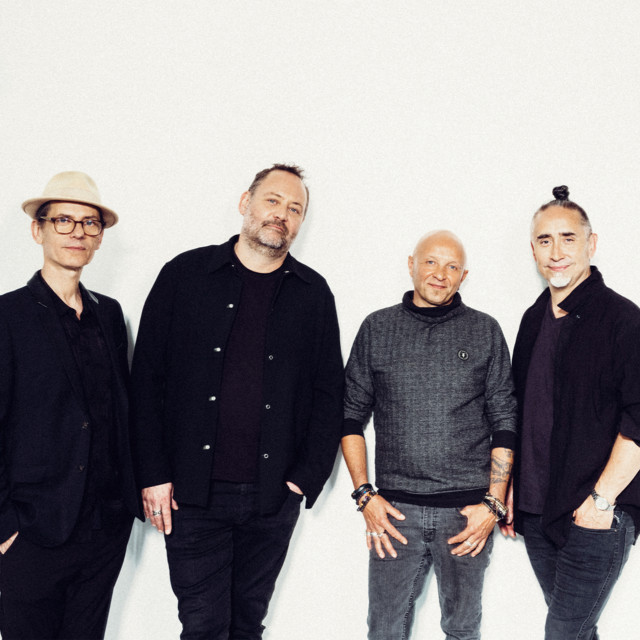
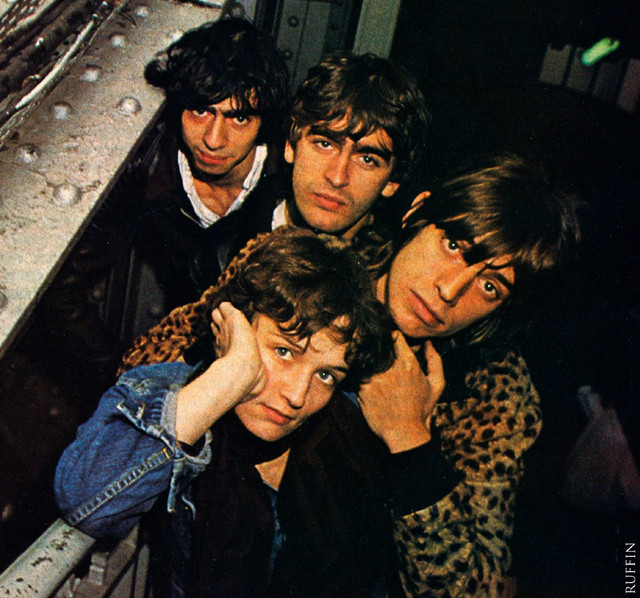
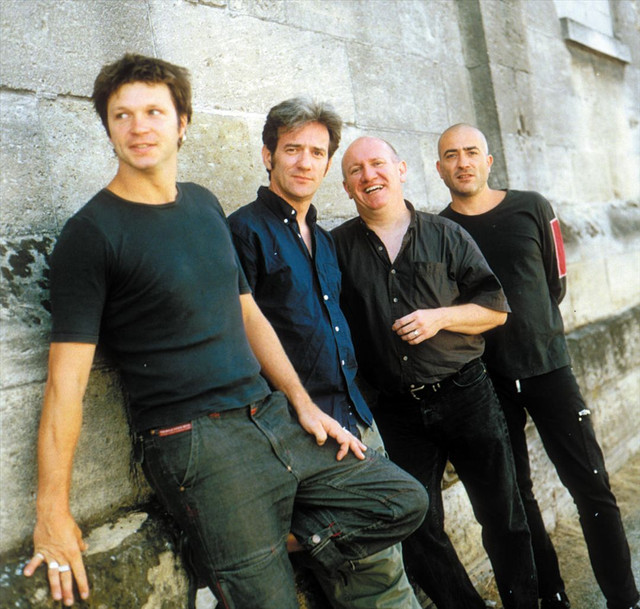
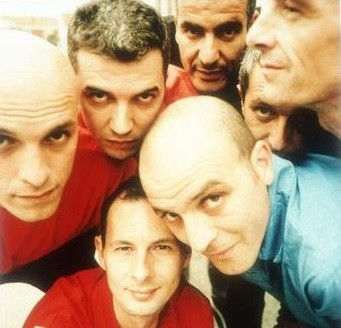
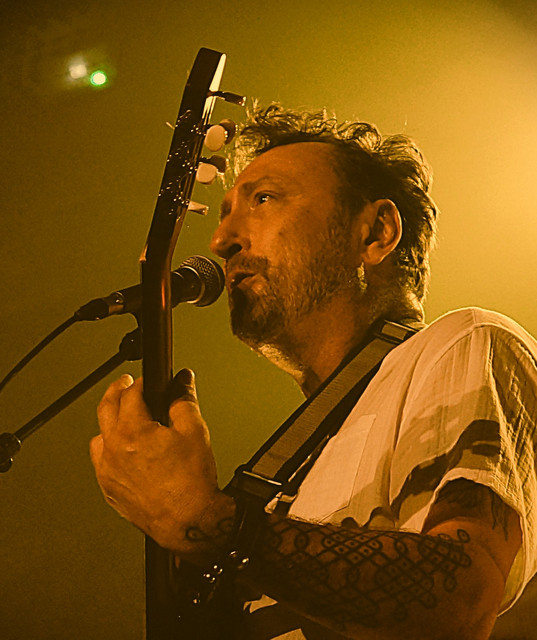
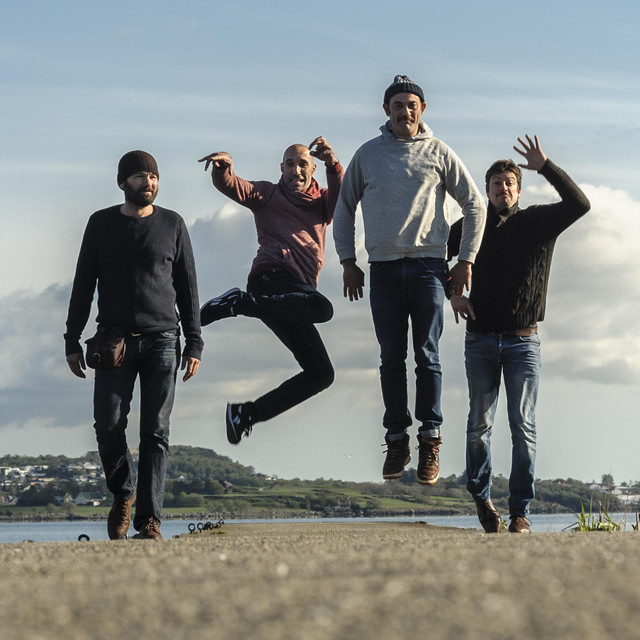
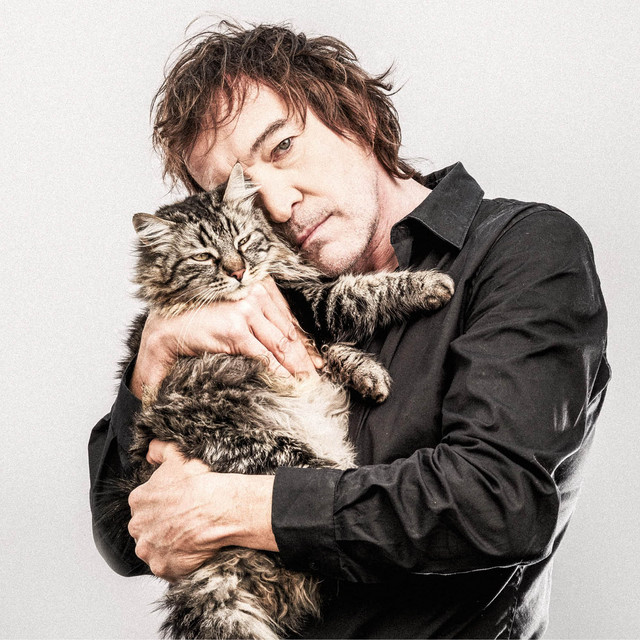
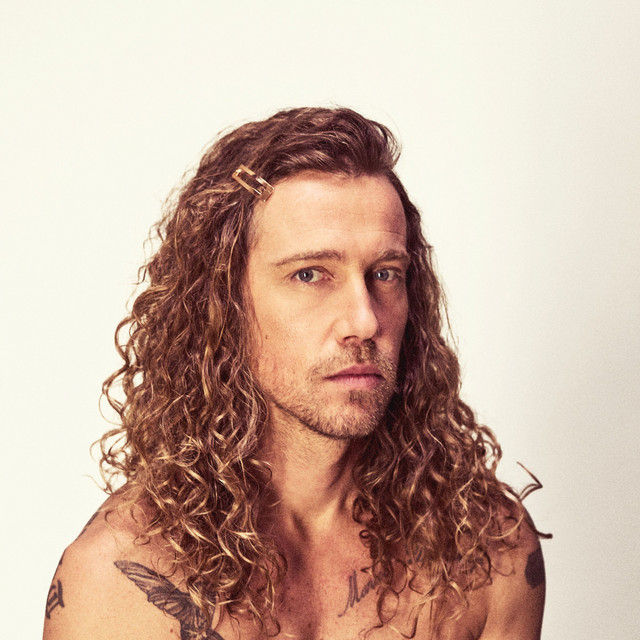
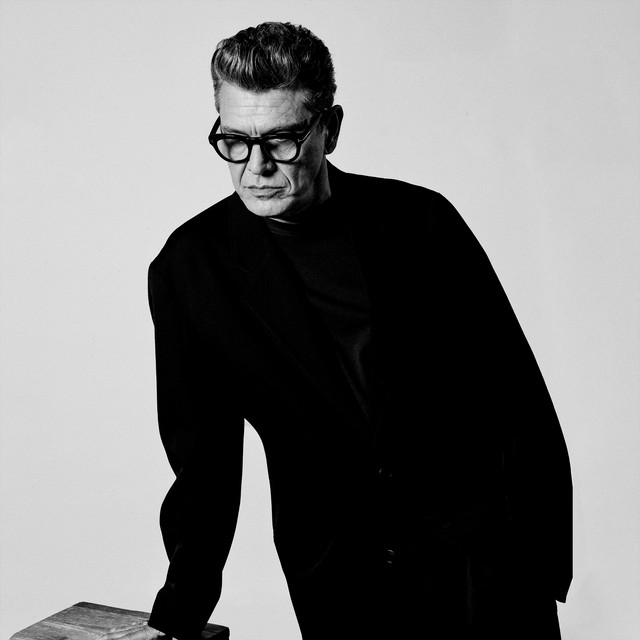
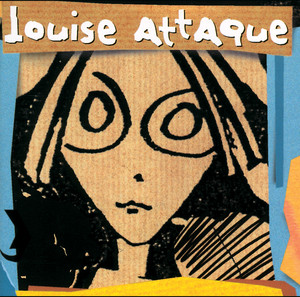
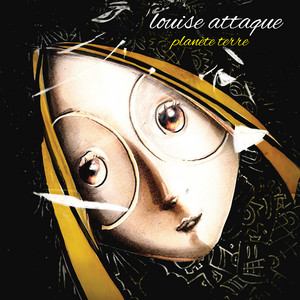
French folk-rock quartet Louise Attaque emerged as one of the most successful new acts of their generation via their award-winning 1997 debut LP. Singer/guitarist <a href="spotify:artist:2FDsdMev4pzIXwoJGXi9zf">Gaëtan Roussel</a> and bassist Robin Feix first met as school children, bonding over their common obsession with popular music. While studying in Paris, they formed the group Caravage, enlisting drummer Alexandre Margraff to play the local nightclub circuit. An extended acoustic tour followed, and upon returning to Paris the trio added violinist Arnaud Samuel, whose string accompaniment heralded their embrace of richer, more folk-inspired melodic textures. After adopting the name Louise Attaque, the new lineup recorded its first demo tape and returned to touring. Following a breakthrough appearance at the Printemps de Bourges festival, they signed to the Atmosphériques label and traveled to Brussels to begin work on their debut, produced by <a href="spotify:artist:2vaRNo2C9WlMNgKN2LJOL4">Gordon Gano</a> of American college rock legends <a href="spotify:artist:0rpMdBzQXf7aYRnu5fDBJy">Violent Femmes</a>. Issued in April 1997, Louise Attaque's self-titled album slowly but surely proved a grassroots success, ultimately selling more than 2.5 million copies in spite of limited marketing. A return performance at the Printemps de Bourges festival was critical in building their fan base, as was a three-night stint at Paris' La Cigale. At the annual Victoires de la Musique awards in early 1999, Louise Attaque earned Best Group of the Year honors, creating even more outsized expectations for their 2000 follow-up, Comme on a Dit. While largely adhering to the formula outlined on the first LP, the album nevertheless boasted an edgier sound than the debut, and proved another commercial success. Eschewing conventional tour promotion, Louise Attaque instead curated a traveling festival show, supported by artists including <a href="spotify:artist:4Zdj4TMYyTqmh6ppJDLwgF">Mickey 3D</a>, <a href="spotify:artist:2C5oeFpPOpTbhaSwPXFnPs">Cornu</a>, and <a href="spotify:artist:2nsGWZA0LtO7istBNsyNTE">Les Wampas</a> as well as U.S. act <a href="spotify:artist:188gwh9RnRT58ZQPwqwHE3">16 Horsepower</a>. At year's end the band went on hiatus, and while <a href="spotify:artist:2FDsdMev4pzIXwoJGXi9zf">Roussel</a> and Samuel collaborated as a duo on L'Atelier, an acoustic album issued under the name <a href="spotify:artist:7jj1zcBEwp0Joqfb9Bdk7J">Tarmac</a>, Feix and Magraff also entered the studio, creating an electronic effort as Ali Dragon. After spending much of 2004 recording at New York City's famed Electric Ladyland, Louise Attaque finally released their third album, A Plus Tard Crocodile, in the fall of 2005, introducing elements of electronica and reggae absent from previous efforts. In 2006 they released the live album En Concert - Y’a t’il quelqu’un ici? Their first Best of compilation, Du monde tout autour followed in 2011. ~ Jason Ankeny, Rovi