Data may be outdated
Last updated: 9 months ago — Click refresh to get the latest statistics.
Even though Luigi Russolo was one of the leaders of the futurist movement, little physical evidence of his musical contributions remains, as nearly all of his scores and inventions no longer exist (only one recording of his work has survived). However, his Futurist Manifesto, addressed to "Balilla Pratella, grande musicista futurista," has been translated into English by Nicolas Slonimsky and is found in Music Since 1900. It was only a year after the movement was formed in 1909, in response to Marinetti's own Futurist Manifesto from Le Figaro, that Russolo first became involved as a painter; later, he participated as a musician, his most influential role. In specific, he became known for his musical employment of non-periodical vibrations; these everyday sounds, which included noise, were reproduced by his own instrumental inventions, such as the rumorarmonio or russolofono, the arco enarmonico, and the well-known intonarumori. The latter instrument was controlled by a lever and either a crank or button on a large black box that had an attached cone for amplification. Records indicate that this period immediately following his first participation in the futurist movement, when he wrote Combattimento nell'oasi (1913), Si pranza sulla terrazza dell'Hotel (1913 - 1914), and Il risveglio di una città (1913 - 1914), was his most plentiful.
Using his own devices, Russolo gave concerts in Europe's largest cities, at times incorporating traditional orchestral instruments. For the most part the response to his music and inventions was violent. Even though the composer's work failed to receive widespread acceptance, his ideas greatly influenced Casella, Diaghilev, <a href="spotify:artist:5BcbyYRgvvhfVGmCJSjHlT">Falla</a>, <a href="spotify:artist:0QDRLNPr0wXKeR5ThXZAUp">Honegger</a>, Milhaud, Mondrian, <a href="spotify:artist:17hR0sYHpx7VYTMRfFUOmY">Ravel</a>, and <a href="spotify:artist:7ie36YytMoKtPiL7tUvmoE">Stravinsky</a>. Eventually his expertise allowed him to provide the accompaniment for the futurist motion pictures Futuristi a Parigi, La marche des machines, and Montparnasse. His art and politics took him to Spain and France, but he eventually returned to Italy where he passed away shortly before his 62nd birthday. Even though late in his career Russolo decreased his involvement in the futurist movement, he is still regarded, alongside <a href="spotify:artist:2hBGTVJ0bxUsKiV66MSfsw">Francesco Balilla Pratella</a>, as one of its early chief representatives.
Using his own devices, Russolo gave concerts in Europe's largest cities, at times incorporating traditional orchestral instruments. For the most part the response to his music and inventions was violent. Even though the composer's work failed to receive widespread acceptance, his ideas greatly influenced Casella, Diaghilev, <a href="spotify:artist:5BcbyYRgvvhfVGmCJSjHlT">Falla</a>, <a href="spotify:artist:0QDRLNPr0wXKeR5ThXZAUp">Honegger</a>, Milhaud, Mondrian, <a href="spotify:artist:17hR0sYHpx7VYTMRfFUOmY">Ravel</a>, and <a href="spotify:artist:7ie36YytMoKtPiL7tUvmoE">Stravinsky</a>. Eventually his expertise allowed him to provide the accompaniment for the futurist motion pictures Futuristi a Parigi, La marche des machines, and Montparnasse. His art and politics took him to Spain and France, but he eventually returned to Italy where he passed away shortly before his 62nd birthday. Even though late in his career Russolo decreased his involvement in the futurist movement, he is still regarded, alongside <a href="spotify:artist:2hBGTVJ0bxUsKiV66MSfsw">Francesco Balilla Pratella</a>, as one of its early chief representatives.
Monthly Listeners
807
Monthly Listeners History
Track the evolution of monthly listeners over the last 28 days.
Followers
3,793
Followers History
Track the evolution of followers over the last 28 days.
Top Cities
20 listeners

17 listeners
16 listeners

15 listeners
15 listeners
Related Artists
David Tudor
Vladimir Ussachevsky
Walter Prati
Morton Subotnick




Jean-Claude Risset

Takehisa Kosugi
The Manhattan Percussion Ensemble
Henri Pousseur
David Moss

Michael Ranta
Mario Mariotti

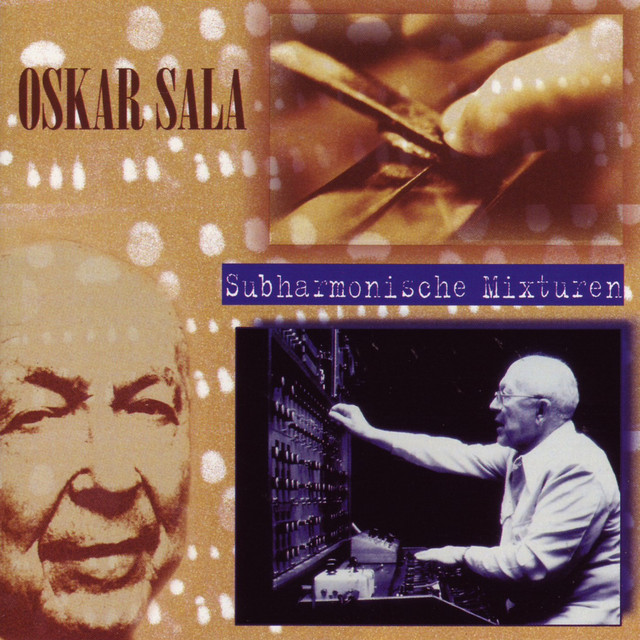
Oskar Sala

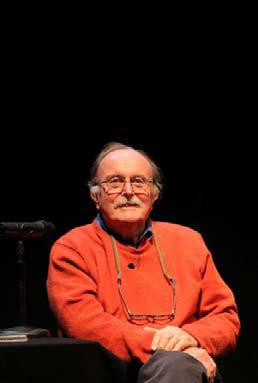
Gottfried Michael Koenig
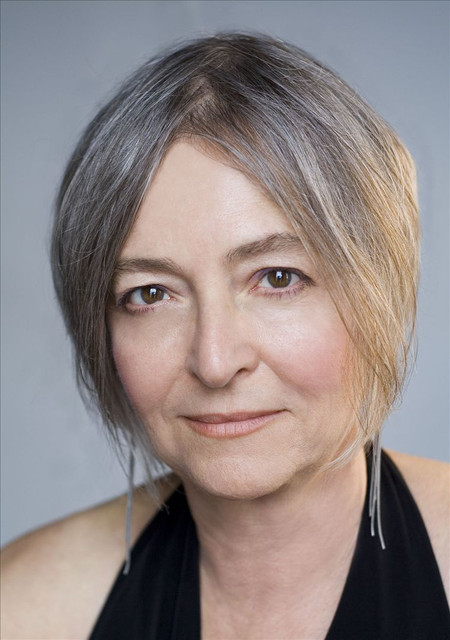
Alice Shields
Fausto Romitelli
Miharu Ogura