Data may be outdated
Last updated: 9 months ago — Click refresh to get the latest statistics.
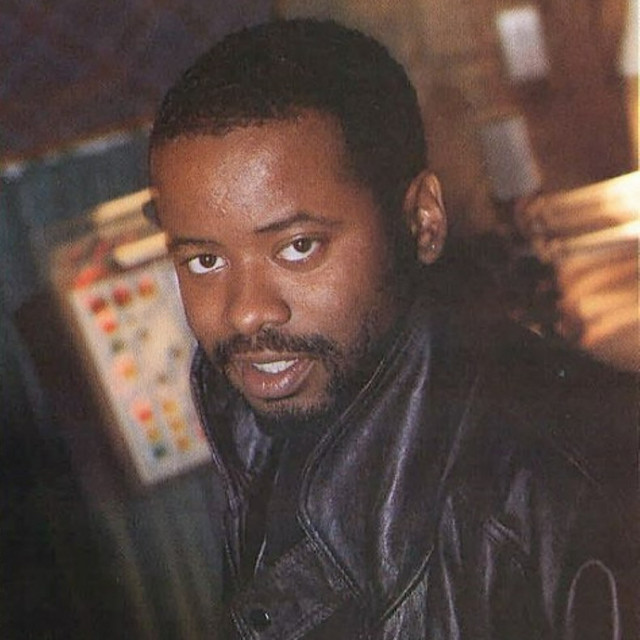
Although he produced only a handful of tracks of renown and disappeared into obscurity almost as quickly as he had emerged from it, Manny Parrish is nonetheless one of the most important and influential figures in American electronic dance music. Helping to lay the foundation of electro, hip-hop, freestyle, and techno, as well as the dozens of subgenres to splinter off from those, Parrish introduced the aesthetic of European electronic pop to the American club scene by combining the plugged-in disco-funk of <a href="spotify:artist:6jU2Tt13MmXYk0ZBv1KmfO">Giorgio Moroder</a> and the man-machine music of <a href="spotify:artist:0dmPX6ovclgOy8WWJaFEUU">Kraftwerk</a> with the beefed-up rhythms and cut'n'mix approach of nascent hip-hop. As a result, tracks like "Hip-Hop Be Bop (Don't Stop)" and "Boogie Down Bronx" were period-defining works that provided the basic genetic material for everyone from <a href="spotify:artist:3CQIn7N5CuRDP8wEI7FiDA">Run-D.M.C.</a> and <a href="spotify:artist:03r4iKL2g2442PT9n2UKsx">the Beastie Boys</a> to <a href="spotify:artist:6WH1V41LwGDGmlPUhSZLHO">Autechre</a> and <a href="spotify:artist:4ugwXaNvZVbB4jqhdIXzKj">Andrea Parker</a> -- and they remain undisputed classics of early hip-hop and electro to this day. A native New Yorker, Parrish was a member of the extended family of glam-chasers and freakazoids that converged nightly at Studio 54. His nickname, Man, first appeared in Andy Warhol's Interview magazine, and his early live shows at Bronx hip-hop clubs were spectacles of lights, glitter, and pyrotechnics that drew as much from the Warhol mystique as from <a href="spotify:artist:7JECb5C75Sdj0DpPE3rVtb">the Cold Crush Brothers</a>.
Influenced by the electronic experiments of <a href="spotify:artist:1uFG5Tg7iA7wd56RchxvWw">Klaus Nomi</a> and <a href="spotify:artist:7MSUfLeTdDEoZiJPDSBXgi">Brian Eno</a> as well as by <a href="spotify:artist:0dmPX6ovclgOy8WWJaFEUU">Kraftwerk</a>, Parrish together with Raúl Rodríguez recorded their best-known work in a tiny studio sometimes shared with <a href="spotify:artist:7cg61q8kK8jlFi8TKKw70p">Afrika Bambaataa</a>, whose own sessions with <a href="spotify:artist:5YzGCkGA6XEGKs2C9KRVKA">Arthur Baker</a> and <a href="spotify:artist:41dWuvsfEBfcmfmUWBcl43">John Robie</a> produced a number of classics equal to Parrish's own, including "Wildstyle," "Looking for the Perfect Beat," and the famous "Planet Rock." What distinguished "Hip-Hop Be Bop," however, was its lack of vocals and the extremely wide spectrum of popularity it gained in the club scene, from ghetto breakdance halls to uptown clubs like Danceteria and the Funhouse. After he discovered a pirated copy of his music being played by a local DJ, Parrish found his way to the offices of the Importe label (a subsidiary of popular dance imprint Sugarscoop), with whom he inked his first deal. He released his self-titled LP shortly after, and the album went on to sell over two million copies worldwide. Following a period of burn-out, Parrish recorded and remixed tracks for <a href="spotify:artist:3fMbdgg4jU18AjLCKBhRSm">Michael Jackson</a>, <a href="spotify:artist:2BWfZGPtsjRlRp7JTDqI45">Boy George</a>, <a href="spotify:artist:6V6WCgi7waF55bJmylC4H5">Gloria Gaynor</a>, and Hi-NRG group <a href="spotify:artist:5mhyYbgxQFdNMPdDFRm9G4">Man 2 Man</a>, among others, and served as road manager for <a href="spotify:artist:0dCKce6tJJdHvlWnDMwzPW">the Village People</a>. While Parrish's subsequent material achieved nowhere near the success or creative pitch of his earlier work, he continued to record from his Brooklyn studio and has been a frequent DJ at New York S&M clubs. His second LP, Dreamtime, appeared on Strictly Rhythm in 1997. ~ Sean Cooper, Rovi
Influenced by the electronic experiments of <a href="spotify:artist:1uFG5Tg7iA7wd56RchxvWw">Klaus Nomi</a> and <a href="spotify:artist:7MSUfLeTdDEoZiJPDSBXgi">Brian Eno</a> as well as by <a href="spotify:artist:0dmPX6ovclgOy8WWJaFEUU">Kraftwerk</a>, Parrish together with Raúl Rodríguez recorded their best-known work in a tiny studio sometimes shared with <a href="spotify:artist:7cg61q8kK8jlFi8TKKw70p">Afrika Bambaataa</a>, whose own sessions with <a href="spotify:artist:5YzGCkGA6XEGKs2C9KRVKA">Arthur Baker</a> and <a href="spotify:artist:41dWuvsfEBfcmfmUWBcl43">John Robie</a> produced a number of classics equal to Parrish's own, including "Wildstyle," "Looking for the Perfect Beat," and the famous "Planet Rock." What distinguished "Hip-Hop Be Bop," however, was its lack of vocals and the extremely wide spectrum of popularity it gained in the club scene, from ghetto breakdance halls to uptown clubs like Danceteria and the Funhouse. After he discovered a pirated copy of his music being played by a local DJ, Parrish found his way to the offices of the Importe label (a subsidiary of popular dance imprint Sugarscoop), with whom he inked his first deal. He released his self-titled LP shortly after, and the album went on to sell over two million copies worldwide. Following a period of burn-out, Parrish recorded and remixed tracks for <a href="spotify:artist:3fMbdgg4jU18AjLCKBhRSm">Michael Jackson</a>, <a href="spotify:artist:2BWfZGPtsjRlRp7JTDqI45">Boy George</a>, <a href="spotify:artist:6V6WCgi7waF55bJmylC4H5">Gloria Gaynor</a>, and Hi-NRG group <a href="spotify:artist:5mhyYbgxQFdNMPdDFRm9G4">Man 2 Man</a>, among others, and served as road manager for <a href="spotify:artist:0dCKce6tJJdHvlWnDMwzPW">the Village People</a>. While Parrish's subsequent material achieved nowhere near the success or creative pitch of his earlier work, he continued to record from his Brooklyn studio and has been a frequent DJ at New York S&M clubs. His second LP, Dreamtime, appeared on Strictly Rhythm in 1997. ~ Sean Cooper, Rovi
Monthly Listeners
36,896
Monthly Listeners History
Track the evolution of monthly listeners over the last 28 days.
Followers
17,930
Followers History
Track the evolution of followers over the last 28 days.
Top Cities
1,185 listeners

536 listeners

520 listeners
423 listeners

416 listeners