Data may be outdated
Last updated: 9 months ago — Click refresh to get the latest statistics.
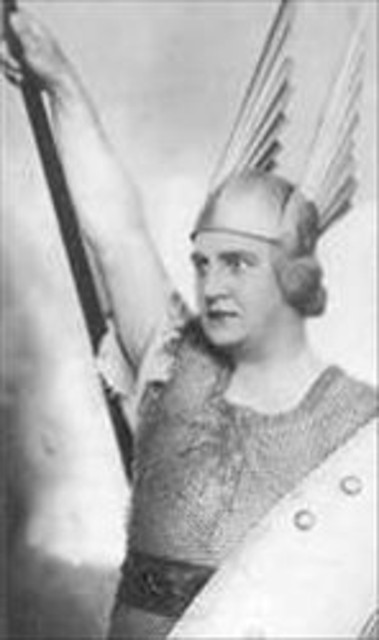
Czech soprano Maria Müller was among the most prominent and beloved lyric/dramatic sopranos singing the German repertory in the interwar years. With an attractive instrument and a warm and instantly appealing stage manner, she proved herself an important member of the Metropolitan Opera, Berlin Staatsoper, and Bayreuth Festival during the 1930s. She was also sufficiently versatile to manage the Italian repertory with some distinction, making herself a viable alternative to <a href="spotify:artist:2UL3ob989gucFstYnWl1Cy">Elisabeth Rethberg</a>, if without <a href="spotify:artist:2UL3ob989gucFstYnWl1Cy">Rethberg</a>'s particular measure of vocal gold. Müller's was not an especially long prime; by the time WWII was over, her voice was showing advanced signs of the unsteadiness that was incipient, but well concealed in her best years.
After studying with the <a href="spotify:artist:1C1x4MVkql8AiABuTw6DgE">Wagnerian</a> tenor Erik Schmedes in Vienna, Müller made her debut in Linz as Elsa, a role which would become a central one in her future. She was engaged in Prague from 1921 to 1923 and sang in Munich in 1923 and 1924. Müller's Metropolitan Opera debut took place on January 21, 1925, as Sieglinde, another of her signature roles. She was greeted with good reviews, such as one from veteran W.J. Henderson deeming her Sieglinde "one of the most satisfying the Metropolitan has known." A lovely face and a slender figure were no liabilities in her presentation, nor was there hesitation about her fresh, lyrically oriented voice.
Müller was offered in a variety of roles, several of them not quite so well-suited as her <a href="spotify:artist:1C1x4MVkql8AiABuTw6DgE">Wagner</a> calling card. Late January brought a role ideally suited to Müller's strengths; as Marie in Smetana's Bartered Bride, she joined bass-baritone <a href="spotify:artist:4DLPmaf1SKeiX77ZkynNWE">Michael Bohnen</a> and an exemplary cast to offer audiences a revelatory production of an unfamiliar, but wonderful work. In February, Müller was the company's choice for the role of Maria in <a href="spotify:artist:3h5MD6ZrJ805sSnCf0QzCx">Montemezzi</a>'s 1905 Giovanni Gallurese. This failed attempt to achieve a success from the composer's pre-L'Amore dei Tre Re days was not heard again after three more performances. Also in February, Müller performed the eponymous heroine in Aida and won respect, but little conviction that she was the most appropriate choice for the role.
Müller's subsequent career at the Metropolitan moved between German roles, many of them done beautifully, and Italian parts such as <a href="spotify:artist:0OzxPXyowUEQ532c9AmHUR">Puccini</a>'s Butterfly which was found "still in the chrysalis state." In New York, Müller continued her vocal studies with Paul Altglass and in 11 seasons was presented in a total of 167 performances covering 19 roles. In addition to the aforementioned roles, she sang a lovely, knowing Eva, a superb Gutrune, a powerful Donna Elvira, and an Amelia in the first American production of <a href="spotify:artist:1JOQXgYdQV2yfrhewqx96o">Verdi</a>'s Simon Boccanegra. Her Elisabeth in Tannhäuser was another interpretation deemed by Henderson "among the best the Metropolitan stage has known."
At Berlin and Bayreuth, Müller's years stretched from 1926 to 1943 and from 1930 to 1944, respectively. In Bayreuth, she was <a href="spotify:artist:4xpgBZSojKNEQqQHXrwSXA">Toscanini</a>'s choice for Elisabeth in his 1930 production of Tannhäuser preserved on disc, but with <a href="spotify:artist:7wKsVgkzcVUVERxZMEn9Mm">Karl Elmendorff</a> rather than the Italian maestro conducting. Recorded on stage, but sans audience, Müller's performance, particularly her last act "Allmächt'ge Jungfrau," testifies to her disarming art. During the years of Heinz Tietjen's leadership (he played a major role in Berlin as well), Müller was Bayreuth's reigning Sieglinde and Elisabeth and was heard prominently as Senta and Eva as well.
In London, her memorable Eva was praised for its youthful freshness, her Sieglinde for its impassioned lyricism.
After studying with the <a href="spotify:artist:1C1x4MVkql8AiABuTw6DgE">Wagnerian</a> tenor Erik Schmedes in Vienna, Müller made her debut in Linz as Elsa, a role which would become a central one in her future. She was engaged in Prague from 1921 to 1923 and sang in Munich in 1923 and 1924. Müller's Metropolitan Opera debut took place on January 21, 1925, as Sieglinde, another of her signature roles. She was greeted with good reviews, such as one from veteran W.J. Henderson deeming her Sieglinde "one of the most satisfying the Metropolitan has known." A lovely face and a slender figure were no liabilities in her presentation, nor was there hesitation about her fresh, lyrically oriented voice.
Müller was offered in a variety of roles, several of them not quite so well-suited as her <a href="spotify:artist:1C1x4MVkql8AiABuTw6DgE">Wagner</a> calling card. Late January brought a role ideally suited to Müller's strengths; as Marie in Smetana's Bartered Bride, she joined bass-baritone <a href="spotify:artist:4DLPmaf1SKeiX77ZkynNWE">Michael Bohnen</a> and an exemplary cast to offer audiences a revelatory production of an unfamiliar, but wonderful work. In February, Müller was the company's choice for the role of Maria in <a href="spotify:artist:3h5MD6ZrJ805sSnCf0QzCx">Montemezzi</a>'s 1905 Giovanni Gallurese. This failed attempt to achieve a success from the composer's pre-L'Amore dei Tre Re days was not heard again after three more performances. Also in February, Müller performed the eponymous heroine in Aida and won respect, but little conviction that she was the most appropriate choice for the role.
Müller's subsequent career at the Metropolitan moved between German roles, many of them done beautifully, and Italian parts such as <a href="spotify:artist:0OzxPXyowUEQ532c9AmHUR">Puccini</a>'s Butterfly which was found "still in the chrysalis state." In New York, Müller continued her vocal studies with Paul Altglass and in 11 seasons was presented in a total of 167 performances covering 19 roles. In addition to the aforementioned roles, she sang a lovely, knowing Eva, a superb Gutrune, a powerful Donna Elvira, and an Amelia in the first American production of <a href="spotify:artist:1JOQXgYdQV2yfrhewqx96o">Verdi</a>'s Simon Boccanegra. Her Elisabeth in Tannhäuser was another interpretation deemed by Henderson "among the best the Metropolitan stage has known."
At Berlin and Bayreuth, Müller's years stretched from 1926 to 1943 and from 1930 to 1944, respectively. In Bayreuth, she was <a href="spotify:artist:4xpgBZSojKNEQqQHXrwSXA">Toscanini</a>'s choice for Elisabeth in his 1930 production of Tannhäuser preserved on disc, but with <a href="spotify:artist:7wKsVgkzcVUVERxZMEn9Mm">Karl Elmendorff</a> rather than the Italian maestro conducting. Recorded on stage, but sans audience, Müller's performance, particularly her last act "Allmächt'ge Jungfrau," testifies to her disarming art. During the years of Heinz Tietjen's leadership (he played a major role in Berlin as well), Müller was Bayreuth's reigning Sieglinde and Elisabeth and was heard prominently as Senta and Eva as well.
In London, her memorable Eva was praised for its youthful freshness, her Sieglinde for its impassioned lyricism.
Monthly Listeners
186
Monthly Listeners History
Track the evolution of monthly listeners over the last 28 days.
Followers
185
Followers History
Track the evolution of followers over the last 28 days.
Top Cities
5 listeners

4 listeners

4 listeners

3 listeners
3 listeners

Related Artists
Eugen Fuchs
Alexander Welitsch
Fritz Krenn
Heinrich Pflanzl

Herbert Alsen

Christel Goltz
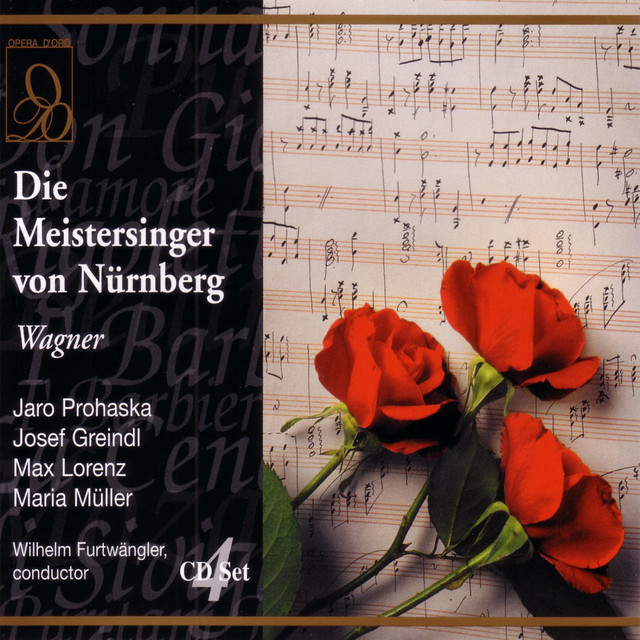
Jaro Prohaska
Benno Arnold
Georg Maikl
Herbert Janssen
Viorica Ursuleac

Luise Willer

Rosette Anday
Josef von Manowarda

Ivar Andrésen
Sigismund Pilinszky
Bolshoi Theatre Chorus and Orchestra
Max Lorenz