Data may be outdated
Last updated: 9 months ago — Click refresh to get the latest statistics.
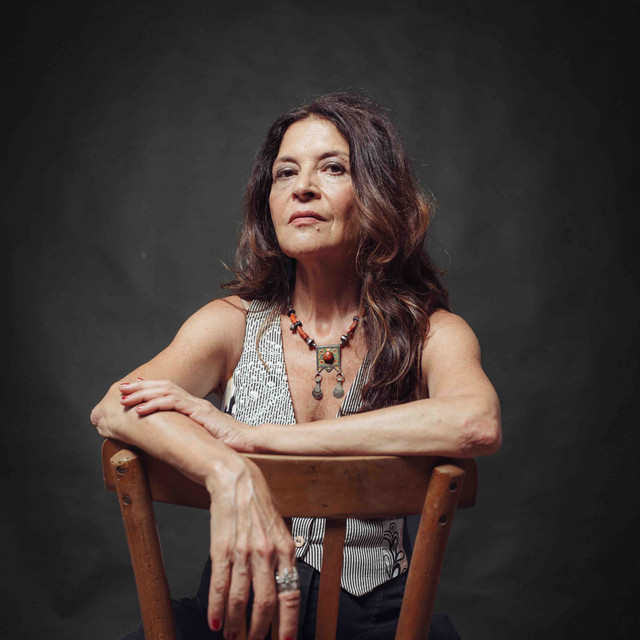
Maria Pia de Vito is an Italian vocalist, arranger, and multi-instrumentalist, who is as well known for her improvisational work as she is for interpreting jazz standards and international folk songs.
She was born in Naples in 1960, and began formal vocal studies as a child, studying opera and classical music as well as the Neapolitan folk tradition.
She began her performing career in 1976, playing with various workshop ensembles, singing, playing guitar, and later piano. Her earliest work was in ethnic and non-ethnic polyphony and folk music related to Mediterranean, Balkan, and South American countries.
In 1980, De Vito began working in jazz circles with world-renowned musicians including <a href="spotify:artist:2qW0CNnmvdEQwiabdareHi">Paolo Fresu</a>, <a href="spotify:artist:3VVUklE9wEr8Fcapy9H8Ua">Bruno Tommaso</a>, and <a href="spotify:artist:72vioIyz3G8Ihu1CboAVSA">Gianluigi Trovesi</a>. She also performed clubs and international festivals with <a href="spotify:artist:3DkK9XA1CI1i7U7ovpAo1G">Joe Zawinul</a>, <a href="spotify:artist:5IkynsVZoak9UR2Xt8qsMj">Michael Brecker</a>, <a href="spotify:artist:3Bm6MhzPUczH3Pej2FNqGi">Peter Erskine</a>, <a href="spotify:artist:0ztzt6g8n0NBcnwMGwMlxD">Miroslav Vitous</a>, <a href="spotify:artist:1l10UPSXfbHFvNnDN7kgbA">Uri Caine</a>, <a href="spotify:artist:429bUEZe2Hq5QJvO2CmhLn">Dave Liebman</a>, <a href="spotify:artist:5DFipPOMNcZT3XMGx59s5I">Billy Hart</a>, <a href="spotify:artist:1fJEAxQLhUQdBmUjsj3vIF">Steve Turre</a>, Maria Joao, <a href="spotify:artist:0LTIwNcvI31Zf5wwFVRHyu">the Art Ensemble of Chicago</a>, and <a href="spotify:artist:0FDi1P8xmY99il5uPynIMR">Nguyen-Le</a>. De Vito sang everything from the bop and post-bop interpretations of the Great American Songbook and free singing to classical and neo-classical, as well as bringing her world music influences.
for her first recording in 1987, Mr. Frankenstein Blues, she fronted the <a href="spotify:artist:1SJh60IgW1gBpNTi9UlrtT">Tino Tracanna Sextet</a>. Her first date as a leader was for Hit the Beast in 1989. She toured internationally and appeared on numerous recordings by Italian jazz artists including Piano & Bit by <a href="spotify:artist:1TZNQ1JwNLy8sfzX3SKYW7">Ernesto Vitolo</a>, and <a href="spotify:artist:3zX0EMvB00JzxnRi5EIICP">Mike Stern</a> and <a href="spotify:artist:0KyolDFb1RjJQb4qXZKCqo">Toots Thielemans</a> for <a href="spotify:search:label%3A%22RCA%22">RCA</a>.
In 1994, De Vito began a new phase of her career in a project conceived and co-directed with <a href="spotify:artist:1KaiGnVyxEODkywQQBoSZJ">Rita Marcotulli</a>, which reflected vocal expression as sound in an encounter between jazz and Neapolitan singing, resulting in the albums Nauplia and Fore Paese in 1995 and 1996, respectively. In 1997, she released Phoné with pianist <a href="spotify:artist:0o9WWL7JAXnjjvUNyPwWTF">John Taylor</a>, <a href="spotify:artist:72vioIyz3G8Ihu1CboAVSA">Trovesi</a>, and others, with a selection of tunes ranging from the Italian Renaissance to the African Congo. It was performed at the Umbria Jazz Festival later that year. In 1998 she returned with <a href="spotify:artist:1KaiGnVyxEODkywQQBoSZJ">Marcotulli</a> and vocalist and multi-instrumentalist <a href="spotify:artist:13TxYlQsBj3sUlIuyqMz6g">Arto Tuncboyaciyan</a> for the release of Triboh. That same year she fronted <a href="spotify:artist:1SJh60IgW1gBpNTi9UlrtT">Tracanna</a>'s band for the landmark Gesualdo, a modern jazz portrait of the Italian madrigal composer's music. In 1999, she recorded with <a href="spotify:artist:7r7tGGESNaJaftahQxLwaT">Colin Towns' Mask Quintet</a> for Still Life, and, along with singer <a href="spotify:artist:0CRQWqvYVd26x1RHVzzBy5">Norma Winstone</a>, fronted his Mask Symphonic project (70 musicians strong) on Dreaming Man with Blue Suede Shoes.
In the late '90s, De Vito toured the festival circuit in a trio with pianist <a href="spotify:artist:0o9WWL7JAXnjjvUNyPwWTF">John Taylor</a> and guitarist <a href="spotify:artist:1tbxopipOkDjnRDfMKj535">Ralph Towner</a>. They recorded their debut album, Verso, for <a href="spotify:search:label%3A%22Provocateur%22">Provocateur</a> in 1998, and followed it a year later with Nel Respiro. In 2003, she released her own offering, Tumulti, backed by <a href="spotify:artist:3G3RD2OMqpKq9V234MF8TA">Ernst Reijseger</a>, <a href="spotify:artist:3gSwRrdppBFWGY6NzLDmd1">Patrice Heral</a>, and <a href="spotify:artist:4rpg8nkGnleZ7pPhIG1aSy">Paul Urbanek</a>.
For the next two years, she sang on <a href="spotify:artist:3VVUklE9wEr8Fcapy9H8Ua">Tommaso</a>-led projects including Lettere da Orsara and Specula et Gemini with the Orchestra Jazz a Maiella. She collaborated with <a href="spotify:artist:2k1nZ9A4l6tQLfrVABHwcL">David Linx</a>, <a href="spotify:artist:6SWdCdXOByDrKuxMlKp6Bv">Diederik Wissels</a>, and <a href="spotify:artist:5NRdz3sJhdfzGhHE9zK5Lz">Fay Claassen</a> on One Heart, Three Voices in 2005. That same year, her So Right album appeared from <a href="spotify:search:label%3A%22Cam+Jazz%22">Cam Jazz</a>. Songs from the Underground was issued in 2007, followed by Mind the Gap in 2009, an experimental record that bridged free-form jazz, traditional European music, pop songs, and abstract electronica.
De Vito continued to collaborate with other artists and to tour in the ensuing years. In 2013, she made her <a href="spotify:search:label%3A%22ECM%22">ECM</a> debut with Il Pergolese, accompanied by <a href="spotify:artist:4Zt9Fpz2Zw4j5JckmwnL76">Francois Couturier</a>, <a href="spotify:artist:0SGPrWBKXE2DfxLX4GbtBN">Anja Lechner</a>, and <a href="spotify:artist:0PrEXi9LcYr5j82OZLNyNA">Michele Rabbia</a>. In 2017, De Vito returned with Core, a Brazilian jazz-tinged effort featuring special guests <a href="spotify:artist:6tOsSffQQIXmK8TqsDck8t">Chico Buarque</a>, <a href="spotify:artist:1McRzmSwfysOGYy2GPaSNE">Gabriele Mirabassi</a>, <a href="spotify:artist:3mX0jEzhY4RFHcJ4ZOHjDH">Roberto Taufic</a>, and others. ~ Thom Jurek, Rovi
She was born in Naples in 1960, and began formal vocal studies as a child, studying opera and classical music as well as the Neapolitan folk tradition.
She began her performing career in 1976, playing with various workshop ensembles, singing, playing guitar, and later piano. Her earliest work was in ethnic and non-ethnic polyphony and folk music related to Mediterranean, Balkan, and South American countries.
In 1980, De Vito began working in jazz circles with world-renowned musicians including <a href="spotify:artist:2qW0CNnmvdEQwiabdareHi">Paolo Fresu</a>, <a href="spotify:artist:3VVUklE9wEr8Fcapy9H8Ua">Bruno Tommaso</a>, and <a href="spotify:artist:72vioIyz3G8Ihu1CboAVSA">Gianluigi Trovesi</a>. She also performed clubs and international festivals with <a href="spotify:artist:3DkK9XA1CI1i7U7ovpAo1G">Joe Zawinul</a>, <a href="spotify:artist:5IkynsVZoak9UR2Xt8qsMj">Michael Brecker</a>, <a href="spotify:artist:3Bm6MhzPUczH3Pej2FNqGi">Peter Erskine</a>, <a href="spotify:artist:0ztzt6g8n0NBcnwMGwMlxD">Miroslav Vitous</a>, <a href="spotify:artist:1l10UPSXfbHFvNnDN7kgbA">Uri Caine</a>, <a href="spotify:artist:429bUEZe2Hq5QJvO2CmhLn">Dave Liebman</a>, <a href="spotify:artist:5DFipPOMNcZT3XMGx59s5I">Billy Hart</a>, <a href="spotify:artist:1fJEAxQLhUQdBmUjsj3vIF">Steve Turre</a>, Maria Joao, <a href="spotify:artist:0LTIwNcvI31Zf5wwFVRHyu">the Art Ensemble of Chicago</a>, and <a href="spotify:artist:0FDi1P8xmY99il5uPynIMR">Nguyen-Le</a>. De Vito sang everything from the bop and post-bop interpretations of the Great American Songbook and free singing to classical and neo-classical, as well as bringing her world music influences.
for her first recording in 1987, Mr. Frankenstein Blues, she fronted the <a href="spotify:artist:1SJh60IgW1gBpNTi9UlrtT">Tino Tracanna Sextet</a>. Her first date as a leader was for Hit the Beast in 1989. She toured internationally and appeared on numerous recordings by Italian jazz artists including Piano & Bit by <a href="spotify:artist:1TZNQ1JwNLy8sfzX3SKYW7">Ernesto Vitolo</a>, and <a href="spotify:artist:3zX0EMvB00JzxnRi5EIICP">Mike Stern</a> and <a href="spotify:artist:0KyolDFb1RjJQb4qXZKCqo">Toots Thielemans</a> for <a href="spotify:search:label%3A%22RCA%22">RCA</a>.
In 1994, De Vito began a new phase of her career in a project conceived and co-directed with <a href="spotify:artist:1KaiGnVyxEODkywQQBoSZJ">Rita Marcotulli</a>, which reflected vocal expression as sound in an encounter between jazz and Neapolitan singing, resulting in the albums Nauplia and Fore Paese in 1995 and 1996, respectively. In 1997, she released Phoné with pianist <a href="spotify:artist:0o9WWL7JAXnjjvUNyPwWTF">John Taylor</a>, <a href="spotify:artist:72vioIyz3G8Ihu1CboAVSA">Trovesi</a>, and others, with a selection of tunes ranging from the Italian Renaissance to the African Congo. It was performed at the Umbria Jazz Festival later that year. In 1998 she returned with <a href="spotify:artist:1KaiGnVyxEODkywQQBoSZJ">Marcotulli</a> and vocalist and multi-instrumentalist <a href="spotify:artist:13TxYlQsBj3sUlIuyqMz6g">Arto Tuncboyaciyan</a> for the release of Triboh. That same year she fronted <a href="spotify:artist:1SJh60IgW1gBpNTi9UlrtT">Tracanna</a>'s band for the landmark Gesualdo, a modern jazz portrait of the Italian madrigal composer's music. In 1999, she recorded with <a href="spotify:artist:7r7tGGESNaJaftahQxLwaT">Colin Towns' Mask Quintet</a> for Still Life, and, along with singer <a href="spotify:artist:0CRQWqvYVd26x1RHVzzBy5">Norma Winstone</a>, fronted his Mask Symphonic project (70 musicians strong) on Dreaming Man with Blue Suede Shoes.
In the late '90s, De Vito toured the festival circuit in a trio with pianist <a href="spotify:artist:0o9WWL7JAXnjjvUNyPwWTF">John Taylor</a> and guitarist <a href="spotify:artist:1tbxopipOkDjnRDfMKj535">Ralph Towner</a>. They recorded their debut album, Verso, for <a href="spotify:search:label%3A%22Provocateur%22">Provocateur</a> in 1998, and followed it a year later with Nel Respiro. In 2003, she released her own offering, Tumulti, backed by <a href="spotify:artist:3G3RD2OMqpKq9V234MF8TA">Ernst Reijseger</a>, <a href="spotify:artist:3gSwRrdppBFWGY6NzLDmd1">Patrice Heral</a>, and <a href="spotify:artist:4rpg8nkGnleZ7pPhIG1aSy">Paul Urbanek</a>.
For the next two years, she sang on <a href="spotify:artist:3VVUklE9wEr8Fcapy9H8Ua">Tommaso</a>-led projects including Lettere da Orsara and Specula et Gemini with the Orchestra Jazz a Maiella. She collaborated with <a href="spotify:artist:2k1nZ9A4l6tQLfrVABHwcL">David Linx</a>, <a href="spotify:artist:6SWdCdXOByDrKuxMlKp6Bv">Diederik Wissels</a>, and <a href="spotify:artist:5NRdz3sJhdfzGhHE9zK5Lz">Fay Claassen</a> on One Heart, Three Voices in 2005. That same year, her So Right album appeared from <a href="spotify:search:label%3A%22Cam+Jazz%22">Cam Jazz</a>. Songs from the Underground was issued in 2007, followed by Mind the Gap in 2009, an experimental record that bridged free-form jazz, traditional European music, pop songs, and abstract electronica.
De Vito continued to collaborate with other artists and to tour in the ensuing years. In 2013, she made her <a href="spotify:search:label%3A%22ECM%22">ECM</a> debut with Il Pergolese, accompanied by <a href="spotify:artist:4Zt9Fpz2Zw4j5JckmwnL76">Francois Couturier</a>, <a href="spotify:artist:0SGPrWBKXE2DfxLX4GbtBN">Anja Lechner</a>, and <a href="spotify:artist:0PrEXi9LcYr5j82OZLNyNA">Michele Rabbia</a>. In 2017, De Vito returned with Core, a Brazilian jazz-tinged effort featuring special guests <a href="spotify:artist:6tOsSffQQIXmK8TqsDck8t">Chico Buarque</a>, <a href="spotify:artist:1McRzmSwfysOGYy2GPaSNE">Gabriele Mirabassi</a>, <a href="spotify:artist:3mX0jEzhY4RFHcJ4ZOHjDH">Roberto Taufic</a>, and others. ~ Thom Jurek, Rovi
Monthly Listeners
2,921
Monthly Listeners History
Track the evolution of monthly listeners over the last 28 days.
Followers
3,092
Followers History
Track the evolution of followers over the last 28 days.
Top Cities
169 listeners

138 listeners
115 listeners

73 listeners
73 listeners
Related Artists
Cristina Zavalloni
Francesca Corrias
Rita Maria

Henrique Gomide

João Luis Nogueira
Paula Sousa

Anette Camargo


Henrique Eisenmann

Claudia Villela

Bernardo Moreira
Beatriz Nunes
Cristóvão Bastos
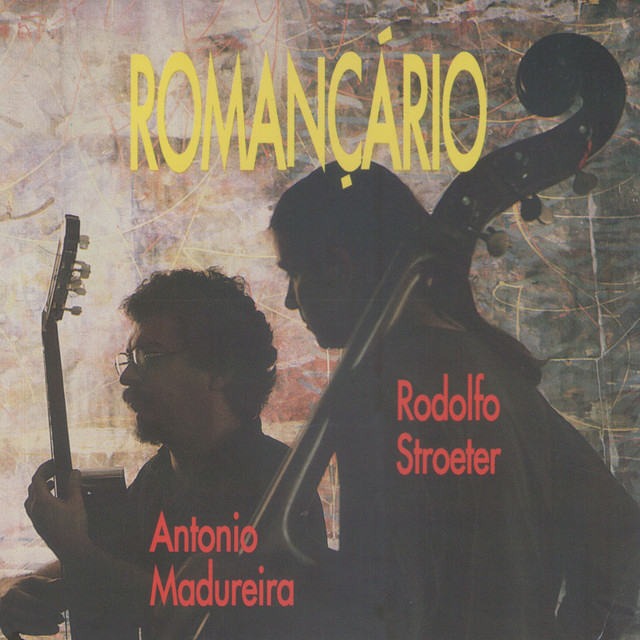

Luís Figueiredo

Roberto Sion

Gonzalo Maestre

Marcel Pascual

Letizia Onorati

Luisa Cottifogli
Nanny Assis

Igor Lazier

Jun Izumi

Tom Cykman
Sara Dowling

Song Yi Jeon
Giulio Corini
Sonny Troupé

Amigo Tom