Data may be outdated
Last updated: 9 months ago — Click refresh to get the latest statistics.
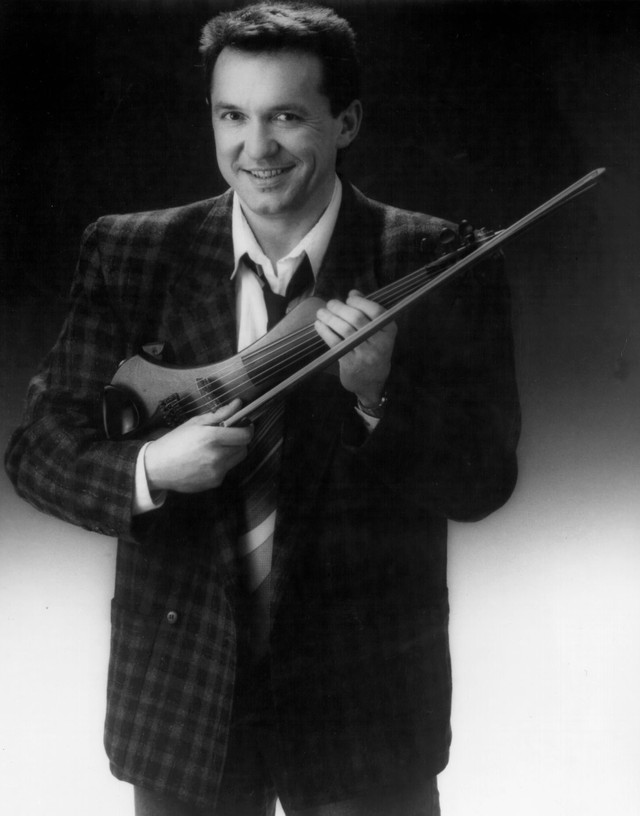
Michał Urbaniak is a violinist, saxophonist, composer, bandleader, and arranger based in New York City. Active since the early 1960s, Urbaniak's pioneering jazz fusion recordings of the '70s -- in particular Paratyphus B (1973), Inactin (1973), Super Constellation (1973), and Atma (1974) -- exposed him to international audiences. In addition to leading bands, he served as a sideman with an array of jazz legends including <a href="spotify:artist:0kbYTNQb4Pb1rPbbaF0pT4">Miles Davis</a>, <a href="spotify:artist:7g9DeYASD3RzlT4kDchsQZ">Gil Evans</a>, <a href="spotify:artist:0IwfuIL3gUJxjzUqY3wJ3j">Billy Cobham</a>, and <a href="spotify:artist:25s8YpOLWqI2SgTlvapJyQ">Larry Coryell</a>, to name a few. His chief collaborator for many years was internationally celebrated Polish vocalist, composer, and then-spouse <a href="spotify:artist:7eSejfUR2a7h5u9IKfYwRk">Urszula Dudziak</a>. During the '80s and '90s, Urbaniak (who had emigrated to the U.S.) scored films, was a session and touring sideman, and recorded and produced his own outings that ranged from straight-ahead jazz (My One and Only Love) to funky fusion and disco (Funk Factory and Facts of Life [Coryell-Urbaniak Band]). In the 21st century, he delivered the tribute Miles of Blue, a big-band fusion outing in UrbSymphony, the acid jazz, funk, hip-hop-injected Urbanator, and Friday Night at the Village Vanguard. In 2023, Germany's <a href="spotify:search:label%3A%22Moosicus%22">Moosicus</a> label released Sound Pieces, compiling Paratyphus B and Inactin, with a restored, previously unissued live recording from Radio Bremen, where Urbaniak presented performances of tracks from both albums months before they were released.
Urbaniak was born in Warsaw, but primarily raised in Lodz. He began playing violin at age six, followed by studies on the soprano and then tenor saxophones. As he grew up, his interest in jazz evolved from Dixieland and swing to bop, hard bop and modal music. Urbaniak studied at the Academy of Music in Warsaw while working in various Polish jazz and classical ensembles. He made his debut recording on tenor saxophone on the five-track 1962 EP Holiday Moods by Jazz Rockers. The band's alto saxophonist was <a href="spotify:artist:2W2XGrPdpYqu68NgNgiFlh">Zbigniew Namyslowski</a>. Between 1962 and 1964, Urbaniak was a core member of pianist and composer <a href="spotify:artist:6BoLqGW2NuMvgHqiDbyfOC">Krzysztof Komeda</a>'s quintet. In 1965, Urbaniak played soprano and tenor saxophones on Rolf Kuhn's Solarius, and in 1968 he formed Michal Urbaniak's Orchestra in Scandinavia with singer <a href="spotify:artist:7eSejfUR2a7h5u9IKfYwRk">Urszula Dudziak</a>; they cut a self-titled offering and returned to Poland in 1969 to found Constellation, a quintet that included pianist <a href="spotify:artist:0Emf6MyFoCjKazTqoaUu6T">Adam Makowicz</a> and drummer <a href="spotify:artist:7n8SMmaCx01ZLswr7UYCoM">Czesław Bartkowski</a>. They issued Live Recording in 1970. The following year Urbaniak won a scholarship to the Berklee College of Music after being voted Best Soloist at the 1971 Montreux Jazz Festival. Urbaniak and <a href="spotify:artist:7eSejfUR2a7h5u9IKfYwRk">Dudziak</a> emigrated to the U.S. in 1973, the same year the Michal Urbaniak Group released Paratyphus B and Inactin, marking his formal return to the violin. That year he and <a href="spotify:artist:7eSejfUR2a7h5u9IKfYwRk">Dudziak</a> also joined <a href="spotify:artist:50bsdKkUBCPSIAirpRXmEV">Attila Zoller</a> and <a href="spotify:artist:65WFsTQhFYVqbovrVZAOd7">Tomasz Stanko</a> on the tribute offering We'll Remember Komeda for the late Polish composer.
Following a recommendation by legendary producer and A&R man John Hammond, Urbaniak signed a record deal with <a href="spotify:search:label%3A%22Columbia%22">Columbia</a> in the U.S. He formed the band Fusion with <a href="spotify:artist:7n8SMmaCx01ZLswr7UYCoM">Bartowski</a>, Paweł Jarzębski, <a href="spotify:artist:7eSejfUR2a7h5u9IKfYwRk">Dudziak</a>, and <a href="spotify:artist:3Om6IvGOO1bsYOHVIOnrIG">Wojciech Karolak</a>. In 1973, Fusion released Super Constellation in Germany and the U.S, introducing melodic and rhythmic elements drawn from Polish folk music into funky, fusion-based jazz. That same group followed in 1974 with Atma. At the time, fusion, still young, boasted bands that were sonic cousins to Fusion including <a href="spotify:artist:3Ao7NH7lRyQAeKQg2mlTcO">Mahavishnu Orchestra</a>, <a href="spotify:artist:3SInttLnvf5G4Aa95aAYPr">Jean Luc Ponty</a>, and <a href="spotify:artist:162DCkd8aDKwvjBb74Gu8b">Weather Report</a>.
In several variations, Fusion released six more albums before splitting in 1977, including Fusion, Funk Factory, Fusion III, Body English, The Beginning, and Urbaniak. Further, this group backed <a href="spotify:artist:7eSejfUR2a7h5u9IKfYwRk">Dudziak</a> on her exceptionally well-received <a href="spotify:search:label%3A%22Arista%22">Arista</a> albums Urszula and Midnight Rain. While Urbaniak's commercial profile would never reach this level again, his talent was so diverse and ubiquitous, he effortlessly moved in many different creative directions, often simultaneously. The violinist also worked on important albums by <a href="spotify:artist:3ud1yQWO0eEL8hVcXyU0Oi">Charles Earland</a>, <a href="spotify:artist:2nQKUeZeleLGNsJj6WLUXN">Oliver Nelson</a>, <a href="spotify:artist:0zdSGWAAxDPCaU0Xa3FTQP">Don Pullen</a>, and <a href="spotify:artist:25s8YpOLWqI2SgTlvapJyQ">Larry Coryell</a> during those years.
In 1978, a new version of Michal Urbaniak's Fusion (with <a href="spotify:artist:7eSejfUR2a7h5u9IKfYwRk">Dudziak</a> as a co-billed guest and keyboardist <a href="spotify:artist:3fvBGGCTOjiCsIqL3MFU6l">Kenny Kirkland</a>) issued Heritage on <a href="spotify:search:label%3A%22MPS%22">MPS</a>. Urbaniak served as <a href="spotify:artist:7eSejfUR2a7h5u9IKfYwRk">Dudziak</a>'s musical director and in 1979, enlisted <a href="spotify:artist:2W2XGrPdpYqu68NgNgiFlh">Namyslowki</a>, <a href="spotify:artist:3fvBGGCTOjiCsIqL3MFU6l">Kirkland</a>, <a href="spotify:artist:1OCdpTg8d7Ehpj8B9j4iqa">John Abercrombie</a>, <a href="spotify:artist:6fmq5mv6HnduZdlTOEYBC9">Marcus Miller</a> and others to back her on Future Talk. In 1980, Urbaniak recorded the breezy smooth jazz set Serenade for the City on <a href="spotify:search:label%3A%22Motown%22">Motown</a>.
In 1980, Urbaniak joined the Harris Simon Group, and played on Swish, and with <a href="spotify:artist:3tw3kasGq7rp86MzQpc2aI">Billy Cobham's Glassmenagerie</a>, appearing on 1981's Stratus. The violinist released My One and Only Love in 1982, leading a trio with guitarist <a href="spotify:artist:3ATJ09aVV7r7szOlQCnHMp">Gene Bertoncini</a> and bassist <a href="spotify:artist:1qmN59E8o3FW3Z0LzC2sGL">Michael Moore</a>. He and <a href="spotify:artist:25s8YpOLWqI2SgTlvapJyQ">Coryell</a> released The Larry Coryell/Michael Urbaniak Duo in 1982, took the show on the road, and in 1983 released Facts of Life in 1983 and Larry Coryell and Michal Urbaniak in 1984. In 1986, he was invited to join the sessions that netted <a href="spotify:artist:0kbYTNQb4Pb1rPbbaF0pT4">Miles Davis</a>' Tutu and 1987's Siesta. In 1987, Urbaniak released the futurist, all-electronic funk of Burning Circuits, with his trio Urbaniax on his own <a href="spotify:search:label%3A%22UBX%22">UBX</a> label. In 1988, following the release of <a href="spotify:artist:7eSejfUR2a7h5u9IKfYwRk">Dudziak</a>'s Magic Lady, the couple divorced. That year his Cinemode album comprised cues and themes from his dozens of film scores was released by <a href="spotify:search:label%3A%22Sonet%22">Sonet</a>. it was followed by Folk Songs, Children's Melodies, Jazz Tunes, And Others..., a duo offering with pianist Władysław Sendecki. Urbaniak released the leader dates Urban Express, Songs for Poland, and did studio work with <a href="spotify:artist:0NSaDbZ3bVycmiRGhVvjyX">the Gil Evans Orchestra</a> and <a href="spotify:artist:00Nnsh2ykMBYnCDsSFGXSY">Earl Klugh</a> in closing the decade.
In 1990, Urbaniak released the polished Code Blue, leading a contemporary jazz quartet that included R&B keyboardist <a href="spotify:artist:2g8J4iI5qyYFMVHcpMcSsS">Bernard Wright</a>, drummer <a href="spotify:artist:478WAnkTtQach00La2gvxR">Lenny White</a>, and guitarist Tom Fox. In 1992, the album Manhattan Man 1994. He also formed his long-running jazz-hip hop fusion ensemble <a href="spotify:artist:0w8119fLc7SFc0mM5ltSBq">Urbanator</a> who issued their eponymous debut, and followed it with Urbanator II in 1996. Further, <a href="spotify:search:label%3A%22Steeplechase%22">Steeplechase</a> released Some Other Blues.
At the dawn of the 21st century, his <a href="spotify:search:label%3A%22UBX%22">UBX</a> label issued a diverse array of recordings including Sax Love & Cinema (2001), Recital (2002), Urbsymphony (2003), Jazz I Love You and Decadence (2004), and Sax Love (2005). In 2002, Sony Jazz released Eden, a collection of contemporary jazz, funk and hip-hop works that included guest spots by <a href="spotify:artist:7eSejfUR2a7h5u9IKfYwRk">Dudziak</a> and Eugene Lazarotti.
Urbanator III also appeared in 2005. In 2007, <a href="spotify:search:label%3A%22Jam+Records%22">Jam Records</a> issued Music for Violin & Jazz Quartet, placing the violinist in the company of NY5: drummer <a href="spotify:artist:1tGINpEJVUsQXssRC28ugo">Roy Haynes</a>, pianist <a href="spotify:artist:3LvX4UVIfEjsQVqrbBToQ3">Kenny Barron</a>, bassist <a href="spotify:artist:0pSoLnWrkv4lvm0CBl526G">Buster Williams</a>, and guitarist <a href="spotify:artist:5UjEzMlPNdJv2UthkvGKBe">Ted Dunbar</a>. In 2009, Sax Love for Lovers Only was issued by <a href="spotify:search:label%3A%22UBX%22">UBX</a>. In 2014, Urbaniak was a co-billed featured guest on 3 Days with Alex Kolosov & Big Sky. The following year he joined legendary Polish progressive rock band <a href="spotify:artist:6Qiz9BW9MNpD5nADhXgRxX">SBB</a> for SBB & Michal Urbaniak. In 2016, the violinist issued Jazz Legends 1 on <a href="spotify:search:label%3A%22UBX%22">UBX</a>, covering standards by composers <a href="spotify:artist:0ZqhrTXYPA9DZR527ZnFdO">Wayne Shorter</a>, <a href="spotify:artist:5ZATfKurLqflrBhv2FLht5">Horace Silver</a>, and <a href="spotify:artist:2dRsXWVnkku2cMDtV1h6NP">Stanley Turrentine</a>. In 2019, Urbaniak formed Urbanizer and issued their debut, Just a Funky Feeling, the following year. In 2023, German label <a href="spotify:search:label%3A%22Moosicus%22">Moosicus</a> offered thoroughly remastered versions of Paratyphus B and Inactin, as well as Sound Pieces, combining those two records with an unissued live concert that preceded their release by several months. ~ Thom Jurek, Rovi
Urbaniak was born in Warsaw, but primarily raised in Lodz. He began playing violin at age six, followed by studies on the soprano and then tenor saxophones. As he grew up, his interest in jazz evolved from Dixieland and swing to bop, hard bop and modal music. Urbaniak studied at the Academy of Music in Warsaw while working in various Polish jazz and classical ensembles. He made his debut recording on tenor saxophone on the five-track 1962 EP Holiday Moods by Jazz Rockers. The band's alto saxophonist was <a href="spotify:artist:2W2XGrPdpYqu68NgNgiFlh">Zbigniew Namyslowski</a>. Between 1962 and 1964, Urbaniak was a core member of pianist and composer <a href="spotify:artist:6BoLqGW2NuMvgHqiDbyfOC">Krzysztof Komeda</a>'s quintet. In 1965, Urbaniak played soprano and tenor saxophones on Rolf Kuhn's Solarius, and in 1968 he formed Michal Urbaniak's Orchestra in Scandinavia with singer <a href="spotify:artist:7eSejfUR2a7h5u9IKfYwRk">Urszula Dudziak</a>; they cut a self-titled offering and returned to Poland in 1969 to found Constellation, a quintet that included pianist <a href="spotify:artist:0Emf6MyFoCjKazTqoaUu6T">Adam Makowicz</a> and drummer <a href="spotify:artist:7n8SMmaCx01ZLswr7UYCoM">Czesław Bartkowski</a>. They issued Live Recording in 1970. The following year Urbaniak won a scholarship to the Berklee College of Music after being voted Best Soloist at the 1971 Montreux Jazz Festival. Urbaniak and <a href="spotify:artist:7eSejfUR2a7h5u9IKfYwRk">Dudziak</a> emigrated to the U.S. in 1973, the same year the Michal Urbaniak Group released Paratyphus B and Inactin, marking his formal return to the violin. That year he and <a href="spotify:artist:7eSejfUR2a7h5u9IKfYwRk">Dudziak</a> also joined <a href="spotify:artist:50bsdKkUBCPSIAirpRXmEV">Attila Zoller</a> and <a href="spotify:artist:65WFsTQhFYVqbovrVZAOd7">Tomasz Stanko</a> on the tribute offering We'll Remember Komeda for the late Polish composer.
Following a recommendation by legendary producer and A&R man John Hammond, Urbaniak signed a record deal with <a href="spotify:search:label%3A%22Columbia%22">Columbia</a> in the U.S. He formed the band Fusion with <a href="spotify:artist:7n8SMmaCx01ZLswr7UYCoM">Bartowski</a>, Paweł Jarzębski, <a href="spotify:artist:7eSejfUR2a7h5u9IKfYwRk">Dudziak</a>, and <a href="spotify:artist:3Om6IvGOO1bsYOHVIOnrIG">Wojciech Karolak</a>. In 1973, Fusion released Super Constellation in Germany and the U.S, introducing melodic and rhythmic elements drawn from Polish folk music into funky, fusion-based jazz. That same group followed in 1974 with Atma. At the time, fusion, still young, boasted bands that were sonic cousins to Fusion including <a href="spotify:artist:3Ao7NH7lRyQAeKQg2mlTcO">Mahavishnu Orchestra</a>, <a href="spotify:artist:3SInttLnvf5G4Aa95aAYPr">Jean Luc Ponty</a>, and <a href="spotify:artist:162DCkd8aDKwvjBb74Gu8b">Weather Report</a>.
In several variations, Fusion released six more albums before splitting in 1977, including Fusion, Funk Factory, Fusion III, Body English, The Beginning, and Urbaniak. Further, this group backed <a href="spotify:artist:7eSejfUR2a7h5u9IKfYwRk">Dudziak</a> on her exceptionally well-received <a href="spotify:search:label%3A%22Arista%22">Arista</a> albums Urszula and Midnight Rain. While Urbaniak's commercial profile would never reach this level again, his talent was so diverse and ubiquitous, he effortlessly moved in many different creative directions, often simultaneously. The violinist also worked on important albums by <a href="spotify:artist:3ud1yQWO0eEL8hVcXyU0Oi">Charles Earland</a>, <a href="spotify:artist:2nQKUeZeleLGNsJj6WLUXN">Oliver Nelson</a>, <a href="spotify:artist:0zdSGWAAxDPCaU0Xa3FTQP">Don Pullen</a>, and <a href="spotify:artist:25s8YpOLWqI2SgTlvapJyQ">Larry Coryell</a> during those years.
In 1978, a new version of Michal Urbaniak's Fusion (with <a href="spotify:artist:7eSejfUR2a7h5u9IKfYwRk">Dudziak</a> as a co-billed guest and keyboardist <a href="spotify:artist:3fvBGGCTOjiCsIqL3MFU6l">Kenny Kirkland</a>) issued Heritage on <a href="spotify:search:label%3A%22MPS%22">MPS</a>. Urbaniak served as <a href="spotify:artist:7eSejfUR2a7h5u9IKfYwRk">Dudziak</a>'s musical director and in 1979, enlisted <a href="spotify:artist:2W2XGrPdpYqu68NgNgiFlh">Namyslowki</a>, <a href="spotify:artist:3fvBGGCTOjiCsIqL3MFU6l">Kirkland</a>, <a href="spotify:artist:1OCdpTg8d7Ehpj8B9j4iqa">John Abercrombie</a>, <a href="spotify:artist:6fmq5mv6HnduZdlTOEYBC9">Marcus Miller</a> and others to back her on Future Talk. In 1980, Urbaniak recorded the breezy smooth jazz set Serenade for the City on <a href="spotify:search:label%3A%22Motown%22">Motown</a>.
In 1980, Urbaniak joined the Harris Simon Group, and played on Swish, and with <a href="spotify:artist:3tw3kasGq7rp86MzQpc2aI">Billy Cobham's Glassmenagerie</a>, appearing on 1981's Stratus. The violinist released My One and Only Love in 1982, leading a trio with guitarist <a href="spotify:artist:3ATJ09aVV7r7szOlQCnHMp">Gene Bertoncini</a> and bassist <a href="spotify:artist:1qmN59E8o3FW3Z0LzC2sGL">Michael Moore</a>. He and <a href="spotify:artist:25s8YpOLWqI2SgTlvapJyQ">Coryell</a> released The Larry Coryell/Michael Urbaniak Duo in 1982, took the show on the road, and in 1983 released Facts of Life in 1983 and Larry Coryell and Michal Urbaniak in 1984. In 1986, he was invited to join the sessions that netted <a href="spotify:artist:0kbYTNQb4Pb1rPbbaF0pT4">Miles Davis</a>' Tutu and 1987's Siesta. In 1987, Urbaniak released the futurist, all-electronic funk of Burning Circuits, with his trio Urbaniax on his own <a href="spotify:search:label%3A%22UBX%22">UBX</a> label. In 1988, following the release of <a href="spotify:artist:7eSejfUR2a7h5u9IKfYwRk">Dudziak</a>'s Magic Lady, the couple divorced. That year his Cinemode album comprised cues and themes from his dozens of film scores was released by <a href="spotify:search:label%3A%22Sonet%22">Sonet</a>. it was followed by Folk Songs, Children's Melodies, Jazz Tunes, And Others..., a duo offering with pianist Władysław Sendecki. Urbaniak released the leader dates Urban Express, Songs for Poland, and did studio work with <a href="spotify:artist:0NSaDbZ3bVycmiRGhVvjyX">the Gil Evans Orchestra</a> and <a href="spotify:artist:00Nnsh2ykMBYnCDsSFGXSY">Earl Klugh</a> in closing the decade.
In 1990, Urbaniak released the polished Code Blue, leading a contemporary jazz quartet that included R&B keyboardist <a href="spotify:artist:2g8J4iI5qyYFMVHcpMcSsS">Bernard Wright</a>, drummer <a href="spotify:artist:478WAnkTtQach00La2gvxR">Lenny White</a>, and guitarist Tom Fox. In 1992, the album Manhattan Man 1994. He also formed his long-running jazz-hip hop fusion ensemble <a href="spotify:artist:0w8119fLc7SFc0mM5ltSBq">Urbanator</a> who issued their eponymous debut, and followed it with Urbanator II in 1996. Further, <a href="spotify:search:label%3A%22Steeplechase%22">Steeplechase</a> released Some Other Blues.
At the dawn of the 21st century, his <a href="spotify:search:label%3A%22UBX%22">UBX</a> label issued a diverse array of recordings including Sax Love & Cinema (2001), Recital (2002), Urbsymphony (2003), Jazz I Love You and Decadence (2004), and Sax Love (2005). In 2002, Sony Jazz released Eden, a collection of contemporary jazz, funk and hip-hop works that included guest spots by <a href="spotify:artist:7eSejfUR2a7h5u9IKfYwRk">Dudziak</a> and Eugene Lazarotti.
Urbanator III also appeared in 2005. In 2007, <a href="spotify:search:label%3A%22Jam+Records%22">Jam Records</a> issued Music for Violin & Jazz Quartet, placing the violinist in the company of NY5: drummer <a href="spotify:artist:1tGINpEJVUsQXssRC28ugo">Roy Haynes</a>, pianist <a href="spotify:artist:3LvX4UVIfEjsQVqrbBToQ3">Kenny Barron</a>, bassist <a href="spotify:artist:0pSoLnWrkv4lvm0CBl526G">Buster Williams</a>, and guitarist <a href="spotify:artist:5UjEzMlPNdJv2UthkvGKBe">Ted Dunbar</a>. In 2009, Sax Love for Lovers Only was issued by <a href="spotify:search:label%3A%22UBX%22">UBX</a>. In 2014, Urbaniak was a co-billed featured guest on 3 Days with Alex Kolosov & Big Sky. The following year he joined legendary Polish progressive rock band <a href="spotify:artist:6Qiz9BW9MNpD5nADhXgRxX">SBB</a> for SBB & Michal Urbaniak. In 2016, the violinist issued Jazz Legends 1 on <a href="spotify:search:label%3A%22UBX%22">UBX</a>, covering standards by composers <a href="spotify:artist:0ZqhrTXYPA9DZR527ZnFdO">Wayne Shorter</a>, <a href="spotify:artist:5ZATfKurLqflrBhv2FLht5">Horace Silver</a>, and <a href="spotify:artist:2dRsXWVnkku2cMDtV1h6NP">Stanley Turrentine</a>. In 2019, Urbaniak formed Urbanizer and issued their debut, Just a Funky Feeling, the following year. In 2023, German label <a href="spotify:search:label%3A%22Moosicus%22">Moosicus</a> offered thoroughly remastered versions of Paratyphus B and Inactin, as well as Sound Pieces, combining those two records with an unissued live concert that preceded their release by several months. ~ Thom Jurek, Rovi
Monthly Listeners
94,226
Monthly Listeners History
Track the evolution of monthly listeners over the last 28 days.
Followers
12,878
Followers History
Track the evolution of followers over the last 28 days.
Top Cities

Related Artists
鈴木 弘
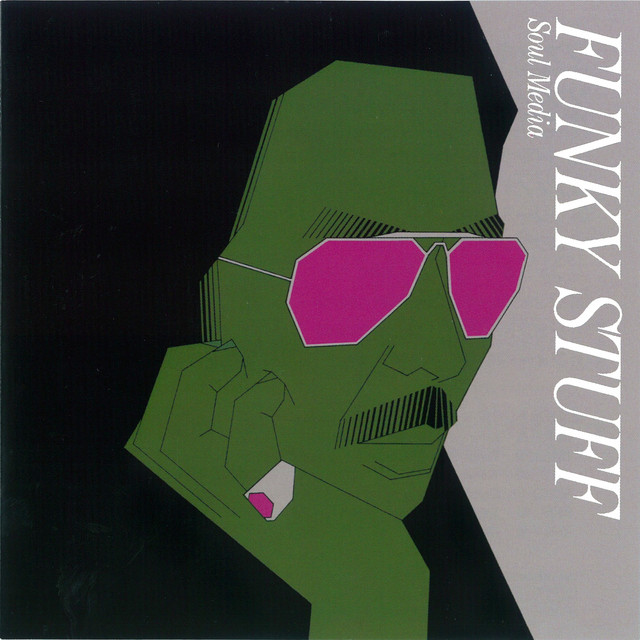
稲垣次郎とソウル・メディア




hoshii
Omasta
Urbanator

Klawo