

Data may be outdated
Last updated: 9 months ago — Click refresh to get the latest statistics.
European jazz saxophonist, composer, and bandleader Muriel Grossmann is responsible for some of the most musically evocative and emotionally resonant jazz albums of the early 21st century. Issued primarily through her own <a href="spotify:search:label%3A%22Dreamland+Records%22">Dreamland Records</a>, Grossmann is equally adept on alto, soprano, and tenor saxophones. Her compositions, written specifically to showcase the strengths of her collaborators, reflect the place where post-<a href="spotify:artist:2hGh5VOeeqimQFxqXvfCUf">Coltrane</a> modalism meets spiritual post-bop and experimentalism. Grossmann is also a trained vocalist, which has deeply influenced her phrasing technique. Where her sophomore outing, 2008's Quartet, provocatively displayed a command of the post-bop lexicon, it also showcased her rigorously disciplined soprano playing in a highly lyrical style. 2010's Birth of the Mystery engaged in far-ranging and even aggressive experimentation employing dissonance, space, and free-floating textural and rhythmic surfaces. By the time she delivered Golden Rule in 2018, a fully conscious tribute to <a href="spotify:artist:2hGh5VOeeqimQFxqXvfCUf">Coltrane</a>'s influence, she brought both poles together, evoking a rich tapestry of Eastern modal inquiry, searing emotional intensity, and spiritual exposition. On 2019's Reverence, 2020's Quiet Earth, and 2023's Devotion, she added Hammond B-3 organ to her quintet's sound.
Grossmann was born in Paris to Austrian parents who were teachers. They moved to Vienna when she was four. She began classical studies of flute at the age of five and continued until she was 21, when she switched to alto and soprano saxophones after borrowing a horn from a friend. She didn't embrace the tenor until some years later; she was initially attracted to the saxophone because of the possibility of putting more air through it, which would allow her a greater range of expression; she learned by playing along with records. The person she credits as a prime influence and teacher is jazz pianist <a href="spotify:artist:63ZJSdxmTX5wWRMoS1C5ph">Joachim Kühn</a>, with whom she later played (she also played with his brother, <a href="spotify:artist:73xPAo16RiiVu6X90p7UVb">Rolf</a>). Her musical heroes were players such as <a href="spotify:artist:0gNn3uUyIEErdQthThI51i">Eddie "Lockjaw" Davis</a>, <a href="spotify:artist:6dAtGAnHCQ1ujMUZ9Ep82k">Grant Green</a>, and <a href="spotify:artist:6HzzZqLS76PGbKaw6dIMHZ">Illinois Jacquet</a>, all of whom evoked notions of soul in their playing. During this period and after completion of her formal studies, she played and toured with various funk, R&B, world music, and jazz groups. In 2002 she moved to Barcelona, where she began leading her own bands for recordings and concerts. Two years later she moved again, this time to Ibiza. That relocation marked the beginning of a fruitful recording and performing period that has continued well into the 2010s. Her debut album, Homecoming Reunion, recorded in Barcelona, featured her working quartet with guitarist Milojkovich, drummer Marko Jelača, and bassist David Marroquin. They played shows at home, got solid press, and played elsewhere in Spain and Europe. 2008's Quartet utilized the same band and was the first to showcase her composed and improvised music within a holistic framework. This was the beginning of her mature music; it started to move past conventional harmony as her serpentine melodies became more transient; they were strengthened by her idiosyncratic phrases rather than by aping avant-jazz clichés. That same year she switched up her M.O. by cutting new compositions on an album with drummer Udo P. Grossmann's quartet; she toured a number of the tunes but went back into the studio in 2009 to record what proved to be, up to that juncture, the decidedly more out Birth of the Mystery, her final album with original quartet. She also issued her only trio date, the kinetic, electrifying Sudden Impact with Milojkovic and bassist Chema Pellico.
Grossmann -- also a mother -- didn't record again for three years. She was forming a new band and playing gigs as often as possible. Her next release was from a concert at the Eivissa Jazz Festival in 2011, but it didn't appear until 2013. She was working in a new quartet setting with Milojkovic on guitar, <a href="spotify:artist:7C9uvkdC4kgYwRG6efafhT">Robert Landfermann</a> on bass, and <a href="spotify:artist:4qSlZL1HI3eqZ5oFP0ZR26">Christian Lillinger</a> on drums. The high-flying conversational improvisation, spurred on by her composed tunes, culminated in the 14-minute "Ornette," which closed the set with sweeping folk melodies, challenging polyrhythms, and criss-crossing dynamics. That group cut Earth Tones, issued in 2015. A spiritual jazz suite, the seed for the record was planted while she listened to an album of gong recordings. The resonances of the gongs -- she played the record for an entire winter -- got her interested in "overtones, colors of tones, and <a href="spotify:artist:2hGh5VOeeqimQFxqXvfCUf">Coltrane</a>'s circular musical handwriting." Wanting to spend more time with the soprano horn, she composed Earth Tones as a suite based upon simple melodies, minimal architectures, and overtones. She desired to create an organic drone that would be the set's guiding thread. To that end, she employed a drone orchestra with tambura, sarangi, piano, flute, melodica, maracas, and bells. She then recorded melodies and solos in single takes that appeared in sequence on the final record. Milojkovic created a series of guitar drones from four different instruments before adding the rhythm section on acoustic bass and a percussion drone, with timpani and concert bass drum, chau and wind gongs, and Tibetan bells. She toured the record briefly before re-entering the studio with a new quartet featuring old friend Austrian bassist <a href="spotify:artist:3kBnxQaBLJj4YF9L91RqXY">Gina Schwarz</a>, and Serbian drummer Uros Stamenkovic. Unlike its speculative and mysterious predecessor, Natural Time was direct, a flowing exploration of simple yet intricate melodies based on modal principles. The album registered positive reviews across Europe while her new band drew raves on bandstands from Germany to Morocco. It served as an introduction to Momentum, a deep, virtuosic dive into spiritual jazz that was a direct outgrowth of Grossmann's work as an instructor; she designed a holistic musical curriculum at Belén Köhler's international Universal Mandala schools. Its intensity, sophistication, and warm energy resonated with jazz critics globally, while the quartet's live performances drew raves and bigger crowds than ever before. For Grossmann, who has stubbornly followed a path of her own design and intuition from the beginning -- all of her recordings are self-funded, self-released, and sold directly on the internet or at gigs (though some also made it into stores) -- the long-overdue watershed occurred in early 2018 when she released Golden Rule, her most open, sprawling exploration (using only soprano and tenor) of the spiritual jazz typified by <a href="spotify:artist:2hGh5VOeeqimQFxqXvfCUf">Coltrane</a>, <a href="spotify:artist:3JLUCojZaHrX2LaUkSj7Ud">Pharoah Sanders</a>, and her contemporaries such <a href="spotify:artist:6ywMpa6AmGJpV5Sbyy58Js">Shabaka Hutchings</a>, <a href="spotify:artist:2W5gU4Vi0nwisoXPARdvIy">Nat Birchall</a>, and <a href="spotify:artist:0Cioop2zjxXxtcPUme7R46">Matthew Halsall</a>. She branded it with her own compelling, emotionally redolent musical signature. While the compact disc was issued by her own <a href="spotify:search:label%3A%22Dreamland%22">Dreamland</a> label and was mixed and mastered by renowned electronic music engineer L. Henry Sarmiento II, the set was also painstakingly prepared on double vinyl by Estonia's <a href="spotify:search:label%3A%22RRGems+Records%22">RRGems Records</a> and presented in a sublimely packaged limited edition. Released in September with the digital disc following in November, it drew the best reviews of her career from international jazz outlets such as Downbeat, Jazziz, UK Vibe, and others, prompting a series of sold-out concerts in Berlin, Barcelona, Belgrade, and Mallorca. Over the next couple of years, Grossmann's profile steadily rose. In addition to the many mentions and reviews in jazz and modern music publications, jazz radio stations across Europe began playing selections from Golden Rule.
At the end of 2019, Grossmann released the double-length Reverence on <a href="spotify:search:label%3A%22RRGems%22">RRGems</a>. It was recorded at her Dreamland Studios in Ibiza along with her performing quartet and guest Hammond B-3 organist Llorenç Barceló. The album's eight tracks were inspired by musical examples from the African continent and explored the essence of polyrhythm in a personal and committed way.
2020's COVID-19 pandemic prevented the quintet from touring after March. Grossmann responded by composing new work in lockdown, in her view to "... Find the strength, the positivity, and the clarity to go through any challenging situation, moment by moment," while re-examining her musical journey and growth. She assembled her quintet and recorded Quiet Earth. It consisted of two new works, the title cut and "African Call," and included studio-recorded versions of "Wien" and "Peaceful River." The latter two originally appeared with very different approaches on 2011's live Awakening. Quiet Earth was issued in December 2020 and again showcased her group with organist Barceló. Devotion appeared in December 2023 and found Abel Boquera taking over organ duties. ~ Thom Jurek, Rovi
Grossmann was born in Paris to Austrian parents who were teachers. They moved to Vienna when she was four. She began classical studies of flute at the age of five and continued until she was 21, when she switched to alto and soprano saxophones after borrowing a horn from a friend. She didn't embrace the tenor until some years later; she was initially attracted to the saxophone because of the possibility of putting more air through it, which would allow her a greater range of expression; she learned by playing along with records. The person she credits as a prime influence and teacher is jazz pianist <a href="spotify:artist:63ZJSdxmTX5wWRMoS1C5ph">Joachim Kühn</a>, with whom she later played (she also played with his brother, <a href="spotify:artist:73xPAo16RiiVu6X90p7UVb">Rolf</a>). Her musical heroes were players such as <a href="spotify:artist:0gNn3uUyIEErdQthThI51i">Eddie "Lockjaw" Davis</a>, <a href="spotify:artist:6dAtGAnHCQ1ujMUZ9Ep82k">Grant Green</a>, and <a href="spotify:artist:6HzzZqLS76PGbKaw6dIMHZ">Illinois Jacquet</a>, all of whom evoked notions of soul in their playing. During this period and after completion of her formal studies, she played and toured with various funk, R&B, world music, and jazz groups. In 2002 she moved to Barcelona, where she began leading her own bands for recordings and concerts. Two years later she moved again, this time to Ibiza. That relocation marked the beginning of a fruitful recording and performing period that has continued well into the 2010s. Her debut album, Homecoming Reunion, recorded in Barcelona, featured her working quartet with guitarist Milojkovich, drummer Marko Jelača, and bassist David Marroquin. They played shows at home, got solid press, and played elsewhere in Spain and Europe. 2008's Quartet utilized the same band and was the first to showcase her composed and improvised music within a holistic framework. This was the beginning of her mature music; it started to move past conventional harmony as her serpentine melodies became more transient; they were strengthened by her idiosyncratic phrases rather than by aping avant-jazz clichés. That same year she switched up her M.O. by cutting new compositions on an album with drummer Udo P. Grossmann's quartet; she toured a number of the tunes but went back into the studio in 2009 to record what proved to be, up to that juncture, the decidedly more out Birth of the Mystery, her final album with original quartet. She also issued her only trio date, the kinetic, electrifying Sudden Impact with Milojkovic and bassist Chema Pellico.
Grossmann -- also a mother -- didn't record again for three years. She was forming a new band and playing gigs as often as possible. Her next release was from a concert at the Eivissa Jazz Festival in 2011, but it didn't appear until 2013. She was working in a new quartet setting with Milojkovic on guitar, <a href="spotify:artist:7C9uvkdC4kgYwRG6efafhT">Robert Landfermann</a> on bass, and <a href="spotify:artist:4qSlZL1HI3eqZ5oFP0ZR26">Christian Lillinger</a> on drums. The high-flying conversational improvisation, spurred on by her composed tunes, culminated in the 14-minute "Ornette," which closed the set with sweeping folk melodies, challenging polyrhythms, and criss-crossing dynamics. That group cut Earth Tones, issued in 2015. A spiritual jazz suite, the seed for the record was planted while she listened to an album of gong recordings. The resonances of the gongs -- she played the record for an entire winter -- got her interested in "overtones, colors of tones, and <a href="spotify:artist:2hGh5VOeeqimQFxqXvfCUf">Coltrane</a>'s circular musical handwriting." Wanting to spend more time with the soprano horn, she composed Earth Tones as a suite based upon simple melodies, minimal architectures, and overtones. She desired to create an organic drone that would be the set's guiding thread. To that end, she employed a drone orchestra with tambura, sarangi, piano, flute, melodica, maracas, and bells. She then recorded melodies and solos in single takes that appeared in sequence on the final record. Milojkovic created a series of guitar drones from four different instruments before adding the rhythm section on acoustic bass and a percussion drone, with timpani and concert bass drum, chau and wind gongs, and Tibetan bells. She toured the record briefly before re-entering the studio with a new quartet featuring old friend Austrian bassist <a href="spotify:artist:3kBnxQaBLJj4YF9L91RqXY">Gina Schwarz</a>, and Serbian drummer Uros Stamenkovic. Unlike its speculative and mysterious predecessor, Natural Time was direct, a flowing exploration of simple yet intricate melodies based on modal principles. The album registered positive reviews across Europe while her new band drew raves on bandstands from Germany to Morocco. It served as an introduction to Momentum, a deep, virtuosic dive into spiritual jazz that was a direct outgrowth of Grossmann's work as an instructor; she designed a holistic musical curriculum at Belén Köhler's international Universal Mandala schools. Its intensity, sophistication, and warm energy resonated with jazz critics globally, while the quartet's live performances drew raves and bigger crowds than ever before. For Grossmann, who has stubbornly followed a path of her own design and intuition from the beginning -- all of her recordings are self-funded, self-released, and sold directly on the internet or at gigs (though some also made it into stores) -- the long-overdue watershed occurred in early 2018 when she released Golden Rule, her most open, sprawling exploration (using only soprano and tenor) of the spiritual jazz typified by <a href="spotify:artist:2hGh5VOeeqimQFxqXvfCUf">Coltrane</a>, <a href="spotify:artist:3JLUCojZaHrX2LaUkSj7Ud">Pharoah Sanders</a>, and her contemporaries such <a href="spotify:artist:6ywMpa6AmGJpV5Sbyy58Js">Shabaka Hutchings</a>, <a href="spotify:artist:2W5gU4Vi0nwisoXPARdvIy">Nat Birchall</a>, and <a href="spotify:artist:0Cioop2zjxXxtcPUme7R46">Matthew Halsall</a>. She branded it with her own compelling, emotionally redolent musical signature. While the compact disc was issued by her own <a href="spotify:search:label%3A%22Dreamland%22">Dreamland</a> label and was mixed and mastered by renowned electronic music engineer L. Henry Sarmiento II, the set was also painstakingly prepared on double vinyl by Estonia's <a href="spotify:search:label%3A%22RRGems+Records%22">RRGems Records</a> and presented in a sublimely packaged limited edition. Released in September with the digital disc following in November, it drew the best reviews of her career from international jazz outlets such as Downbeat, Jazziz, UK Vibe, and others, prompting a series of sold-out concerts in Berlin, Barcelona, Belgrade, and Mallorca. Over the next couple of years, Grossmann's profile steadily rose. In addition to the many mentions and reviews in jazz and modern music publications, jazz radio stations across Europe began playing selections from Golden Rule.
At the end of 2019, Grossmann released the double-length Reverence on <a href="spotify:search:label%3A%22RRGems%22">RRGems</a>. It was recorded at her Dreamland Studios in Ibiza along with her performing quartet and guest Hammond B-3 organist Llorenç Barceló. The album's eight tracks were inspired by musical examples from the African continent and explored the essence of polyrhythm in a personal and committed way.
2020's COVID-19 pandemic prevented the quintet from touring after March. Grossmann responded by composing new work in lockdown, in her view to "... Find the strength, the positivity, and the clarity to go through any challenging situation, moment by moment," while re-examining her musical journey and growth. She assembled her quintet and recorded Quiet Earth. It consisted of two new works, the title cut and "African Call," and included studio-recorded versions of "Wien" and "Peaceful River." The latter two originally appeared with very different approaches on 2011's live Awakening. Quiet Earth was issued in December 2020 and again showcased her group with organist Barceló. Devotion appeared in December 2023 and found Abel Boquera taking over organ duties. ~ Thom Jurek, Rovi
Monthly Listeners
6,328
Monthly Listeners History
Track the evolution of monthly listeners over the last 28 days.
Followers
4,338
Followers History
Track the evolution of followers over the last 28 days.
Top Cities
163 listeners

106 listeners

66 listeners

65 listeners

58 listeners

Related Artists
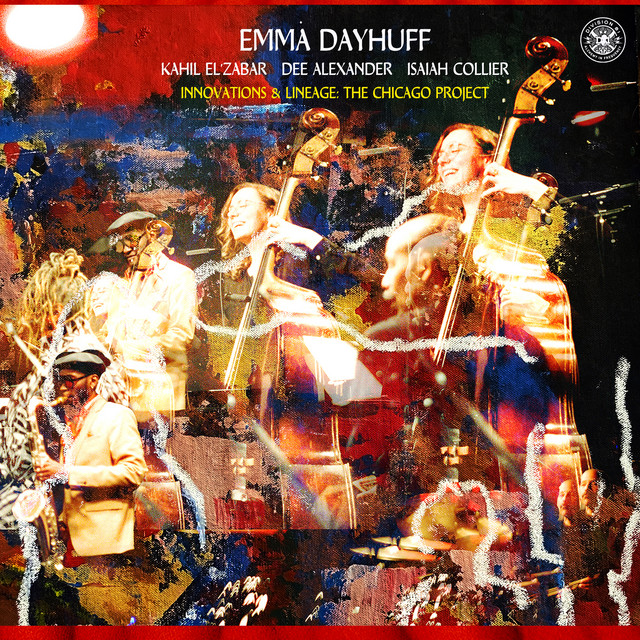
Emma Dayhuff
Jake Baldwin

Olivier Temime

Ian Smit
Joe Sanders

SOL SOL

Peter Manheim


Los Cinco Cardones

Dave Gisler Trio

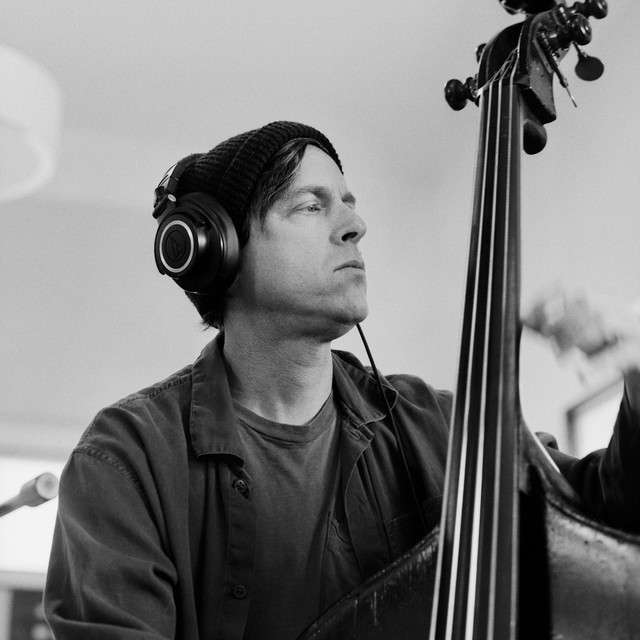
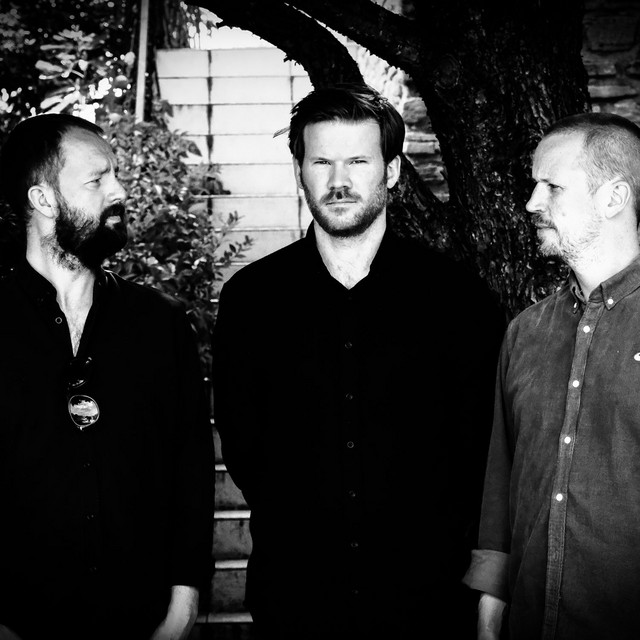
Gard Nilssen Acoustic Unity
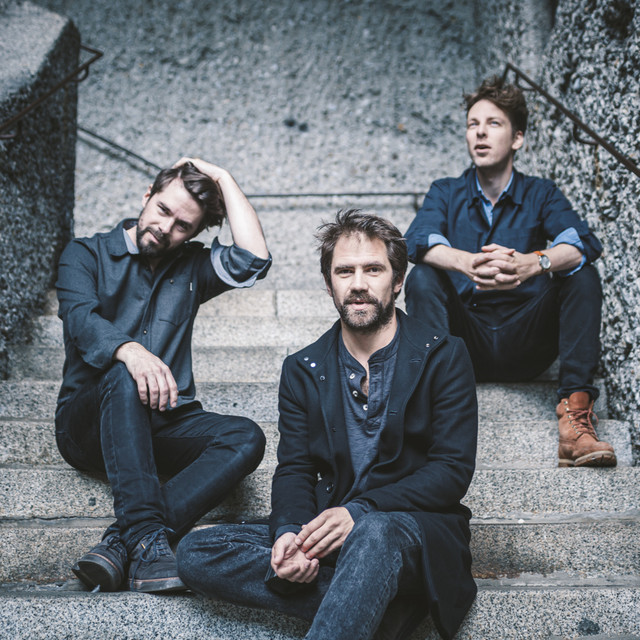
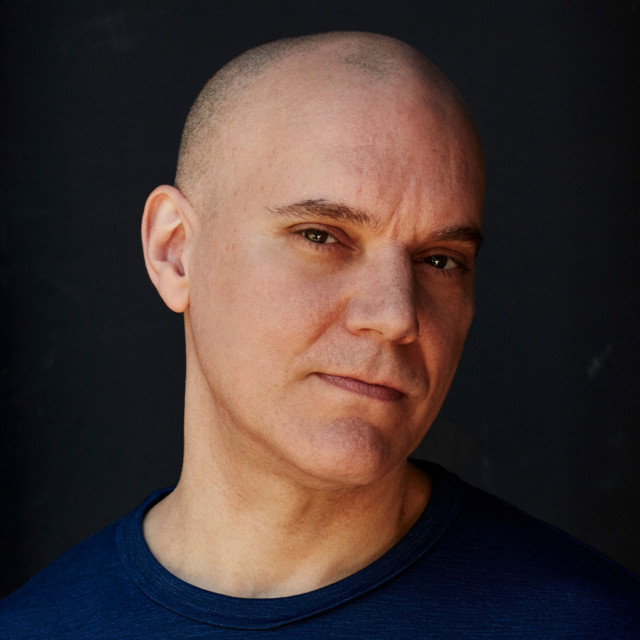
Lukas Traxel

James Allsopp Group


Chaerin Im
Teis Semey
Peter Evans
Aaron Burnett
Ches Smith

Song Nam Hyun
Andy Hay

Tomas Fujiwara
Unionen
Cassie Watson Francillon

Trio of Bloom
