Data may be outdated
Last updated: 9 months ago — Click refresh to get the latest statistics.
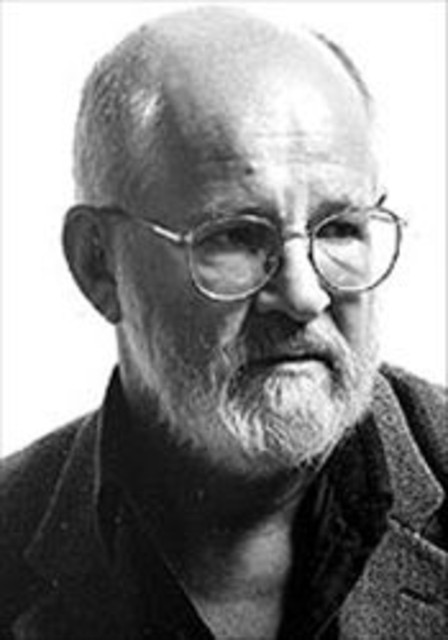
Nicholas Maw, one of the most highly regarded British composers of his generation, has written music in a language greatly influenced by the expressionistic style closely associated with <a href="spotify:artist:5U827e4jbYz6EjtN0fIDt9">Arnold Schoenberg</a>. Still, it is misleading as well as unduly dismissive of Maw's singular mode of expression to categorize him simply as Schoenbergian, or even as expressionistic. Maw's music, with its opposition and blending of 12-tone and tonal principles, is better regarded as the multiply influenced but cohesive creation of a wholly original creative voice.
Maw, born in Grantham, Lincolnshire, England on November 5, 1935, received his early formal training at the Royal Academy of Music in London (1955-1958). There he studied composition with Lennox Berkeley and harmony and counterpoint with Paul Steinitz. With financial help from the French government and the Lili Boulanger Prize, Maw pursued further studies in Paris with famed pedagogue <a href="spotify:artist:1vfC2bld90kx966JTCSwf7">Nadia Boulanger</a>, with whom Berkeley had also studied. It was during his time in Paris that Maw studied under former <a href="spotify:artist:5U827e4jbYz6EjtN0fIDt9">Schoenberg</a> pupil Max Deutsch, who influenced his exploration of 12-tone techniques.
In 1962, at the age of 26, Maw wrote Scenes and Arias for orchestra and three women's voices, the work that established him as a composer of some consequence. Since then, he has composed operas, sonatas, and chamber, vocal, and choral works, but remains best known for his orchestral music. From 1973 to 1987 he worked on the immense symphonic poem Odyssey, generally regarded as his greatest creative achievement. Maw's other orchestral music includes popular works like Spring Music (1983), The World in the Evening (1988), Shahnama (1992), and the Violin Concerto (1993).
The composer's smaller works include three string quartets (1965, 1982, and 1993-1994), Life Studies (1973) for chamber ensemble, and Personae IV, V, VI (1985-1986) for piano. His first two operas, One Man Show (1964) and The Rising of the Moon (1970), use comedy to convey underlying social and political commentary.
Maw's academic career began with a post as resident composer at Trinity College, Cambridge (1966-1970). In 1972, he served briefly as a visiting lecturer in composition at Exeter University and later held positions at Yale University and Bard College in New York. He has achieved considerable popularity in both his native country and his adopted U.S. home. He has been a particular favorite of the British Broadcasting Company, which has commissioned music from him on several occasions; other commissions include works for the <a href="spotify:artist:77CaCn32H4mOMQA7UElzfF">Academy of St. Martin-in-the-Fields</a>, the Philharmonia Orchestra, the Royal Opera House, and the <a href="spotify:artist:0MvSBMGRQJY3mRwIbJsqF1">Royal Philharmonic Orchestra</a>. A recording of Odyssey by <a href="spotify:artist:4GQwgdcDQwqtcHICjUNndp">Simon Rattle</a> and the <a href="spotify:artist:6wuudWq7XpVutoFp4bsVDo">City of Birmingham Symphony Orchestra</a> was nominated for a Grammy award in 1992. In 1993, his Violin Concerto for Joshua Bell was well received, and Maw's final triumph was the opera Sophie's Choice, premiered at Covent Garden in 2002.
Maw, born in Grantham, Lincolnshire, England on November 5, 1935, received his early formal training at the Royal Academy of Music in London (1955-1958). There he studied composition with Lennox Berkeley and harmony and counterpoint with Paul Steinitz. With financial help from the French government and the Lili Boulanger Prize, Maw pursued further studies in Paris with famed pedagogue <a href="spotify:artist:1vfC2bld90kx966JTCSwf7">Nadia Boulanger</a>, with whom Berkeley had also studied. It was during his time in Paris that Maw studied under former <a href="spotify:artist:5U827e4jbYz6EjtN0fIDt9">Schoenberg</a> pupil Max Deutsch, who influenced his exploration of 12-tone techniques.
In 1962, at the age of 26, Maw wrote Scenes and Arias for orchestra and three women's voices, the work that established him as a composer of some consequence. Since then, he has composed operas, sonatas, and chamber, vocal, and choral works, but remains best known for his orchestral music. From 1973 to 1987 he worked on the immense symphonic poem Odyssey, generally regarded as his greatest creative achievement. Maw's other orchestral music includes popular works like Spring Music (1983), The World in the Evening (1988), Shahnama (1992), and the Violin Concerto (1993).
The composer's smaller works include three string quartets (1965, 1982, and 1993-1994), Life Studies (1973) for chamber ensemble, and Personae IV, V, VI (1985-1986) for piano. His first two operas, One Man Show (1964) and The Rising of the Moon (1970), use comedy to convey underlying social and political commentary.
Maw's academic career began with a post as resident composer at Trinity College, Cambridge (1966-1970). In 1972, he served briefly as a visiting lecturer in composition at Exeter University and later held positions at Yale University and Bard College in New York. He has achieved considerable popularity in both his native country and his adopted U.S. home. He has been a particular favorite of the British Broadcasting Company, which has commissioned music from him on several occasions; other commissions include works for the <a href="spotify:artist:77CaCn32H4mOMQA7UElzfF">Academy of St. Martin-in-the-Fields</a>, the Philharmonia Orchestra, the Royal Opera House, and the <a href="spotify:artist:0MvSBMGRQJY3mRwIbJsqF1">Royal Philharmonic Orchestra</a>. A recording of Odyssey by <a href="spotify:artist:4GQwgdcDQwqtcHICjUNndp">Simon Rattle</a> and the <a href="spotify:artist:6wuudWq7XpVutoFp4bsVDo">City of Birmingham Symphony Orchestra</a> was nominated for a Grammy award in 1992. In 1993, his Violin Concerto for Joshua Bell was well received, and Maw's final triumph was the opera Sophie's Choice, premiered at Covent Garden in 2002.
Monthly Listeners
282
Monthly Listeners History
Track the evolution of monthly listeners over the last 28 days.
Followers
267
Followers History
Track the evolution of followers over the last 28 days.
Top Cities
22 listeners

5 listeners

4 listeners

4 listeners

4 listeners
Related Artists

Anthony Burgess
Emilio Calandin

Maurice Ohana
Jean Absil
アルベルト・ヒナステラ

Julián Orbón
Konstantin Bliokh
José Manuel López López

David Del Puerto
Alejandro Basulto
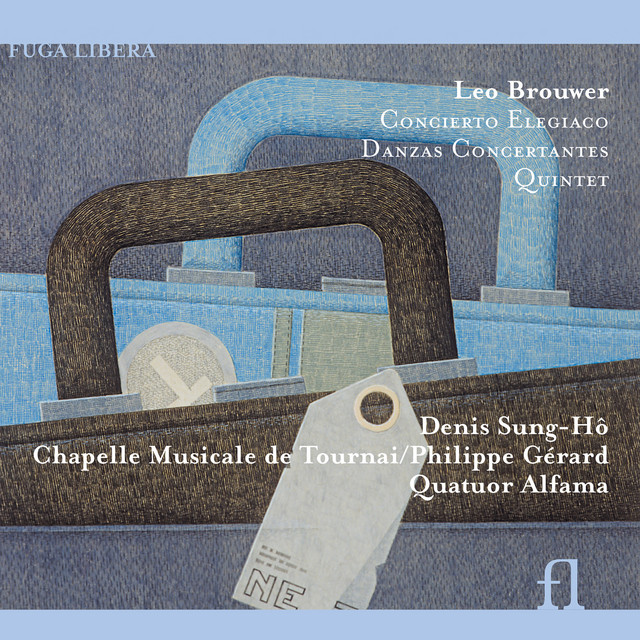
Denis Sung-Hô

Lutz-Werner Hesse

Axel Borup-Jørgensen

Alan Thomas
Walter Jentsch

Jan Boland
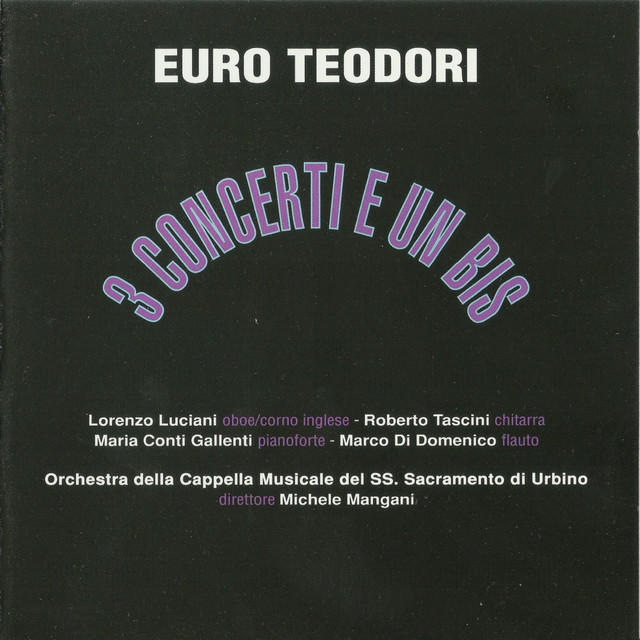
Euro Teodori
Ulrich Schultheiss
Keith Fitch