Data may be outdated
Last updated: 9 months ago — Click refresh to get the latest statistics.
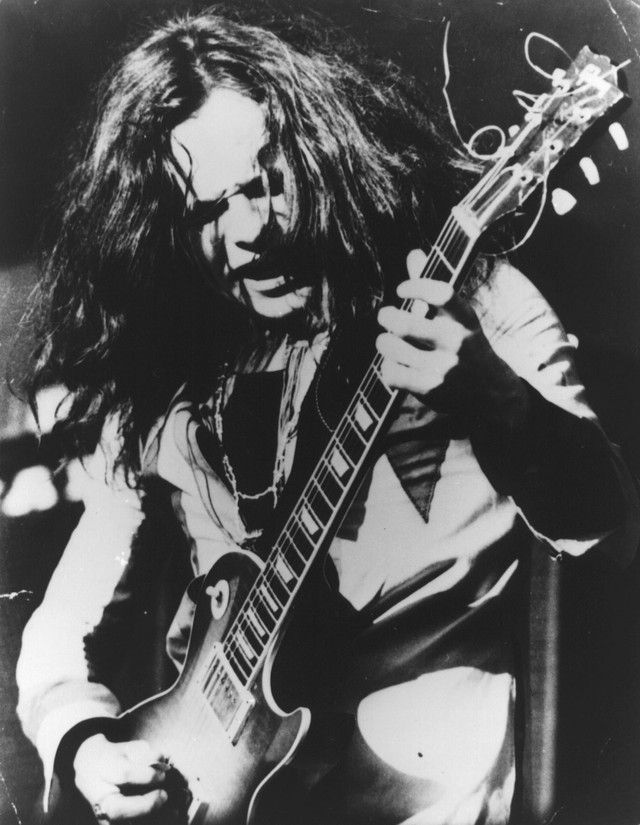
Throughout the years, rock music has been littered with talented musicians whose lives were cut short due to drug-related deaths. <a href="spotify:artist:2e53aHBQdCMKWqHDuyJsjC">Free</a>/<a href="spotify:artist:0k20D9EulSe7S4VOQGXJvV">Back Street Crawler</a> guitarist Paul Kossoff was one such casualty. Kossoff was born in London, England, on September 14, 1950, and early on studied classical guitar (before giving up on the instrument by his teenaged years). But upon discovering the British blues-rock movement of the '60s, Kossoff's interest in guitar perked up once again, especially after catching a <a href="spotify:artist:5s4z3mRAE7nxE3jjft8J3h">John Mayall</a>'s <a href="spotify:artist:2ScuQMRWThcifBRIvNDFDC">Bluesbreakers</a> live show with <a href="spotify:artist:6PAt558ZEZl0DmdXlnjMgD">Eric Clapton</a>. Kossoff soon purchased an electric guitar (a vintage Gibson Les Paul, which eventually become his trademark guitar) and began playing in local bands. Through one such band, <a href="spotify:artist:22qUriquuivy8Eoi0Xy21x">Black Cat Bones</a>, Kossoff became good friends with their drummer, <a href="spotify:artist:0vKffNhiMY9sJ6lyOJL6NF">Simon Kirke</a>, who would serve a prominent part in Kossoff's musical future. Eventually feeling that the band had reached its zenith, the band broke up after <a href="spotify:artist:22qUriquuivy8Eoi0Xy21x">the Black Cat Bones</a> backed bluesman <a href="spotify:artist:1NnRjWELSLqFONDhwc8VU7">Champion Jack Dupree</a> on a song called "When You Feel the Feeling."
Kossoff and <a href="spotify:artist:0vKffNhiMY9sJ6lyOJL6NF">Kirke</a> set out to form another group, hooking up with vocalist <a href="spotify:artist:2gaWNB3YrlTc0KRlHNqhol">Paul Rodgers</a> and bassist <a href="spotify:artist:3N9UQPXdiusFPiz3MOf5PW">Andy Fraser</a>, the quartet decided to go by the name <a href="spotify:artist:2e53aHBQdCMKWqHDuyJsjC">Free</a> (which was supposedly christened by British blues icon <a href="spotify:artist:385tW2q0gMaQTkswc9lMSe">Alexis Korner</a>). Just as the new band signed a deal with Island/A&M Records, Kossoff had fully blossomed into an outstanding guitarist, renowned for his fluid, slow, and melodic leads and bluesy riffs. <a href="spotify:artist:2e53aHBQdCMKWqHDuyJsjC">Free</a> issued a pair of albums in the late '60s that went largely unnoticed -- 1968's Tons of Sobs and 1969's self-titled release -- as Kossoff grew slightly disillusioned by the group's lack of commercial progress and tried out for guitar openings in such groups as <a href="spotify:artist:22bE4uQ6baNwSHPVcDxLCe">the Rolling Stones</a> and <a href="spotify:artist:6w6z8m4WXX7Tub4Rb6Lu7R">Jethro Tull</a>. But big-time success would prove to be just around the corner for <a href="spotify:artist:2e53aHBQdCMKWqHDuyJsjC">Free</a> as their 1970 release Fire and Water spawned the massive hit single (and eventual classic rock standard) "All Right Now" and helped secure the group a spot at the esteemed 1970 Isle of Wight Festival (which also included performances by <a href="spotify:artist:67ea9eGLXYMsO2eYQRui3w">the Who</a> and <a href="spotify:artist:5m8H6zSadhu1j9Yi04VLqD">Sly & the Family Stone</a>, as well as one of the final performances ever by both <a href="spotify:artist:776Uo845nYHJpNaStv1Ds4">Jimi Hendrix</a> and <a href="spotify:artist:22WZ7M8sxp5THdruNY3gXt">the Doors</a>).
But, this would prove to be <a href="spotify:artist:2e53aHBQdCMKWqHDuyJsjC">Free</a>'s commercial apex as after one more release, 1971's underappreciated Highway, the group brokeup. In the wake of their split, <a href="spotify:artist:2e53aHBQdCMKWqHDuyJsjC">Free</a>'s record label issued the concert set Free Live, while its members indulged in other projects. Both <a href="spotify:artist:0vKffNhiMY9sJ6lyOJL6NF">Kirke</a> and Kossoff decided to stay together, forming the short-lived Kossoff, Kirke, Tetsu & Rabbit, along with bassist Tetsu Yamauchi and keyboardist <a href="spotify:artist:1AgPyXiYnFJneU9U2vOUnQ">John "Rabbit" Bundrick</a>, issuing a lone self-titled release the same year. To the delight of fans, <a href="spotify:artist:2e53aHBQdCMKWqHDuyJsjC">Free</a>'s split was short-lived as the quartet reunited in 1972, offering a strong "comeback" album, Free at Last. But behind the scenes, things were in disarray: Kossoff, by this time, had developed a dangerous drug dependency, which led to <a href="spotify:artist:3N9UQPXdiusFPiz3MOf5PW">Fraser</a>'s exit from the band. With Yamauchi taking <a href="spotify:artist:3N9UQPXdiusFPiz3MOf5PW">Fraser</a>'s place in the lineup (and <a href="spotify:artist:1AgPyXiYnFJneU9U2vOUnQ">Bundrick</a> on board for good measure), the new lineup of <a href="spotify:artist:2e53aHBQdCMKWqHDuyJsjC">Free</a> attempted to record a sixth studio album, but due to his problems, Kossoff's input was minimal (with <a href="spotify:artist:2gaWNB3YrlTc0KRlHNqhol">Rodgers</a> and another guitarist subbing in for Kossoff). When <a href="spotify:artist:2e53aHBQdCMKWqHDuyJsjC">Free</a> supported the resulting album, 1973's Heartbreaker, with a tour, Kossoff was replaced with Wendell Richardson and upon the tour's completion, <a href="spotify:artist:2e53aHBQdCMKWqHDuyJsjC">Free</a> split up once more, but this time for good (as both <a href="spotify:artist:2gaWNB3YrlTc0KRlHNqhol">Rodgers</a> and <a href="spotify:artist:0vKffNhiMY9sJ6lyOJL6NF">Kirke</a> would go on to form <a href="spotify:artist:5AEG63ajney2BoDXi0Vb84">Bad Company</a>).
The same year as <a href="spotify:artist:2e53aHBQdCMKWqHDuyJsjC">Free</a>'s swan song, Kossoff was able to pull himself together long enough to record a solo album, Back Street Crawler, which surprisingly featured contributions from his former <a href="spotify:artist:2e53aHBQdCMKWqHDuyJsjC">Free</a> bandmates (as well as <a href="spotify:artist:7AC976RDJzL2asmZuz7qil">Yes</a> drummer <a href="spotify:artist:2oR2Frxa3hitSHpBsQhu7I">Alan White</a>). Happy with the results, Kossoff decided to form a full-time solo outfit, named after the title of his solo debut. In addition to Kossoff, <a href="spotify:artist:0k20D9EulSe7S4VOQGXJvV">Back Street Crawler</a> featured singer Terry Wilson-Slesser, keyboard player <a href="spotify:artist:1nOGJKSjjIuF0oo181Wxbh">Mike Montgomery</a>, bassist Terry Wilson, and drummer Tony Braunagel and the lineup signed on with Atlantic Records to issue a total of two releases -- 1975's The Band Plays On and 1976's Second Street. But Kossoff's health kept worsening; while in a London drug rehab in 1975, Kossoff narrowly escaped death when his heart stopped beating and he had to be revived. Undeterred, Kossoff continued on his destructive path and on March 19, 1976, Kossoff died from a drug-induced heart attack while on a plane flight from Los Angeles to New York at the age of 25.
In the wake of his tragic death, a 16-track career retrospective of Kossoff's, titled Koss (after his nickname), was issued in 1977. Subsequently, several British Kossoff releases were issued in the '80s on the Street Tunes label: 1981's The Hunter, 1982's Leaves in the Wind, 1983's Mr. Big, and 1984's Croydon June 15th, 1975. The late '90s saw a renewed interest in Kossoff and another career retrospective was issued, 1997's 14-track Blue Blue Soul, as well as five-disc <a href="spotify:artist:2e53aHBQdCMKWqHDuyJsjC">Free</a> box set Songs of Yesterday, and a <a href="spotify:artist:2e53aHBQdCMKWqHDuyJsjC">Free</a> biography entitled Heavy Load -- The Story of Free. ~ Greg Prato, Rovi
Kossoff and <a href="spotify:artist:0vKffNhiMY9sJ6lyOJL6NF">Kirke</a> set out to form another group, hooking up with vocalist <a href="spotify:artist:2gaWNB3YrlTc0KRlHNqhol">Paul Rodgers</a> and bassist <a href="spotify:artist:3N9UQPXdiusFPiz3MOf5PW">Andy Fraser</a>, the quartet decided to go by the name <a href="spotify:artist:2e53aHBQdCMKWqHDuyJsjC">Free</a> (which was supposedly christened by British blues icon <a href="spotify:artist:385tW2q0gMaQTkswc9lMSe">Alexis Korner</a>). Just as the new band signed a deal with Island/A&M Records, Kossoff had fully blossomed into an outstanding guitarist, renowned for his fluid, slow, and melodic leads and bluesy riffs. <a href="spotify:artist:2e53aHBQdCMKWqHDuyJsjC">Free</a> issued a pair of albums in the late '60s that went largely unnoticed -- 1968's Tons of Sobs and 1969's self-titled release -- as Kossoff grew slightly disillusioned by the group's lack of commercial progress and tried out for guitar openings in such groups as <a href="spotify:artist:22bE4uQ6baNwSHPVcDxLCe">the Rolling Stones</a> and <a href="spotify:artist:6w6z8m4WXX7Tub4Rb6Lu7R">Jethro Tull</a>. But big-time success would prove to be just around the corner for <a href="spotify:artist:2e53aHBQdCMKWqHDuyJsjC">Free</a> as their 1970 release Fire and Water spawned the massive hit single (and eventual classic rock standard) "All Right Now" and helped secure the group a spot at the esteemed 1970 Isle of Wight Festival (which also included performances by <a href="spotify:artist:67ea9eGLXYMsO2eYQRui3w">the Who</a> and <a href="spotify:artist:5m8H6zSadhu1j9Yi04VLqD">Sly & the Family Stone</a>, as well as one of the final performances ever by both <a href="spotify:artist:776Uo845nYHJpNaStv1Ds4">Jimi Hendrix</a> and <a href="spotify:artist:22WZ7M8sxp5THdruNY3gXt">the Doors</a>).
But, this would prove to be <a href="spotify:artist:2e53aHBQdCMKWqHDuyJsjC">Free</a>'s commercial apex as after one more release, 1971's underappreciated Highway, the group brokeup. In the wake of their split, <a href="spotify:artist:2e53aHBQdCMKWqHDuyJsjC">Free</a>'s record label issued the concert set Free Live, while its members indulged in other projects. Both <a href="spotify:artist:0vKffNhiMY9sJ6lyOJL6NF">Kirke</a> and Kossoff decided to stay together, forming the short-lived Kossoff, Kirke, Tetsu & Rabbit, along with bassist Tetsu Yamauchi and keyboardist <a href="spotify:artist:1AgPyXiYnFJneU9U2vOUnQ">John "Rabbit" Bundrick</a>, issuing a lone self-titled release the same year. To the delight of fans, <a href="spotify:artist:2e53aHBQdCMKWqHDuyJsjC">Free</a>'s split was short-lived as the quartet reunited in 1972, offering a strong "comeback" album, Free at Last. But behind the scenes, things were in disarray: Kossoff, by this time, had developed a dangerous drug dependency, which led to <a href="spotify:artist:3N9UQPXdiusFPiz3MOf5PW">Fraser</a>'s exit from the band. With Yamauchi taking <a href="spotify:artist:3N9UQPXdiusFPiz3MOf5PW">Fraser</a>'s place in the lineup (and <a href="spotify:artist:1AgPyXiYnFJneU9U2vOUnQ">Bundrick</a> on board for good measure), the new lineup of <a href="spotify:artist:2e53aHBQdCMKWqHDuyJsjC">Free</a> attempted to record a sixth studio album, but due to his problems, Kossoff's input was minimal (with <a href="spotify:artist:2gaWNB3YrlTc0KRlHNqhol">Rodgers</a> and another guitarist subbing in for Kossoff). When <a href="spotify:artist:2e53aHBQdCMKWqHDuyJsjC">Free</a> supported the resulting album, 1973's Heartbreaker, with a tour, Kossoff was replaced with Wendell Richardson and upon the tour's completion, <a href="spotify:artist:2e53aHBQdCMKWqHDuyJsjC">Free</a> split up once more, but this time for good (as both <a href="spotify:artist:2gaWNB3YrlTc0KRlHNqhol">Rodgers</a> and <a href="spotify:artist:0vKffNhiMY9sJ6lyOJL6NF">Kirke</a> would go on to form <a href="spotify:artist:5AEG63ajney2BoDXi0Vb84">Bad Company</a>).
The same year as <a href="spotify:artist:2e53aHBQdCMKWqHDuyJsjC">Free</a>'s swan song, Kossoff was able to pull himself together long enough to record a solo album, Back Street Crawler, which surprisingly featured contributions from his former <a href="spotify:artist:2e53aHBQdCMKWqHDuyJsjC">Free</a> bandmates (as well as <a href="spotify:artist:7AC976RDJzL2asmZuz7qil">Yes</a> drummer <a href="spotify:artist:2oR2Frxa3hitSHpBsQhu7I">Alan White</a>). Happy with the results, Kossoff decided to form a full-time solo outfit, named after the title of his solo debut. In addition to Kossoff, <a href="spotify:artist:0k20D9EulSe7S4VOQGXJvV">Back Street Crawler</a> featured singer Terry Wilson-Slesser, keyboard player <a href="spotify:artist:1nOGJKSjjIuF0oo181Wxbh">Mike Montgomery</a>, bassist Terry Wilson, and drummer Tony Braunagel and the lineup signed on with Atlantic Records to issue a total of two releases -- 1975's The Band Plays On and 1976's Second Street. But Kossoff's health kept worsening; while in a London drug rehab in 1975, Kossoff narrowly escaped death when his heart stopped beating and he had to be revived. Undeterred, Kossoff continued on his destructive path and on March 19, 1976, Kossoff died from a drug-induced heart attack while on a plane flight from Los Angeles to New York at the age of 25.
In the wake of his tragic death, a 16-track career retrospective of Kossoff's, titled Koss (after his nickname), was issued in 1977. Subsequently, several British Kossoff releases were issued in the '80s on the Street Tunes label: 1981's The Hunter, 1982's Leaves in the Wind, 1983's Mr. Big, and 1984's Croydon June 15th, 1975. The late '90s saw a renewed interest in Kossoff and another career retrospective was issued, 1997's 14-track Blue Blue Soul, as well as five-disc <a href="spotify:artist:2e53aHBQdCMKWqHDuyJsjC">Free</a> box set Songs of Yesterday, and a <a href="spotify:artist:2e53aHBQdCMKWqHDuyJsjC">Free</a> biography entitled Heavy Load -- The Story of Free. ~ Greg Prato, Rovi
Monthly Listeners
13,654
Monthly Listeners History
Track the evolution of monthly listeners over the last 28 days.
Followers
19,188
Followers History
Track the evolution of followers over the last 28 days.
Top Cities
1,015 listeners
278 listeners

151 listeners
133 listeners
112 listeners
Related Artists


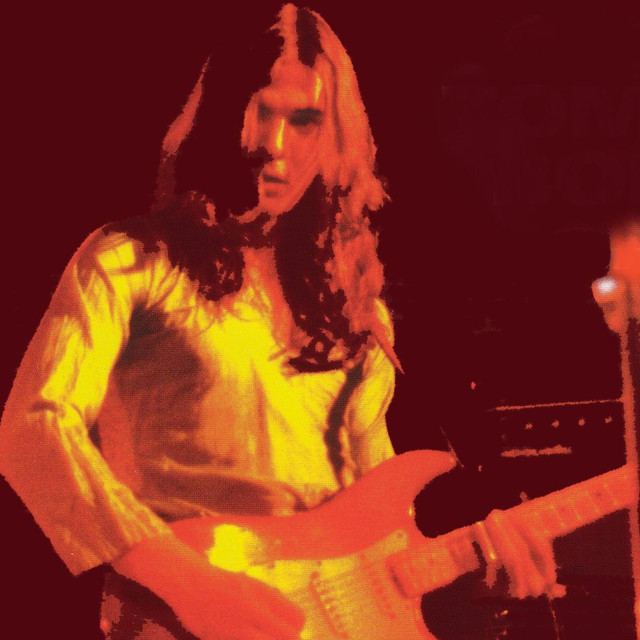

Simon Kirke

Kim Simmonds

Back Street Crawler
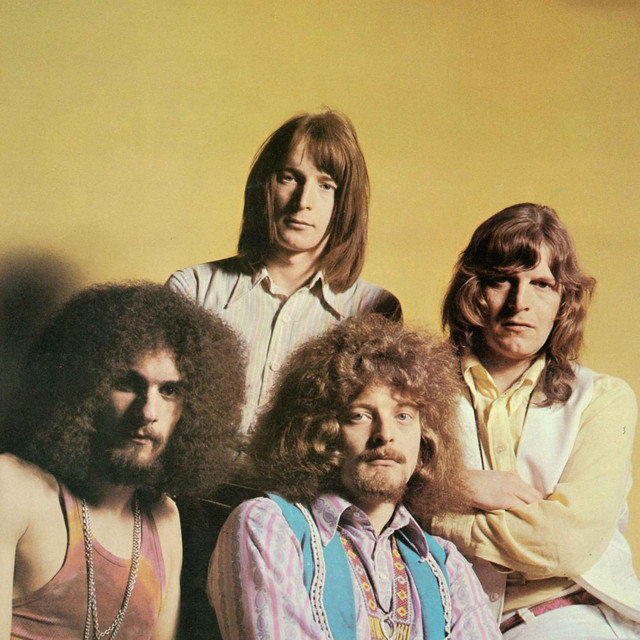


Tone Stevens

Ronnie Montrose

Aynsley Dunbar Retaliation