Data may be outdated
Last updated: 9 months ago — Click refresh to get the latest statistics.
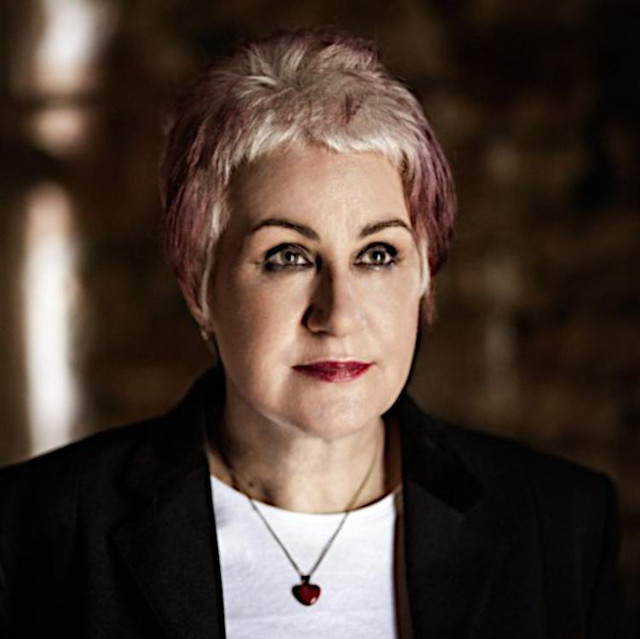
Born in the small northeast England university town of Durham on March 8, 1958, Pauline Murray was exactly the right age and in exactly the right place to get caught up in the first flush of punk, circa 1976. Along with her hometown friends Neale Floyd (guitar), Robert Blamire (bass), Fred Purser (guitar and keyboards), and Gary Smallman (drums), <a href="spotify:artist:7d7q5Y1p2QWS4QRAhTQR5E">Murray</a> formed <a href="spotify:artist:0XLpzWw7BLdlsf32qlMXKV">Penetration</a> in early 1977, and by the end of the year, the group had signed with <a href="spotify:search:label%3A%22Virgin+Records%22">Virgin Records</a> and released one of the great punk singles of the era, "Don't Dictate." The usual difficulties of being a young and inexperienced band intervened, and <a href="spotify:artist:0XLpzWw7BLdlsf32qlMXKV">Penetration</a>'s debut album, Moving Targets, didn't come out until nearly a year later. In another sadly typical punk scenario, <a href="spotify:artist:0XLpzWw7BLdlsf32qlMXKV">Penetration</a>'s second album, 1979's Coming Up for Air, was an over-produced (by <a href="spotify:artist:7fGW0xHsS8qa4W9KeHOQqN">Steve Lillywhite</a>), underwritten mess with little of the debut's energy, and with the release of an officially sanctioned live-and-demos bootleg, Race Against Time, <a href="spotify:artist:0XLpzWw7BLdlsf32qlMXKV">Penetration</a> split up in late 1979.
In most cases, that would be that, discounting the possibility of a '90s punk nostalgia reunion tour, but Pauline Murray was just getting started. Moving from Newcastle to the more artistically friendly climate of Manchester, <a href="spotify:artist:7d7q5Y1p2QWS4QRAhTQR5E">Murray</a> hooked up with producer <a href="spotify:artist:0K0Cb0h8kpL0AsoxRGTcNb">Martin Hannett</a> and began a solo career. <a href="spotify:artist:0K0Cb0h8kpL0AsoxRGTcNb">Hannett</a> matched <a href="spotify:artist:7d7q5Y1p2QWS4QRAhTQR5E">Murray</a> up with his own group, the Invisible Girls, which had previously backed Mancunian poet <a href="spotify:artist:0EOkMBYWbDnVqwfHA4zq32">John Cooper Clarke</a>. With <a href="spotify:artist:0K0Cb0h8kpL0AsoxRGTcNb">Hannett</a> on guitar and bass, Vini Reilly (who was pursuing a concurrent solo career as <a href="spotify:artist:7fh7bwX9qV60tLxxsp9bTe">the Durutti Column</a>) and Dave Rowbotham on guitar, <a href="spotify:artist:7d7q5Y1p2QWS4QRAhTQR5E">Murray</a>'s ex-<a href="spotify:artist:0XLpzWw7BLdlsf32qlMXKV">Penetration</a> bandmate Blamire on bass, <a href="spotify:artist:4U9EePwNXlVy1PGXoI09Ae">Steve Hopkins</a> on keyboards, and <a href="spotify:artist:2DxlS3lTLFIq70S7ap5H3y">Buzzcock</a> John Maher on drums, <a href="spotify:artist:7d7q5Y1p2QWS4QRAhTQR5E">Murray</a> moved 180 degrees from <a href="spotify:artist:0XLpzWw7BLdlsf32qlMXKV">Penetration</a>'s buzzsaw punk roots. Under <a href="spotify:artist:0K0Cb0h8kpL0AsoxRGTcNb">Hannett</a>'s direction, Murray & the Invisible Girls made ethereal, occasionally beautiful pop records that in retrospect sound like a possible influence on <a href="spotify:artist:5Wabl1lPdNOeIn0SQ5A1mp">the Cocteau Twins</a>, <a href="spotify:artist:13ccXrK7AmXb4TddMkE7jy">Everything but the Girl</a>, and nearly everything that came out on the <a href="spotify:search:label%3A%22Cherry+Red%22">Cherry Red</a> label between 1981 and 1987. The mysterious, lovely "Dream Sequences" single was released in August 1980, with the Pauline Murray & the Invisible Girls album following the next month and the non-LP "Mr. X" single in November of the same year. The Searching for Heaven EP came out in April of 1981, providing <a href="spotify:artist:7d7q5Y1p2QWS4QRAhTQR5E">Murray</a> with the biggest hit of her career, but the breakneck pace couldn't be maintained. Hampered by an increasingly severe heroin addiction that would contribute to his death in 1991, <a href="spotify:artist:0K0Cb0h8kpL0AsoxRGTcNb">Hannett</a> broke up the Invisible Girls, leaving <a href="spotify:artist:7d7q5Y1p2QWS4QRAhTQR5E">Murray</a> to reconstruct her musical career on her own.
Retaining her boyfriend Blamire on guitar, bass, and keyboards, <a href="spotify:artist:7d7q5Y1p2QWS4QRAhTQR5E">Murray</a> returned in the mid-'80s as Pauline Murray & the Storm. Only two singles were released, a cover of <a href="spotify:artist:3UvcmAOZt64oKpP95f6MMM">Big Star</a>'s doomy "Holocaust" in 1984 and original composition "New Age" in 1986. Confusingly, tracks from both those singles, plus some new material, came out in February 1987 on the EP Hong Kong, credited to Pauline Murray & the Saint. <a href="spotify:artist:7d7q5Y1p2QWS4QRAhTQR5E">Murray</a> then ditched the band names entirely for her next two releases, the This Thing Called Love EP and the album Storm Clouds, both released in 1989. Engagingly brooding, albeit extremely similar to mid-period <a href="spotify:artist:1n65zfwYIj5kKEtNgxUlWb">Siouxsie and the Banshees</a>, Storm Clouds was <a href="spotify:artist:7d7q5Y1p2QWS4QRAhTQR5E">Murray</a>'s recording farewell; she and Blamire retired from the music business at the dawn of the '90s. ~ Stewart Mason, Rovi
In most cases, that would be that, discounting the possibility of a '90s punk nostalgia reunion tour, but Pauline Murray was just getting started. Moving from Newcastle to the more artistically friendly climate of Manchester, <a href="spotify:artist:7d7q5Y1p2QWS4QRAhTQR5E">Murray</a> hooked up with producer <a href="spotify:artist:0K0Cb0h8kpL0AsoxRGTcNb">Martin Hannett</a> and began a solo career. <a href="spotify:artist:0K0Cb0h8kpL0AsoxRGTcNb">Hannett</a> matched <a href="spotify:artist:7d7q5Y1p2QWS4QRAhTQR5E">Murray</a> up with his own group, the Invisible Girls, which had previously backed Mancunian poet <a href="spotify:artist:0EOkMBYWbDnVqwfHA4zq32">John Cooper Clarke</a>. With <a href="spotify:artist:0K0Cb0h8kpL0AsoxRGTcNb">Hannett</a> on guitar and bass, Vini Reilly (who was pursuing a concurrent solo career as <a href="spotify:artist:7fh7bwX9qV60tLxxsp9bTe">the Durutti Column</a>) and Dave Rowbotham on guitar, <a href="spotify:artist:7d7q5Y1p2QWS4QRAhTQR5E">Murray</a>'s ex-<a href="spotify:artist:0XLpzWw7BLdlsf32qlMXKV">Penetration</a> bandmate Blamire on bass, <a href="spotify:artist:4U9EePwNXlVy1PGXoI09Ae">Steve Hopkins</a> on keyboards, and <a href="spotify:artist:2DxlS3lTLFIq70S7ap5H3y">Buzzcock</a> John Maher on drums, <a href="spotify:artist:7d7q5Y1p2QWS4QRAhTQR5E">Murray</a> moved 180 degrees from <a href="spotify:artist:0XLpzWw7BLdlsf32qlMXKV">Penetration</a>'s buzzsaw punk roots. Under <a href="spotify:artist:0K0Cb0h8kpL0AsoxRGTcNb">Hannett</a>'s direction, Murray & the Invisible Girls made ethereal, occasionally beautiful pop records that in retrospect sound like a possible influence on <a href="spotify:artist:5Wabl1lPdNOeIn0SQ5A1mp">the Cocteau Twins</a>, <a href="spotify:artist:13ccXrK7AmXb4TddMkE7jy">Everything but the Girl</a>, and nearly everything that came out on the <a href="spotify:search:label%3A%22Cherry+Red%22">Cherry Red</a> label between 1981 and 1987. The mysterious, lovely "Dream Sequences" single was released in August 1980, with the Pauline Murray & the Invisible Girls album following the next month and the non-LP "Mr. X" single in November of the same year. The Searching for Heaven EP came out in April of 1981, providing <a href="spotify:artist:7d7q5Y1p2QWS4QRAhTQR5E">Murray</a> with the biggest hit of her career, but the breakneck pace couldn't be maintained. Hampered by an increasingly severe heroin addiction that would contribute to his death in 1991, <a href="spotify:artist:0K0Cb0h8kpL0AsoxRGTcNb">Hannett</a> broke up the Invisible Girls, leaving <a href="spotify:artist:7d7q5Y1p2QWS4QRAhTQR5E">Murray</a> to reconstruct her musical career on her own.
Retaining her boyfriend Blamire on guitar, bass, and keyboards, <a href="spotify:artist:7d7q5Y1p2QWS4QRAhTQR5E">Murray</a> returned in the mid-'80s as Pauline Murray & the Storm. Only two singles were released, a cover of <a href="spotify:artist:3UvcmAOZt64oKpP95f6MMM">Big Star</a>'s doomy "Holocaust" in 1984 and original composition "New Age" in 1986. Confusingly, tracks from both those singles, plus some new material, came out in February 1987 on the EP Hong Kong, credited to Pauline Murray & the Saint. <a href="spotify:artist:7d7q5Y1p2QWS4QRAhTQR5E">Murray</a> then ditched the band names entirely for her next two releases, the This Thing Called Love EP and the album Storm Clouds, both released in 1989. Engagingly brooding, albeit extremely similar to mid-period <a href="spotify:artist:1n65zfwYIj5kKEtNgxUlWb">Siouxsie and the Banshees</a>, Storm Clouds was <a href="spotify:artist:7d7q5Y1p2QWS4QRAhTQR5E">Murray</a>'s recording farewell; she and Blamire retired from the music business at the dawn of the '90s. ~ Stewart Mason, Rovi
Monthly Listeners
1,076
Monthly Listeners History
Track the evolution of monthly listeners over the last 28 days.
Followers
1,254
Followers History
Track the evolution of followers over the last 28 days.
Top Cities
67 listeners

18 listeners
16 listeners

15 listeners

14 listeners
Related Artists



Fay Ray
Indians in Moscow

Jane Kennaway

Dalek I Love You
The Kamikaze Pilots


Global Infantilists


Social Security

They Must Be Russians

Random Hold

Scars

Afraid Of Mice

The Twinsets


Lori & the Chameleons