
Data may be outdated
Last updated: 9 months ago — Click refresh to get the latest statistics.
With his lyrical, harmonically rich style and warm sense for group interplay, pianist Richie Beirach emerged in the '70s as a highly respected jazz artist. Schooled in classical and jazz, Beirach spent several early years with <a href="spotify:artist:0FMucZsEnCxs5pqBjHjIc8">Stan Getz</a> before joining saxophonist <a href="spotify:artist:429bUEZe2Hq5QJvO2CmhLn">David Liebman</a> on albums like 1973's Lookout Farm and 1978's Omerta. From there, he toured and recorded with such luminaries as <a href="spotify:artist:3rxeQlsv0Sc2nyYaZ5W71T">Chet Baker</a>, <a href="spotify:artist:4YNvbaOaqp5pzC5US5t48k">Lee Konitz</a>, <a href="spotify:artist:1OCdpTg8d7Ehpj8B9j4iqa">John Abercrombie</a>, and others. He also issued his own highly regarded albums for <a href="spotify:search:label%3A%22ECM%22">ECM</a>, including 1976's Eon and 1979's Elm. His ongoing creative partnership with <a href="spotify:artist:429bUEZe2Hq5QJvO2CmhLn">Liebman</a> led to the formation of the forward-thinking <a href="spotify:artist:3i56tClx1CsaoGJC8BKlhz">Quest</a> ensemble, as well as continued duets on albums like 1991's Chant and 2016's Balladscapes.
Born Richard Alan Beirach on May 23, 1947 in Brooklyn, New York, Beirach became interested in music at a young age and first started taking piano lessons at five. Studying classical music with noted pianist and composer James Palmieri, he developed a strong technique and ear for harmony. However, it wasn't until his teens that he discovered jazz after hearing <a href="spotify:artist:35iymrFS4VnsKn35ebHKX9">Red Garland</a>'s version of "Billy Boy." By the early '60s, he was splitting his time between classical lessons with Palmieri, working as a longshoreman, and playing in jazz jam sessions alongside artists like <a href="spotify:artist:4YNvbaOaqp5pzC5US5t48k">Lee Konitz</a> and <a href="spotify:artist:0fTHKjepK5HWOrb2rkS5Em">Freddie Hubbard</a>. Hoping to expand his jazz studies, he enrolled at Boston's Berklee College of Music, where he stayed for a year before transferring to the Manhattan School of Music to study composition with Ludmila Ulehla.
After graduating in 1972 with his Master of Music degree, Beirach quickly found work playing with <a href="spotify:artist:0FMucZsEnCxs5pqBjHjIc8">Stan Getz</a> alongside bassist <a href="spotify:artist:1bqaQBqbqbEXPxLF0v6AAH">Dave Holland</a> and drummer <a href="spotify:artist:7rDjbKTLlpNYJRWMm7QVxU">Jack DeJohnette</a>. From there, he joined saxophonist <a href="spotify:artist:429bUEZe2Hq5QJvO2CmhLn">David Liebman</a> for his landmark 1973 septet fusion album Lookout Farm. Beirach and <a href="spotify:artist:429bUEZe2Hq5QJvO2CmhLn">Liebman</a> formed a creative bond, and went on to collaborate on albums like 1975's Night Scape, 1977's Forgotten Fantasies, and 1978's Omerta. It was also during this period that the pianist made his solo debut with the 1976 trio date Eon with drummer <a href="spotify:artist:0IOnvvXiTnxF39PdVGuBQu">Eliot Zigmund</a> and bassist <a href="spotify:artist:01RbLDQjYyfcVqlOmWRAb1">Frank Tusa</a> on <a href="spotify:search:label%3A%22ECM%22">ECM</a>. More well-received sessions followed, including 1977's Hubris and 1979's Elm. There were also sessions and tours with <a href="spotify:artist:3rxeQlsv0Sc2nyYaZ5W71T">Chet Baker</a>, <a href="spotify:artist:14RXohtx6NiBGFTW8IdmAK">John Scofield</a>, and <a href="spotify:artist:1OCdpTg8d7Ehpj8B9j4iqa">John Abercrombie</a>.
During the '80s, Beirach found himself continuing to balance his own work as a leader with further work alongside <a href="spotify:artist:3rxeQlsv0Sc2nyYaZ5W71T">Baker</a>, trumpeter <a href="spotify:artist:3Suh6KZUGb2LxOA0MPynZN">John McNeil</a>, and others. In 1981, he paid homage to one of his major influences with Elegy for Bill Evans, joined by bassist <a href="spotify:artist:6o1OpKGBkE7eSYjtaMfQKe">George Mraz</a> and drummer <a href="spotify:artist:4PqV4TEgVltnn4N47ODKV6">Al Foster</a>. He also formed the stylistically expansive post-bop outfit <a href="spotify:artist:3i56tClx1CsaoGJC8BKlhz">Quest</a> with <a href="spotify:artist:429bUEZe2Hq5QJvO2CmhLn">Liebman</a>, bringing on board at various times drummers <a href="spotify:artist:4PqV4TEgVltnn4N47ODKV6">Foster</a> and <a href="spotify:artist:5DFipPOMNcZT3XMGx59s5I">Billy Hart</a> and bassists <a href="spotify:artist:6o1OpKGBkE7eSYjtaMfQKe">Mraz</a> and <a href="spotify:artist:6RK29G5At2xKQBDqZV960u">Ron McClure</a>. Together they issued a series of adventurous albums including 1986's Quest II, 1988's Natural Selection, and 1990's Of One Mind. Outside of the band, Beirach devoted increasing time to his solo piano work, releasing 1985's ambitious Antarctica, 1987's Common Heart, and 1989's Some Other Time: A Tribute to Chet Baker.
He returned to more collaborative work in the '90s, including albums with saxophonist <a href="spotify:artist:2bznm4QNyfgutcxCbRAfwH">George Coleman</a>, bassist <a href="spotify:artist:6RK29G5At2xKQBDqZV960u">McClure</a>, and <a href="spotify:artist:429bUEZe2Hq5QJvO2CmhLn">Liebman</a>. In 1997, he delivered the trio album Trust with <a href="spotify:artist:1bqaQBqbqbEXPxLF0v6AAH">Holland</a> and <a href="spotify:artist:7rDjbKTLlpNYJRWMm7QVxU">DeJohnette</a>. Snow Leopard, also a trio date, followed a year later. There also were sessions with <a href="spotify:artist:7xHUfrXaMkL3lRpJxO6QdI">Conrad Herwig</a>, <a href="spotify:artist:77jN62YC5c95ogzKlDdcqm">Michel Graillier</a>, <a href="spotify:artist:1e7dyNeEIMdecAaeWvMmK0">Jamie Baum</a>, Steve Davis, and more. He next issued the standards albums What Is This Thing Called Love? and Romantic Rhapsody in 2002 and 2003, followed by the 2003 classical-themed effort No Borders. Also around this time, Beirach relocated to Germany, where he accepted a position as professor of jazz piano at the University of Music and Theatre "Felix Mendelssohn Bartholdy" Leipzig.
Since then, Beirach has remained prolific, issuing a steady stream of solo and small-group sessions, including 2003's Round About Monteverdi, 2008's Piano Solo, and 2010's Quest for Freedom with <a href="spotify:artist:429bUEZe2Hq5QJvO2CmhLn">Liebman</a> and <a href="spotify:artist:5ElbcIDCAB1mhTzTlR9RN5">the Frankfurt Radio Bigband</a>. Also in 2010, he and <a href="spotify:artist:429bUEZe2Hq5QJvO2CmhLn">Liebman</a> joined <a href="spotify:artist:4YNvbaOaqp5pzC5US5t48k">Lee Konitz</a> for Knowinglee. The following year, he released Impressions of Tokyo: Ancient City of the Future, and paired again with <a href="spotify:artist:429bUEZe2Hq5QJvO2CmhLn">Liebman</a> for Unspoken. Varuna followed in 2015 and found the pianist collaborating with singer <a href="spotify:artist:56QkPwRVOgyQSwuCm5QkoB">Laurie Antonioli</a>. He then reunited once again with <a href="spotify:artist:429bUEZe2Hq5QJvO2CmhLn">Liebman</a> for 2016's Balladscapes. In 2018, both Beirach and <a href="spotify:artist:429bUEZe2Hq5QJvO2CmhLn">Liebman</a> joined vocalist <a href="spotify:artist:3HxhoHVhXgdhLdENAwirS6">Fred Farell</a> for Fred Farell: Distant Song. Crossing Borders arrived the following year and found Beirach backed by violinist <a href="spotify:artist:20gZxG96Gyyp8nLjPghBd5">Gregor Huebner</a> and Germany's <a href="spotify:artist:5oldzkZrHypxJpr1ri05Fu">WDR Big Band</a>. ~ Matt Collar, Rovi
Born Richard Alan Beirach on May 23, 1947 in Brooklyn, New York, Beirach became interested in music at a young age and first started taking piano lessons at five. Studying classical music with noted pianist and composer James Palmieri, he developed a strong technique and ear for harmony. However, it wasn't until his teens that he discovered jazz after hearing <a href="spotify:artist:35iymrFS4VnsKn35ebHKX9">Red Garland</a>'s version of "Billy Boy." By the early '60s, he was splitting his time between classical lessons with Palmieri, working as a longshoreman, and playing in jazz jam sessions alongside artists like <a href="spotify:artist:4YNvbaOaqp5pzC5US5t48k">Lee Konitz</a> and <a href="spotify:artist:0fTHKjepK5HWOrb2rkS5Em">Freddie Hubbard</a>. Hoping to expand his jazz studies, he enrolled at Boston's Berklee College of Music, where he stayed for a year before transferring to the Manhattan School of Music to study composition with Ludmila Ulehla.
After graduating in 1972 with his Master of Music degree, Beirach quickly found work playing with <a href="spotify:artist:0FMucZsEnCxs5pqBjHjIc8">Stan Getz</a> alongside bassist <a href="spotify:artist:1bqaQBqbqbEXPxLF0v6AAH">Dave Holland</a> and drummer <a href="spotify:artist:7rDjbKTLlpNYJRWMm7QVxU">Jack DeJohnette</a>. From there, he joined saxophonist <a href="spotify:artist:429bUEZe2Hq5QJvO2CmhLn">David Liebman</a> for his landmark 1973 septet fusion album Lookout Farm. Beirach and <a href="spotify:artist:429bUEZe2Hq5QJvO2CmhLn">Liebman</a> formed a creative bond, and went on to collaborate on albums like 1975's Night Scape, 1977's Forgotten Fantasies, and 1978's Omerta. It was also during this period that the pianist made his solo debut with the 1976 trio date Eon with drummer <a href="spotify:artist:0IOnvvXiTnxF39PdVGuBQu">Eliot Zigmund</a> and bassist <a href="spotify:artist:01RbLDQjYyfcVqlOmWRAb1">Frank Tusa</a> on <a href="spotify:search:label%3A%22ECM%22">ECM</a>. More well-received sessions followed, including 1977's Hubris and 1979's Elm. There were also sessions and tours with <a href="spotify:artist:3rxeQlsv0Sc2nyYaZ5W71T">Chet Baker</a>, <a href="spotify:artist:14RXohtx6NiBGFTW8IdmAK">John Scofield</a>, and <a href="spotify:artist:1OCdpTg8d7Ehpj8B9j4iqa">John Abercrombie</a>.
During the '80s, Beirach found himself continuing to balance his own work as a leader with further work alongside <a href="spotify:artist:3rxeQlsv0Sc2nyYaZ5W71T">Baker</a>, trumpeter <a href="spotify:artist:3Suh6KZUGb2LxOA0MPynZN">John McNeil</a>, and others. In 1981, he paid homage to one of his major influences with Elegy for Bill Evans, joined by bassist <a href="spotify:artist:6o1OpKGBkE7eSYjtaMfQKe">George Mraz</a> and drummer <a href="spotify:artist:4PqV4TEgVltnn4N47ODKV6">Al Foster</a>. He also formed the stylistically expansive post-bop outfit <a href="spotify:artist:3i56tClx1CsaoGJC8BKlhz">Quest</a> with <a href="spotify:artist:429bUEZe2Hq5QJvO2CmhLn">Liebman</a>, bringing on board at various times drummers <a href="spotify:artist:4PqV4TEgVltnn4N47ODKV6">Foster</a> and <a href="spotify:artist:5DFipPOMNcZT3XMGx59s5I">Billy Hart</a> and bassists <a href="spotify:artist:6o1OpKGBkE7eSYjtaMfQKe">Mraz</a> and <a href="spotify:artist:6RK29G5At2xKQBDqZV960u">Ron McClure</a>. Together they issued a series of adventurous albums including 1986's Quest II, 1988's Natural Selection, and 1990's Of One Mind. Outside of the band, Beirach devoted increasing time to his solo piano work, releasing 1985's ambitious Antarctica, 1987's Common Heart, and 1989's Some Other Time: A Tribute to Chet Baker.
He returned to more collaborative work in the '90s, including albums with saxophonist <a href="spotify:artist:2bznm4QNyfgutcxCbRAfwH">George Coleman</a>, bassist <a href="spotify:artist:6RK29G5At2xKQBDqZV960u">McClure</a>, and <a href="spotify:artist:429bUEZe2Hq5QJvO2CmhLn">Liebman</a>. In 1997, he delivered the trio album Trust with <a href="spotify:artist:1bqaQBqbqbEXPxLF0v6AAH">Holland</a> and <a href="spotify:artist:7rDjbKTLlpNYJRWMm7QVxU">DeJohnette</a>. Snow Leopard, also a trio date, followed a year later. There also were sessions with <a href="spotify:artist:7xHUfrXaMkL3lRpJxO6QdI">Conrad Herwig</a>, <a href="spotify:artist:77jN62YC5c95ogzKlDdcqm">Michel Graillier</a>, <a href="spotify:artist:1e7dyNeEIMdecAaeWvMmK0">Jamie Baum</a>, Steve Davis, and more. He next issued the standards albums What Is This Thing Called Love? and Romantic Rhapsody in 2002 and 2003, followed by the 2003 classical-themed effort No Borders. Also around this time, Beirach relocated to Germany, where he accepted a position as professor of jazz piano at the University of Music and Theatre "Felix Mendelssohn Bartholdy" Leipzig.
Since then, Beirach has remained prolific, issuing a steady stream of solo and small-group sessions, including 2003's Round About Monteverdi, 2008's Piano Solo, and 2010's Quest for Freedom with <a href="spotify:artist:429bUEZe2Hq5QJvO2CmhLn">Liebman</a> and <a href="spotify:artist:5ElbcIDCAB1mhTzTlR9RN5">the Frankfurt Radio Bigband</a>. Also in 2010, he and <a href="spotify:artist:429bUEZe2Hq5QJvO2CmhLn">Liebman</a> joined <a href="spotify:artist:4YNvbaOaqp5pzC5US5t48k">Lee Konitz</a> for Knowinglee. The following year, he released Impressions of Tokyo: Ancient City of the Future, and paired again with <a href="spotify:artist:429bUEZe2Hq5QJvO2CmhLn">Liebman</a> for Unspoken. Varuna followed in 2015 and found the pianist collaborating with singer <a href="spotify:artist:56QkPwRVOgyQSwuCm5QkoB">Laurie Antonioli</a>. He then reunited once again with <a href="spotify:artist:429bUEZe2Hq5QJvO2CmhLn">Liebman</a> for 2016's Balladscapes. In 2018, both Beirach and <a href="spotify:artist:429bUEZe2Hq5QJvO2CmhLn">Liebman</a> joined vocalist <a href="spotify:artist:3HxhoHVhXgdhLdENAwirS6">Fred Farell</a> for Fred Farell: Distant Song. Crossing Borders arrived the following year and found Beirach backed by violinist <a href="spotify:artist:20gZxG96Gyyp8nLjPghBd5">Gregor Huebner</a> and Germany's <a href="spotify:artist:5oldzkZrHypxJpr1ri05Fu">WDR Big Band</a>. ~ Matt Collar, Rovi
Monthly Listeners
3,259
Monthly Listeners History
Track the evolution of monthly listeners over the last 28 days.
Followers
4,052
Followers History
Track the evolution of followers over the last 28 days.
Top Cities
77 listeners

46 listeners

40 listeners

32 listeners

30 listeners

Related Artists

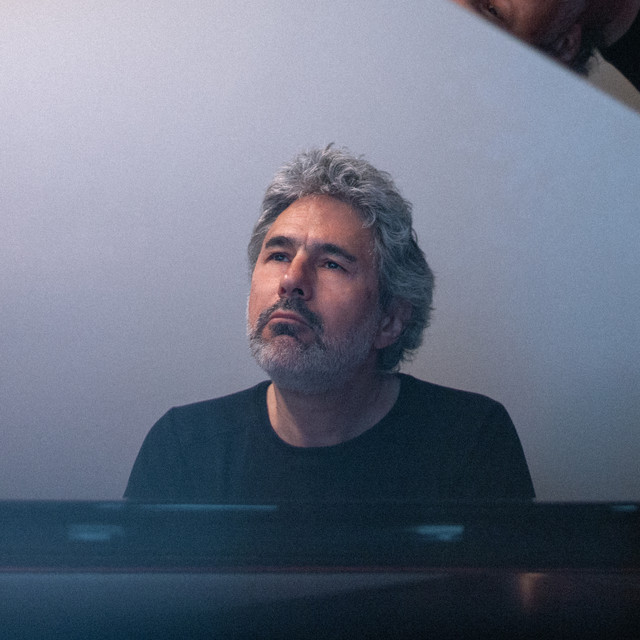



Martin Gasselsberger

Eric Surmenian


Elan Mehler
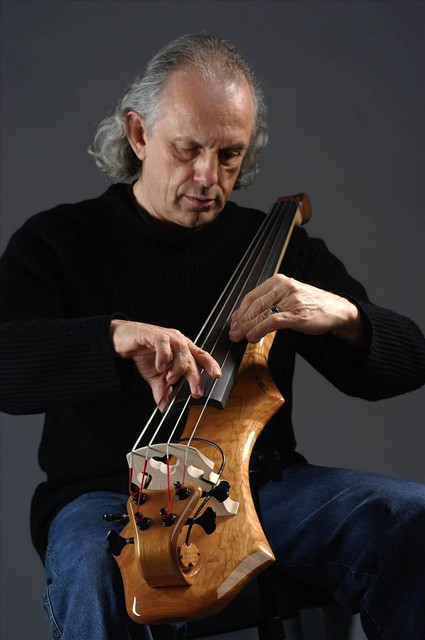
David Friesen
Edwin Berg

Rudi Wilfer


Mike Nock
Sam Anning


Dennis Mitcheltree

Simon Nabatov

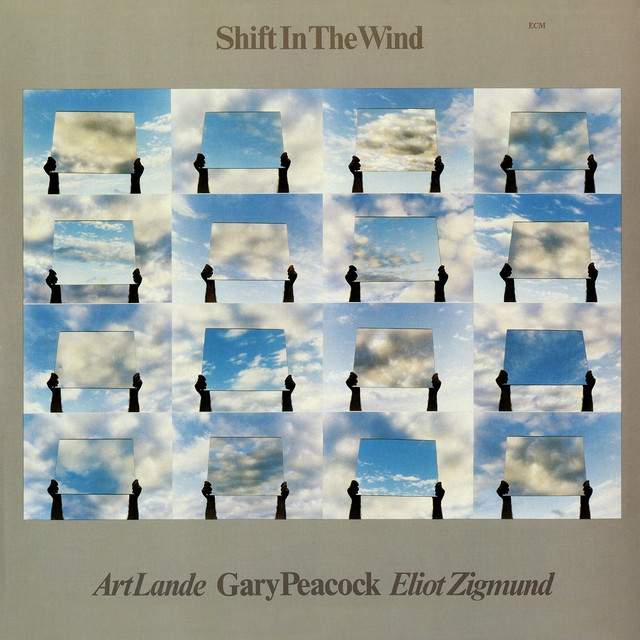
Eliot Zigmund


Damien Groleau

Thomas Clausen Trio


Marcin Grochowina

Vigleik Storaas
