Data may be outdated
Last updated: 9 months ago — Click refresh to get the latest statistics.
Regarded as the finest basso buffo of the 1930s through the early 1960s, Salvatore Baccaloni wielded a far more substantial voice than most practitioners of Italian comic roles. Indeed, in the earliest stages of his career, he essayed straight bass roles such as Sparafucile before being guided into his ultimate repertory by his girth, his gift for comedic timing and a richly plastic countenance. While his facility for mugging often led him over the top, his endearing persona usually deflected criticism. Appearances outside the confines of the opera house made Baccaloni something of a popular figure.
Baccaloni received his first musical training at the San Salvatore School from the age of five. At seven, he joined the choir school at the Sistine Chapel. After his voice broke, he turned from music and earned a degree in architecture from the Academy of Fine Arts in Rome. Heard at a private musicale by baritone Giuseppe Kashmann, Baccaloni was invited to study with the noted singer and, after two years, made his debut at the Teatro Adriano Rome as Bartolo in Barbiere di Siviglia. Over the ensuing four years, Baccaloni appeared in numerous smaller Italian houses. A performance of Louise in Bologna was heard by Toscanini who facilitated his engagement by La Scala where the bass was heard as a leading artist until 1940.
Toscanini urged Baccaloni to consider concentrating on comic roles, noting that these were usually performed by older singers who had lost their voices, whereas Baccaloni had a splendid voice and an undeniable gift for comedy. Thus, the bass entered a new phase of his still-young career, performing such roles as Dulcamara, Leporello, Don Pasquale, and Falstaff. So thorough was Baccaloni's conquest of this repertory that in 1934 he was made a Knight of the Crown of Italy.
During Baccaloni's years with La Scala, he was a welcome guest elsewhere. In 1928, he made his Covent Garden debut as Varlaam in a Boris Godunov featuring <a href="spotify:artist:1A6JXyIYY4ZhWxdLTLt3kR">Chaliapin</a> in Russian while the rest of the cast sang in Italian. He also sang a mellifluous Timur in Turandot. The following year, Baccaloni repeated his Varlaam and was mentioned as having provided "one of the best pieces of singing" all evening. His appearance in Manon Lescaut was also cited as exemplary.
Baccaloni's American debut took place with the Chicago Opera on October 29, 1930 when his Melitone in La Forza del Destino was heard with Muzio as Leonora. He later appeared with the San Francisco Opera beginning in 1938 as Melitone, Leporello, and Pasquale and continued to be a presence there into the 1960s. While Covent Garden saw too little of him in the 1930s, Baccaloni established a positive relationship with the budding Glyndebourne Festival south of London. There, from 1936 through 1939, he sang Leporello, Don Pasquale, Bartolo, Don Alfonso, and even Osmin and set standards for the combining of comic realization with smooth vocalization.
Baccaloni's Metropolitan Opera debut took place on December 7, 1940, as <a href="spotify:artist:4NJhFmfw43RLBLjQvxDuRS">Mozart</a>'s Bartolo and began an association that lasted until 1962, one in which he sang 297 performances embracing 15 different roles. <a href="spotify:artist:1ucvqiCLdOj84dNEKXS5mr">Virgil Thomson</a> wrote of his Don Pasquale in 1941 as "the finest piece of lyric acting in the comic vein I have ever seen, not excepting <a href="spotify:artist:1A6JXyIYY4ZhWxdLTLt3kR">Chaliapin</a>."
In 1957, Baccaloni made his film debut in Full of Life featuring Judy Holliday.
Baccaloni received his first musical training at the San Salvatore School from the age of five. At seven, he joined the choir school at the Sistine Chapel. After his voice broke, he turned from music and earned a degree in architecture from the Academy of Fine Arts in Rome. Heard at a private musicale by baritone Giuseppe Kashmann, Baccaloni was invited to study with the noted singer and, after two years, made his debut at the Teatro Adriano Rome as Bartolo in Barbiere di Siviglia. Over the ensuing four years, Baccaloni appeared in numerous smaller Italian houses. A performance of Louise in Bologna was heard by Toscanini who facilitated his engagement by La Scala where the bass was heard as a leading artist until 1940.
Toscanini urged Baccaloni to consider concentrating on comic roles, noting that these were usually performed by older singers who had lost their voices, whereas Baccaloni had a splendid voice and an undeniable gift for comedy. Thus, the bass entered a new phase of his still-young career, performing such roles as Dulcamara, Leporello, Don Pasquale, and Falstaff. So thorough was Baccaloni's conquest of this repertory that in 1934 he was made a Knight of the Crown of Italy.
During Baccaloni's years with La Scala, he was a welcome guest elsewhere. In 1928, he made his Covent Garden debut as Varlaam in a Boris Godunov featuring <a href="spotify:artist:1A6JXyIYY4ZhWxdLTLt3kR">Chaliapin</a> in Russian while the rest of the cast sang in Italian. He also sang a mellifluous Timur in Turandot. The following year, Baccaloni repeated his Varlaam and was mentioned as having provided "one of the best pieces of singing" all evening. His appearance in Manon Lescaut was also cited as exemplary.
Baccaloni's American debut took place with the Chicago Opera on October 29, 1930 when his Melitone in La Forza del Destino was heard with Muzio as Leonora. He later appeared with the San Francisco Opera beginning in 1938 as Melitone, Leporello, and Pasquale and continued to be a presence there into the 1960s. While Covent Garden saw too little of him in the 1930s, Baccaloni established a positive relationship with the budding Glyndebourne Festival south of London. There, from 1936 through 1939, he sang Leporello, Don Pasquale, Bartolo, Don Alfonso, and even Osmin and set standards for the combining of comic realization with smooth vocalization.
Baccaloni's Metropolitan Opera debut took place on December 7, 1940, as <a href="spotify:artist:4NJhFmfw43RLBLjQvxDuRS">Mozart</a>'s Bartolo and began an association that lasted until 1962, one in which he sang 297 performances embracing 15 different roles. <a href="spotify:artist:1ucvqiCLdOj84dNEKXS5mr">Virgil Thomson</a> wrote of his Don Pasquale in 1941 as "the finest piece of lyric acting in the comic vein I have ever seen, not excepting <a href="spotify:artist:1A6JXyIYY4ZhWxdLTLt3kR">Chaliapin</a>."
In 1957, Baccaloni made his film debut in Full of Life featuring Judy Holliday.
Monthly Listeners
342
Monthly Listeners History
Track the evolution of monthly listeners over the last 28 days.
Followers
253
Followers History
Track the evolution of followers over the last 28 days.
Top Cities
9 listeners

8 listeners

6 listeners
5 listeners
4 listeners

Related Artists
Lina Pagliughi
Charles Cambon
José Luccioni
Luigi Infantino
Paul Cabanel
Henri Medus
Charles Kullman

John Garris
Anibal Vela
Antonio Cassinelli
Nicola Moscona

Ljuba Welitsch


Orchester der Metropolitan Opera

Emilio Sagi-Barba
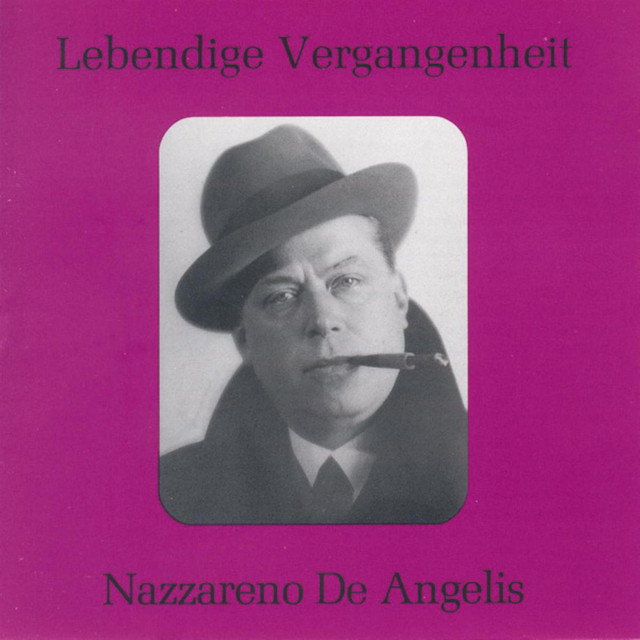
Nazzareno De Angelis
E.I.A.R. Symphony Orchestra Turin