Data may be outdated
Last updated: 2 weeks ago — Click refresh to get the latest statistics.
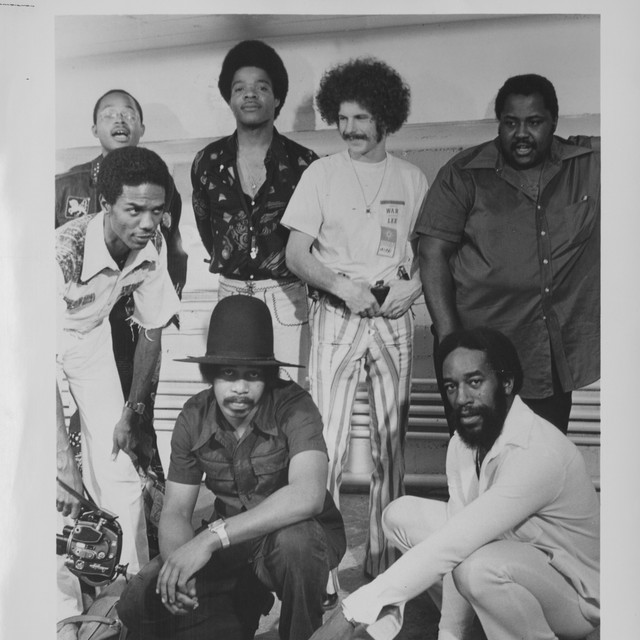
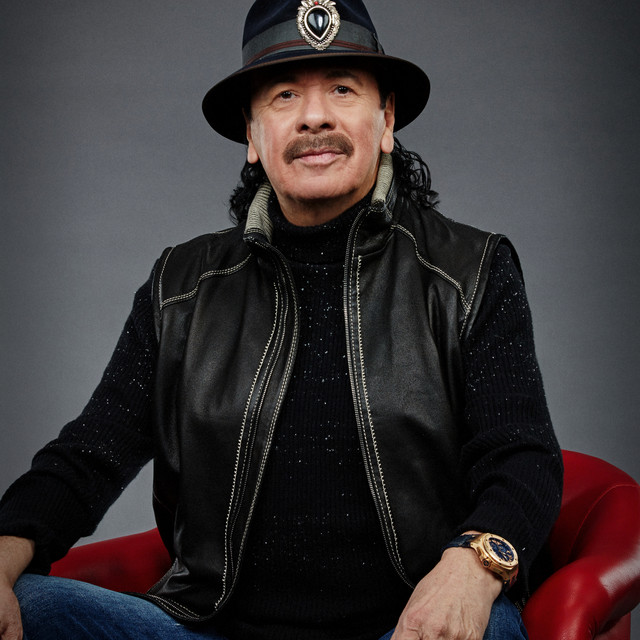
<a href="spotify:artist:7yGQgQiiKpg2k00JXf8hJk">Carlos Santana</a> formed the Santana Blues Band with guitarist keyboardist/singer <a href="spotify:artist:2O2kcKthTkrpLI5JpgrPh4">Gregg Rolie</a> in 1966. During the group's early days, the lineup was volatile, with the membership settling down to <a href="spotify:artist:7yGQgQiiKpg2k00JXf8hJk">Carlos</a>, <a href="spotify:artist:2O2kcKthTkrpLI5JpgrPh4">Rolie</a>, bassist David Brown, drummer <a href="spotify:artist:1n8LsK850ruMqeFvVpcDW9">Bob "Doc" Livingston</a>, and percussionist <a href="spotify:artist:1N3tM9SkDC5lYIDRVBBuiR">Marcus Malone</a> in 1967, around which time the group lost the "Blues Band" from their name. Promoter Bill Graham discovered the band and booked Santana to play his Fillmore West on June 16, 1968. The group soon landed a deal with <a href="spotify:search:label%3A%22Columbia+Records%22">Columbia Records</a>, which enlisted producer David Rubinson to capture the band playing the Fillmore West in December; these tapes were shelved until <a href="spotify:search:label%3A%22Columbia%2FLegacy%22">Columbia/Legacy</a> issued them in 1997 as Live at the Fillmore 1968.
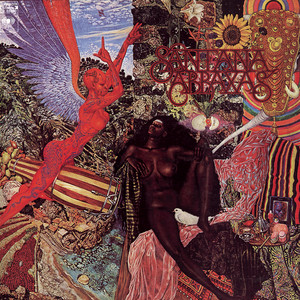
Prior to recording their first album in early 1969, Santana swapped Livingston and <a href="spotify:artist:1N3tM9SkDC5lYIDRVBBuiR">Malone</a> for <a href="spotify:artist:1ruEDrFZVTsTgtfWMJgN7b">Michael Shrieve</a> and Mike Carabello, adding percussionist <a href="spotify:artist:1DG1kERIyDVyUYZekOaEJt">José Chepitó Areas</a> as well. This incarnation recorded the group's eponymous debut, then set out on tour, where they had a career-making appearance at the Woodstock festival in August 1969. That was the same month Santana appeared in the record stores, and it was a swift success, climbing its way to number four on Billboard's album charts during the course of its two-year run on the charts. The album was assisted by Santana's show-stealing performance in 1970's Woodstock documentary and the single "Evil Ways," which peaked at number nine on Billboard's Hot 100 in 1970. In September of that year, Santana released Abraxas, which bested its predecessor: it peaked at number one, stayed on the charts for a year-and-a-half, and generated two major hits with "Black Magic Woman," which reached number four on Billboard, and "Oye Como Va," which peaked at 13.
The ranks of Santana expanded on 1971's Santana -- commonly called Santana III -- with guitarist <a href="spotify:artist:4YLlWUd8PnnyGVKxqoebs7">Neil Schon</a> joining the fold and percussionist <a href="spotify:artist:65kap9egGUKOpb84xAutqX">Coke Escovedo</a> replacing an ailing <a href="spotify:artist:1DG1kERIyDVyUYZekOaEJt">Areas</a>. Santana III became the third successive smash for the band, peaking at number one and generating a big hit with "Everybody's Everything," which reached number 12 on Billboard's Hot 100.
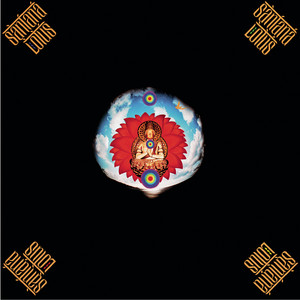
Santana III marked the end of the classic lineup of the band. Upon the conclusion of its supporting tour, the group broke up, with <a href="spotify:artist:7yGQgQiiKpg2k00JXf8hJk">Carlos</a> retaining the rights to the band name. He soon assembled a different version of the band featuring <a href="spotify:artist:2O2kcKthTkrpLI5JpgrPh4">Rolie</a>, <a href="spotify:artist:4YLlWUd8PnnyGVKxqoebs7">Schon</a>, and <a href="spotify:artist:1DG1kERIyDVyUYZekOaEJt">Areas</a>, debuting this lineup on Caravanserai, a 1972 album that found the guitarist pushing forward into jazz. Although the album peaked at eight on Billboard and earned a Grammy nomination for Best Pop Instrumental Performance with Vocal Coloring, it ceased the group's commercial momentum, which did nothing to deter the guitarist's appetite for musical exploration. Soon, he started dividing his time between his band and solo projects. First came Carlos Santana & Buddy Miles: Live!, an LP that captured performances from their joint tour of December 1971-April 1972. Next, he teamed with guitarist <a href="spotify:artist:4v0R1feRiuCDch7aAheVhY">John McLaughlin</a> and his fusion band the <a href="spotify:artist:3Ao7NH7lRyQAeKQg2mlTcO">Mahavishnu Orchestra</a> to record 1973's Love Devotion Surrender. This album was informed by Santana's increased interest in spirituality. <a href="spotify:artist:4v0R1feRiuCDch7aAheVhY">McLaughlin</a> introduced him to his guru Sri Chinmoy, and <a href="spotify:artist:7yGQgQiiKpg2k00JXf8hJk">Carlos</a> soon became a disciple, adopting the name Devadip -- meaning "the lamp, light, and eye of God" -- in the process. Along these lines, <a href="spotify:artist:7yGQgQiiKpg2k00JXf8hJk">Carlos</a> teamed with <a href="spotify:artist:0oKYiTD5CdNbrofRvM1dIr">Alice Coltrane</a> in 1974 for Illuminations, a jazz fusion duet album. That same year, the Santana band released the triple-live album Lotus, recorded in Japan; over the years, its reputation grew, and it would eventually be reissued by <a href="spotify:search:label%3A%22Columbia%2FLegacy%22">Columbia/Legacy</a> in a "complete edition" in 2017.
While he was expanding his musical and spiritual horizons, <a href="spotify:artist:7yGQgQiiKpg2k00JXf8hJk">Carlos</a> continued to keep his namesake band active; from this point forward, the membership was fluid, with musicians drifting in and out of the group on a regular basis. In 1973, a new lineup released Welcome, but its chart appearance illustrated how Caravanserai alienated some of the group's fans: it peaked at 25 on Billboard. Borboletta, released a year later, performed slightly better, reaching 20, but it was clear the band was in jeopardy of losing their audience, so <a href="spotify:artist:7yGQgQiiKpg2k00JXf8hJk">Carlos</a> decided to make 1976's Amigos as a commercially minded project. Reuniting with producer David Rubinson, the man who'd helmed the group's initial hits, Santana sounded slick and direct on Amigos, and their gambit paid off: the album peaked at number ten on the Billboard charts. Rubinson and Santana swiftly delivered a sequel in the form of Festival, which performed respectably upon its January 1977 release. By the end of the year, the band issued Moonflower, which scattered studio cuts among live tracks; it peaked at ten, partially on the strength of a cover of <a href="spotify:artist:2jgPkn6LuUazBoBk6vvjh5">the Zombies</a>' "She's Not There," which peaked at 27 -- their best showing on the Hot 100 since 1971. Another oldies cover -- "Stormy" by the <a href="spotify:artist:6XGJvNG372fPJ2TV2OoN0Z">Classics IV</a> -- was featured on 1978's Inner Secrets, an album that just scraped the Top 30.
<a href="spotify:artist:7yGQgQiiKpg2k00JXf8hJk">Carlos</a> released his first official solo album Oneness: Silver Dreams Golden Reality in March of 1979; the jazz-influenced album was billed to <a href="spotify:artist:7yGQgQiiKpg2k00JXf8hJk">Devadip</a>. Later that year, the Santana band returned with Marathon, a more commercial-oriented effort produced by <a href="spotify:artist:5tNV8b1D2iT3dQmSMaX0X2">Keith Olsen</a>, which featured the single "You Know That I Love You." Shortly afterward, <a href="spotify:artist:7yGQgQiiKpg2k00JXf8hJk">Carlos</a> released the solo album The Swing of Delight, a collaboration with Rubinson that was billed to <a href="spotify:artist:7yGQgQiiKpg2k00JXf8hJk">Devadip Carlos Santana</a>. The band bounced back in 1981 with Zebop!, which peaked at number nine thanks to the hit single "Winning." "Hold On," the lead single from 1982's Shangó, went to 15 on the Hot 100, taking its parent album to 22. A solo album, this time billed to "Carlos Santana" and called Havana Moon appeared in 1983, peaking at 31.
Following this prolific decade-and-a-half, <a href="spotify:artist:7yGQgQiiKpg2k00JXf8hJk">Carlos</a> started to slow the band's studio output in the '80s. Santana didn't return with a new album until 1985, when Beyond Appearances arrived in February of that year; its single "Say it Again" topped out at 45, five rungs higher than 50 that was the album's peak showing. Santana celebrated their 20th anniversary with a concert in 1986, but 1987's Freedom didn't make much of an impact on the charts, peaking at 95. <a href="spotify:artist:7yGQgQiiKpg2k00JXf8hJk">Carlos</a> went solo in 1987 with Blues for Salvador, an album that snagged him his first Grammy Award for its title track (Best Rock Instrumental Performance). A lavish box-set retrospective called Viva Santana! appeared in 1988 -- it would be certified gold -- and the Santana band returned in 1990 with Spirits Dancing in the Flesh, which turned out to be their last album for their longtime home of <a href="spotify:search:label%3A%22Columbia+Records%22">Columbia Records</a>.
Santana signed with <a href="spotify:search:label%3A%22Polydor%22">Polydor</a> for 1992's Milagro, but the album failed to generate much attention, peaking at 1992. A year later, the group released Sacred Fire: Live in South America, which peaked at 181 on Billboard's Top 200. In 1994, <a href="spotify:artist:7yGQgQiiKpg2k00JXf8hJk">Carlos</a> teamed with his brother <a href="spotify:artist:68GKwB0h4qEbbEWfpT25Vm">Jorge</a> and his nephew Carlos Hernandez for the Santana Brothers album; it scraped the Top 200, reaching 191. While <a href="spotify:artist:7yGQgQiiKpg2k00JXf8hJk">Carlos</a> worked with his brother, <a href="spotify:artist:2O2kcKthTkrpLI5JpgrPh4">Rolie</a>, <a href="spotify:artist:1DG1kERIyDVyUYZekOaEJt">Areas</a>, and Carabello formed a separate group called Abraxas Pool, releasing the Abraxas Pool album in 1994.
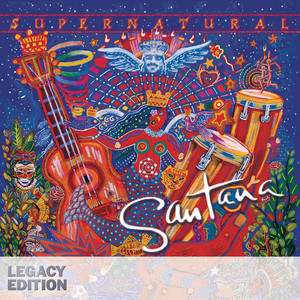
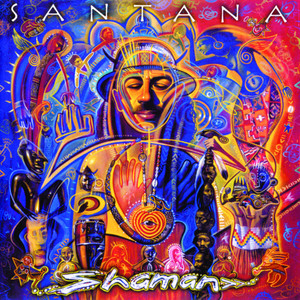
During the rest of the '90s, Santana drifted ever closer to the oldies circuit, but their fortunes were revived when their old supporter Clive Davis signed the group to <a href="spotify:search:label%3A%22Arista%22">Arista</a> in 1998. <a href="spotify:artist:5alKeK7PQGqEJ2oBz5n7sU">Davis</a> designed a star-studded comeback for Santana that took the form of Supernatural, a 1999 album that exceeded any possible expectations. Thanks to the single "Smooth," a song featuring <a href="spotify:artist:3Ngh2zDBRPEriyxQDAMKd1">Matchbox Twenty</a> singer <a href="spotify:artist:3aBkeBhwadnWMWoVJ2CxJC">Rob Thomas</a> (who also co-wrote the tune), Supernatural became an international blockbuster, topping the charts throughout the world, earning a coveted diamond certification in the U.S. and winning eight Grammy Awards, including Record of the Year and Album of the Year. Supernatural produced another number one single in the form of "Maria Maria," which featured <a href="spotify:artist:7aBzpmFXB4WWpPl2F7RjBe">Wyclef Jean</a> and G&B Product, but it was "Smooth" that kept Supernatural on the top of the charts for 12 weeks. Santana delivered Shaman, their Supernatural sequel, in 2002. Thanks to the hit single "The Game of Love" -- a song co-written by <a href="spotify:artist:2sEKfBxQGL428O3RMhol13">Gregg Alexander</a> of <a href="spotify:artist:0Grjlu7ncIuCaSYvCs9fcd">the New Radicals</a> and sung by <a href="spotify:artist:5rScKX1Sh1U67meeUyTGwk">Michelle Branch</a>; it peaked at five and won the Grammy for Best Pop Collaboration with Vocals -- the album was another cross-demographic hit, peaking at number one on Billboard and earning double-platinum certification by the RIAA.
Arriving in 2005, All That I Am debuted at two on Billboard, but effectively brought Santana's revival as hitmakers to an end; its lead single, "I'm Feeling You" -- which once again featured <a href="spotify:artist:5rScKX1Sh1U67meeUyTGwk">Michelle Branch</a> on vocals -- topped out at 55. Even though there were no hit singles forthcoming, Santana remained a fixture in pop and rock culture. In 2010, they released Guitar Heaven, a collection of classic rock covers featuring guest vocalists; debuting at five on Billboard, it turned out to be their last album for <a href="spotify:search:label%3A%22Arista%22">Arista</a>.
Shape Shifter, the band's 2012 album, was their first not to feature guests since Milagro. Released on their <a href="spotify:search:label%3A%22Sony%22">Sony</a>-distributed imprint <a href="spotify:search:label%3A%22Starfaith%22">Starfaith</a>, the largely instrumental album peaked at 16 upon its release. Santana returned to duets for 2014's Corazón, an album the spotlighted Latin music and featured appearances by <a href="spotify:artist:0TnOYISbd1XYRBk9myaseg">Pitbull</a>, <a href="spotify:artist:5IFCkqu9J6xdWeYMk5I889">Gloria Estefan</a>, <a href="spotify:artist:2FS22haX3FYbyOsUAkuYqZ">Los Fabulosos Cadillacs</a>, and <a href="spotify:artist:0UWZUmn7sybxMCqrw9tGa7">Juanes</a>. <a href="spotify:artist:7yGQgQiiKpg2k00JXf8hJk">Carlos</a> reunited most of the Santana III lineup, featuring <a href="spotify:artist:2O2kcKthTkrpLI5JpgrPh4">Rolie</a>, <a href="spotify:artist:4YLlWUd8PnnyGVKxqoebs7">Schon</a>, <a href="spotify:artist:1ruEDrFZVTsTgtfWMJgN7b">Shrieve</a>, and Carabello, for Santana IV, an album released in April 2016. The next year, they issued Power of Peace, a collaborative album with <a href="spotify:artist:53QzNeFpzAaXYnrDBbDrIp">the Isley Brothers</a>. It was Santana's last album for <a href="spotify:search:label%3A%22Sony%22">Sony</a>.
Santana signed with <a href="spotify:search:label%3A%22Concord%22">Concord</a> in 2018. The first release in the contract was the <a href="spotify:artist:37WGztoQRbNgo55GQCw75B">Narada Michael Walden</a>-produced EP In Search of the Mona Lisa, which appeared in January 2019. That June, Santana issued Africa Speaks. Produced by <a href="spotify:artist:1EpmQFTiJbcxzwbLpuUL8L">Rick Rubin</a>, it marked an auspicious collaboration between the Santana band and Spanish vocalist <a href="spotify:artist:1gbXoccc8bjK8eUh92mILy">Concha Buika</a>. Its title track was co-composed by the guitarist and the singer (they wrote most of the album together), and the late producer/arranger <a href="spotify:artist:4hCKF3RZSkFSMntkfCxO74">David Axelrod</a>. Other highlights included the single "Breaking Down the Door"; "Los Invisibles," which the pair wrote with <a href="spotify:artist:2URqJkDiySO0FRiAUq75FV">Rachid Taha</a> and <a href="spotify:artist:4ruO9Y424Hf796fUGMLKcC">Steve Hillage</a>; and <a href="spotify:artist:0Dy94lW3txJhWQHqNXP1BT">Laura Mvula</a>'s "Blue Skies," one of two songs on which she made a guest appearance. The LP debuted at number three on the U.S. Billboard 200.
Blessings and Miracles found Santana delivering another pop-leaning record overfilled with guests. This time, <a href="spotify:artist:4YLtscXsxbVgi031ovDDdh">Chris Stapleton</a>, <a href="spotify:artist:5gxynDEKwNDgxGJmJjZyte">Steve Winwood</a>, <a href="spotify:artist:02kJSzxNuaWGqwubyUba0Z">G-Eazy</a>, <a href="spotify:artist:1q43UYqmrt3prvsBUfuRdr">Corey Glover</a>, <a href="spotify:artist:2ePzbA0F0TD96Na0MEB2Cf">Kirk Hammett</a>, and <a href="spotify:artist:3aBkeBhwadnWMWoVJ2CxJC">Rob Thomas</a> all joined Santana for a free-wheeling pop-fusion LP. ~ Stephen Thomas Erlewine, Rovi
Monthly Listeners
18.6 million
Monthly Listeners History
Track the evolution of monthly listeners over the last 28 days.
Followers
4.1 million
Followers History
Track the evolution of followers over the last 28 days.
Total Streams
4.5 billion
Total Streams History
Track the evolution of total streams over the last 28 days. This data is calculated from all tracks listed in the artist's discography.