Data may be outdated
Last updated: 2 months ago — Click refresh to get the latest statistics.
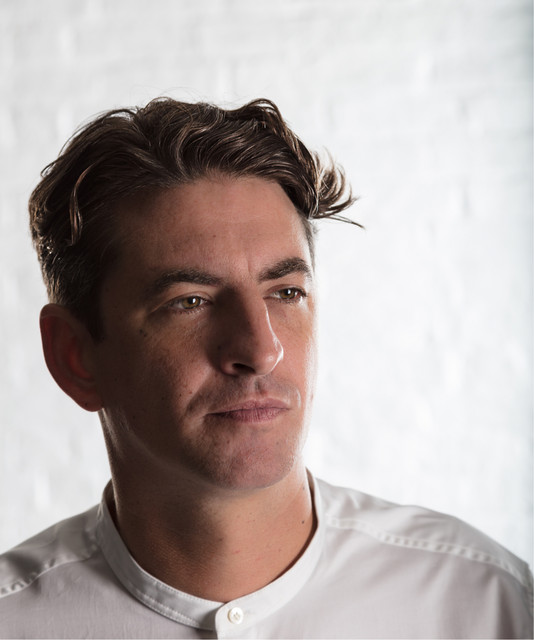
Ollie Jones had the good fortune to be working at the Big Apple record store when he first started making beats at age 15 and armed with a cracked copy of the Fruity Loops music-making software. Big Apple was at the center of the early development of U.K. garage's dark, half-speed offshoot dubstep before it was even called dubstep, and it was at Big Apple that Jones, who recorded as Skream, met fellow beatsmiths <a href="spotify:artist:6lyYDuLxgcxPLH5RjUPH5p">Benga</a> and <a href="spotify:artist:6uKJAfwWvzUrpHovtyaPet">Hatcha</a>. <a href="spotify:artist:6uKJAfwWvzUrpHovtyaPet">Hatcha</a> was a DJ at the seminal club Forward and was only too happy to debut the dubplates of both Skream and <a href="spotify:artist:6lyYDuLxgcxPLH5RjUPH5p">Benga</a>'s early recordings. Their music took the tension-and-release formula of dance music, removed the release, and layered in more tension instead. With slow and pounding basslines and wobbly treble, they were creating a kind of music that summoned and summed up feelings of urban paranoia, but in an enjoyable way. Emphasizing the sub-bass made them popular with clubbers, but they were also popular with bloggers. Championed and spread by word of mouth on the Internet, Skream went straight from being a name in Croydon to being known around the world.
When the owner of Big Apple founded a label to give a home to tracks by dubstep artists, Skream was one of those who released material on it. Other early Skream singles appeared on Ital, <a href="spotify:search:label%3A%22Tectonic%22">Tectonic</a>, and <a href="spotify:search:label%3A%22Tempa%22">Tempa</a>, who issued his breakout classic track "Midnight Request Line," which received praise and airplay from far outside the dubstep scene. The track appeared on Jones' first full-length album, Skream!, which was released in 2006 by <a href="spotify:search:label%3A%22Tempa%22">Tempa</a>. Skream began hosting a weekly program on dance music station Rinse FM (later joined by <a href="spotify:artist:6lyYDuLxgcxPLH5RjUPH5p">Benga</a>), and continued releasing acclaimed singles and EPs, including the long-running Skreamizm series. His first mix CD, Rinse: 02, appeared in 2007, followed by Watch the Ride in 2008.
Skream began producing remixes for non-dubstep artists (including <a href="spotify:artist:762310PdDnwsDxAQxzQkfX">Depeche Mode</a>'s <a href="spotify:artist:7hKXTmrq3ZppBx881yBbOr">David Gahan</a> and <a href="spotify:artist:2qlAMLpUyBjZgnzuFXXZXI">Klaxons</a>), furthering the genre's popularity. In particular, his rave-inspired mix of <a href="spotify:artist:3K2zB87GZv1krx031en5VA">La Roux</a>'s "In for the Kill" helped contribute to the song's international success. Skream's second full-length, Outside the Box, appeared in 2010. The album was significantly more pop-influenced than his earlier work, and also contained a few dramatic drum'n'bass tracks. <a href="spotify:artist:40ttEBZPhAHbXH6aUg4GkL">Magnetic Man</a>'s debut album also arrived that year, and contained several hits, including the U.K. Top Ten-charting "I Need Air" as well as collaborations with <a href="spotify:artist:5y2Xq6xcjJb2jVM54GHK3t">John Legend</a>, <a href="spotify:artist:5EUdiv20t58GCS09VMKk7M">Katy B</a>, and <a href="spotify:artist:42qLC3FgtazA9AvaIoiP62">Ms. Dynamite</a>. Skream and <a href="spotify:artist:6lyYDuLxgcxPLH5RjUPH5p">Benga</a> left Rinse FM in 2011 and began DJ'ing on BBC Radio 1, earning a weekly slot in April of 2012.
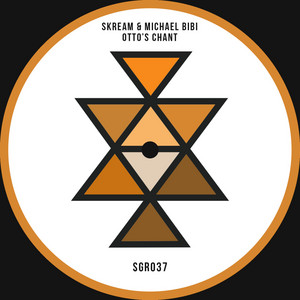
While Skream continued releasing dubstep 12"s on labels like <a href="spotify:search:label%3A%22Deep+Medi+Musik%22">Deep Medi Musik</a> and <a href="spotify:search:label%3A%22Nonplus+Records%22">Nonplus Records</a>, his club sets began incorporating techno, house, and disco, and his own productions reflected the shift. The disco-inspired single "Rollercoaster" (with <a href="spotify:artist:6XB7kwc9FUCehSoYkW7h4P">Sam Frank</a>) appeared in 2013, as did All Gone Miami 2013, a double mix CD shared with British dance music legend <a href="spotify:artist:6n1t55WMsSIUFHrAL4mUsB">Pete Tong</a>. The more aggressive techno track "Bang That" was released by <a href="spotify:search:label%3A%22Boysnoize+Records%22">Boysnoize Records</a> in 2014, and subsequent tracks appeared on tech-house label <a href="spotify:search:label%3A%22Crosstown+Rebels%22">Crosstown Rebels</a> and Skream's Of Unsound Mind imprint. Skream's mix CD Fabriclive 96, a fluid selection of techno, house, and electro tracks, was issued by <a href="spotify:search:label%3A%22Fabric%22">Fabric</a> in 2018. He continued issuing club tracks like 2019's "Otto's Chant" (with Michael Bibi) and 2020's "DUNNN," and he revisited his archives with a series of Unreleased Classics releases.
2021 saw collaborations with dubstep producer <a href="spotify:artist:4aBx7mA6lUOVhEsjokZrXb">MUST DIE!</a> ("LOL OK") and Japanese taiko drummers <a href="spotify:artist:3nmREzlLOE9LEtFUHVIloD">Kodo</a> ("Shinogi"), as well as the EP Steel City Dance Discs, Vol. 23 and several singles. The Attention Deficit EP, including a track co-produced by Jackmaster, appeared in 2022. The following year, the producer released Skreamizm 8, a full-length leaning in a more breakbeat-heavy direction, with appearances from Trim, <a href="spotify:artist:6HabM2PUM519iIxervGWSb">Prospa</a>, and <a href="spotify:artist:0NKEYlmkuqK8YM6TtMEnBr">Lagoon Wavey</a>. Throughout 2024, Skream focused on remixes and collaborations, including mixes of Eliza Rose and <a href="spotify:artist:7CajNmpbOovFoOoasH2HaY">Calvin Harris</a>' "Body Moving" and <a href="spotify:artist:25uiPmTg16RbhZWAqwLBy5">Charli xcx</a>'s "Von Dutch," in addition to the track "Witching Hour" with AF13 and Jeff Kite. ~ Jody Macgregor & Paul Simpson, Rovi
Monthly Listeners
589,201
Monthly Listeners History
Track the evolution of monthly listeners over the last 28 days.
Followers
149,474
Followers History
Track the evolution of followers over the last 28 days.
Total Streams
155.6 million
Total Streams History
Track the evolution of total streams over the last 28 days. This data is calculated from all tracks listed in the artist's discography.
Top Cities


Related Artists
Oppidan



Benga

Cesco
Audio Bullys
ATW