Data may be outdated
Last updated: 7 months ago — Click refresh to get the latest statistics.
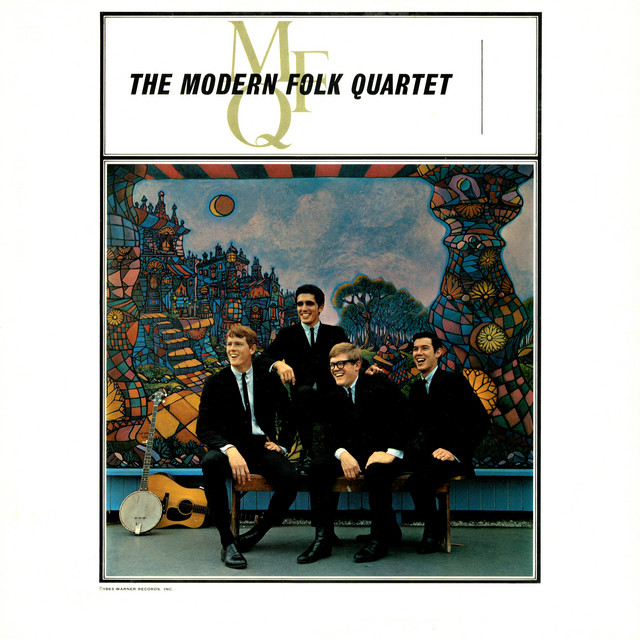
More notable for their later achievements and peripheral connections to important industry figures than for their music, the Modern Folk Quartet made commercially minded folk in the early '60s with an emphasis on group harmonies. They were not far removed from <a href="spotify:artist:3qtcbDvdIgQOXkPbtRvBaQ">the Kingston Trio</a> in sound, though they were mildly hipper than the most mainstream outfits like <a href="spotify:artist:14onnTnkou3zvtEXRPTxYq">Chad Mitchell</a>. Each of the quartet would go on to make a significant mark in music or media that had little to do with the folk revival. <a href="spotify:artist:3RZO2sUvl6ysgVzdT44WvR">Jerry Yester</a> did some production for <a href="spotify:artist:2kuNswDC82PL9xRbfaZJaS">the Association</a> and <a href="spotify:artist:6zHRqvws8dVeqL8D31ponr">Tim Buckley</a>, was briefly in <a href="spotify:artist:7CCn4PFRRRZF127jtCBAUe">the Lovin' Spoonful</a> as <a href="spotify:artist:1EbFQk4CBE8i0v69zGPX5R">Zal Yanovsky's</a> replacement, and made a fine, overlooked psychedelic pop album with his wife of the time, <a href="spotify:artist:3UtfXMhd36NSwHMvWYuE8A">Judy Henske</a>, for <a href="spotify:artist:6ra4GIOgCZQZMOaUECftGN">Frank Zappa's</a> <a href="spotify:search:label%3A%22Straight%22">Straight</a> label. <a href="spotify:artist:2i9LaqOlI1U4waTaRfSyxF">Cyrus Faryar</a> recorded for <a href="spotify:search:label%3A%22Elektra%22">Elektra</a> as a singer/songwriter in the early '70s, played sessions (including some for <a href="spotify:artist:1sXbwvCQLGZnaH0Jp2HTVc">Linda Ronstadt</a> and <a href="spotify:artist:3xmUdkZUQbtMM62XP4nnb6">Fred Neil</a>) and provided astrological narration for Zodiac's Cosmic Sounds (1967), one of the most zonked-out psychedelic concept albums ever. Henry Diltz became a top rock photographer, and Chip Douglas became a bassist and producer, most notably on some albums by <a href="spotify:artist:320EPCSEezHt1rtbfwH6Ck">the Monkees</a>.
Get all these guys together in a room and you'd no doubt hear some great stories, but their two albums for <a href="spotify:search:label%3A%22Warner+Bros%22">Warner Bros</a>. were fairly bland, clean-cut folk with no original tunes. They were a little more adventurous than the average such group: they covered material that bore the songwriting credit of Chester Powers (aka <a href="spotify:artist:1BMoKvhibzf1DG39iBkxiI">Dino Valente</a>), did songs by <a href="spotify:artist:74ASZWbe4lXaubB36ztrGX">Bob Dylan</a> ("Farewell") and <a href="spotify:artist:3JhQGw54MOytJP3GZ8KNPo">Phil Ochs</a> ("The Bells"), and employed fuller arrangements than many such LPs did. Their first album was produced by Jim Dickson, who would shortly go on to manage <a href="spotify:artist:1PCZpxHJz7WAMF8EEq8bfc">the Byrds</a> in their early years. After <a href="spotify:artist:1PCZpxHJz7WAMF8EEq8bfc">the Byrds</a> made it big, the MFQ, like several other similar groups, modernized their sound and went into electric folk-rock, attracting the attention of <a href="spotify:artist:3jVMgT4X7YeuYE4aludcmE">Phil Spector</a>, who was looking to modernize his sound himself. The MFQ recorded a <a href="spotify:artist:3jVMgT4X7YeuYE4aludcmE">Spector</a>-produced, <a href="spotify:artist:3RTzAwFprBqiskp550eSJX">Harry Nilsson</a>-written song, "This Could Be the Night," that was used as the theme to the rock concert film The Big TNT Show. Sadly, the song never came out, as <a href="spotify:artist:3jVMgT4X7YeuYE4aludcmE">Spector</a> began to withdraw from the music business entirely in 1966, although it's on <a href="spotify:artist:3jVMgT4X7YeuYE4aludcmE">Spector's</a> Back to Mono box set. the Modern Folk Quartet disbanded shortly afterwards. ~ Richie Unterberger, Rovi
Get all these guys together in a room and you'd no doubt hear some great stories, but their two albums for <a href="spotify:search:label%3A%22Warner+Bros%22">Warner Bros</a>. were fairly bland, clean-cut folk with no original tunes. They were a little more adventurous than the average such group: they covered material that bore the songwriting credit of Chester Powers (aka <a href="spotify:artist:1BMoKvhibzf1DG39iBkxiI">Dino Valente</a>), did songs by <a href="spotify:artist:74ASZWbe4lXaubB36ztrGX">Bob Dylan</a> ("Farewell") and <a href="spotify:artist:3JhQGw54MOytJP3GZ8KNPo">Phil Ochs</a> ("The Bells"), and employed fuller arrangements than many such LPs did. Their first album was produced by Jim Dickson, who would shortly go on to manage <a href="spotify:artist:1PCZpxHJz7WAMF8EEq8bfc">the Byrds</a> in their early years. After <a href="spotify:artist:1PCZpxHJz7WAMF8EEq8bfc">the Byrds</a> made it big, the MFQ, like several other similar groups, modernized their sound and went into electric folk-rock, attracting the attention of <a href="spotify:artist:3jVMgT4X7YeuYE4aludcmE">Phil Spector</a>, who was looking to modernize his sound himself. The MFQ recorded a <a href="spotify:artist:3jVMgT4X7YeuYE4aludcmE">Spector</a>-produced, <a href="spotify:artist:3RTzAwFprBqiskp550eSJX">Harry Nilsson</a>-written song, "This Could Be the Night," that was used as the theme to the rock concert film The Big TNT Show. Sadly, the song never came out, as <a href="spotify:artist:3jVMgT4X7YeuYE4aludcmE">Spector</a> began to withdraw from the music business entirely in 1966, although it's on <a href="spotify:artist:3jVMgT4X7YeuYE4aludcmE">Spector's</a> Back to Mono box set. the Modern Folk Quartet disbanded shortly afterwards. ~ Richie Unterberger, Rovi
Monthly Listeners
853
Monthly Listeners History
Track the evolution of monthly listeners over the last 28 days.
Followers
933
Followers History
Track the evolution of followers over the last 28 days.
Top Cities
35 listeners

32 listeners
21 listeners
19 listeners
16 listeners
Related Artists

Mama Cass & The Big Three


The Tradewinds
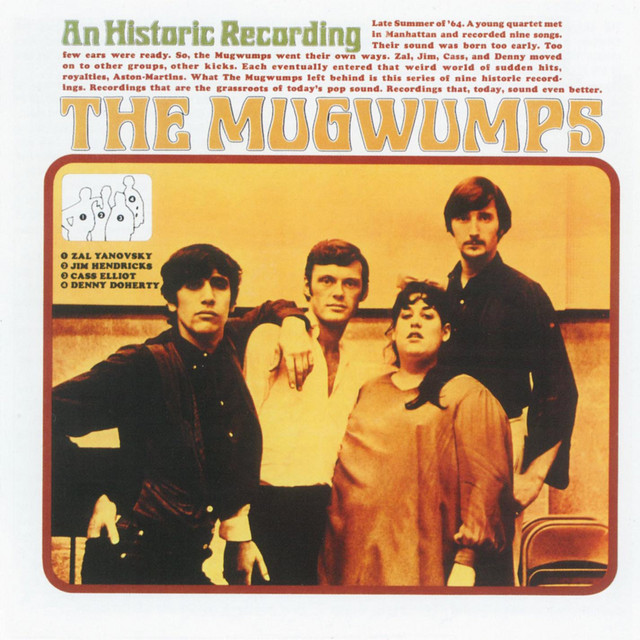
The Mugwumps
The Honeys

Gordon Alexander