Data may be outdated
Last updated: 9 months ago — Click refresh to get the latest statistics.
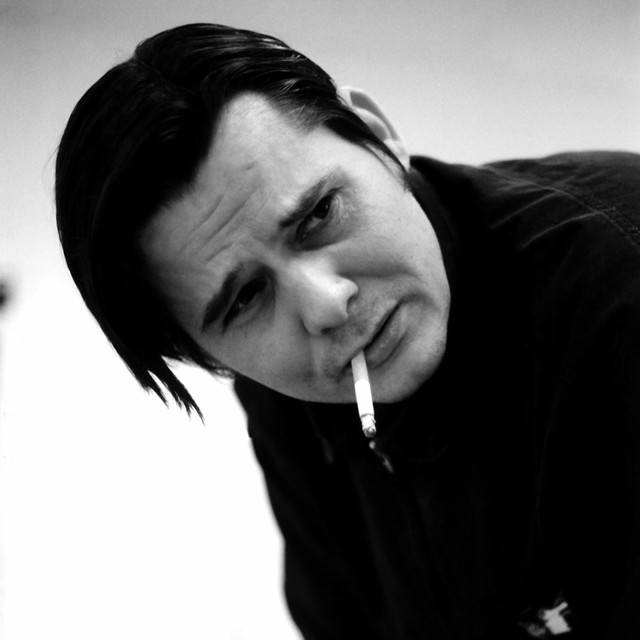
A moniker of influential German producer, songwriter, and mastering engineer <a href="spotify:artist:5zzqzIMneFGMgiufQNGoBI">Jörg Burger</a>, the Modernist makes minimal techno inspired by the melodicism of classic indie pop. Previously known for making trance and downtempo as <a href="spotify:artist:4mRdVoTsvzp1CzE9LweVXG">the Bionaut</a>, as well as collaborations with <a href="spotify:artist:3pq8SlVVKJdVO3MHEFSpsw">Wolfgang Voigt</a> such as Burger/Ink, <a href="spotify:artist:5zzqzIMneFGMgiufQNGoBI">Burger</a> first appeared as the Modernist with the 1997 full-length Opportunity Knox, establishing a stripped-down yet tuneful techno sound which would later become a trademark of the Cologne scene centered around the <a href="spotify:search:label%3A%22Kompakt%22">Kompakt</a> label. Two more albums and numerous singles followed, and after the release of the 2006 mix Collectors Series, Pt. 1: Popular Songs, <a href="spotify:artist:5zzqzIMneFGMgiufQNGoBI">Burger</a> largely reserved the project for remixes and compilation tracks. 2021's Total the Modernist collected songs previously released on <a href="spotify:search:label%3A%22Kompakt%22">Kompakt</a>'s Total series.
Initially inspired by the pop scene in London, where both <a href="spotify:artist:5zzqzIMneFGMgiufQNGoBI">Burger</a> and <a href="spotify:artist:3pq8SlVVKJdVO3MHEFSpsw">Voigt</a> resided in the early '80s, the pair became acid techno converts when they returned to Germany. By 1988, they were recording electronic music influenced by both pop and acid techno, though <a href="spotify:artist:3pq8SlVVKJdVO3MHEFSpsw">Voigt</a>'s music had a minimal, rhythmic bent while <a href="spotify:artist:5zzqzIMneFGMgiufQNGoBI">Burger</a>'s was warmer and more melodic. Two of <a href="spotify:artist:5zzqzIMneFGMgiufQNGoBI">Burger</a>'s early tracks appeared on the 1989 compilation Teutonic Beats, which was produced by <a href="spotify:artist:71GWL6ijlpTh7oGqYlMMpM">Thomas Fehlmann</a>. Two years later, <a href="spotify:artist:5zzqzIMneFGMgiufQNGoBI">Burger</a> and <a href="spotify:artist:3pq8SlVVKJdVO3MHEFSpsw">Voigt</a> formed their first label, Trance Atlantic, on which <a href="spotify:artist:5zzqzIMneFGMgiufQNGoBI">Burger</a> released Burger Industries: Vol. 1. In 1993, after a move to Frankfurt to work with <a href="spotify:artist:5MhxFD2oBgZmX4lbhjSc3N">Air Liquide</a>'s <a href="spotify:artist:0KY3r91pP9gaYq5YOaeXSy">Jammin' Unit</a> and <a href="spotify:artist:6yAVNH7JYYbHgo7nTcuaTo">Dr. Walker</a> and the creation of two other labels, Structure (which released <a href="spotify:artist:5zzqzIMneFGMgiufQNGoBI">Burger</a>'s first <a href="spotify:artist:4mRdVoTsvzp1CzE9LweVXG">Bionaut</a> album, 1992's Everybody's Kissing Everyone) and Blue, <a href="spotify:artist:3pq8SlVVKJdVO3MHEFSpsw">Voigt</a> and <a href="spotify:artist:5zzqzIMneFGMgiufQNGoBI">Burger</a> put their collaboration on a temporary hiatus. <a href="spotify:artist:5zzqzIMneFGMgiufQNGoBI">Burger</a> returned to Cologne and, along with recording artists like <a href="spotify:artist:0eNVBq4ee0qY2FCY3oSorx">Cristian Vogel</a> and <a href="spotify:artist:4QLCqJ3RSF3y6DdvboPk9m">Thomas Heckmann</a>, he put his creative energies into <a href="spotify:artist:4mRdVoTsvzp1CzE9LweVXG">Bionaut</a> and one-off single projects, a new label, <a href="spotify:search:label%3A%22Eat+Raw%22">Eat Raw</a>, a dance magazine called House Attack and a record store, Delirium.
He also contributed to the relaunch of <a href="spotify:search:label%3A%22EMI%22">EMI</a>'s <a href="spotify:search:label%3A%22Harvest%22">Harvest</a> label, which released <a href="spotify:artist:4mRdVoTsvzp1CzE9LweVXG">Bionaut</a>'s 1995 long-player Lush Life Electronica as well as the 1996 <a href="spotify:artist:5zzqzIMneFGMgiufQNGoBI">Burger</a>/<a href="spotify:artist:1GlO6fbTFkwP6CyQgsjSoe">Ink</a> album Las Vegas and the Modernist's debut, 1997's Opportunity Knox. These releases were received warmly by publications like Spex, Muzik, Jockey Slut, and Mixmag. Around this time <a href="spotify:artist:5zzqzIMneFGMgiufQNGoBI">Burger</a> also founded Granit, a graphics and illustration studio responsible for the artwork on all of his projects' covers.
By 1999, <a href="spotify:artist:5zzqzIMneFGMgiufQNGoBI">Burger</a> had moved from <a href="spotify:search:label%3A%22EMI%22">EMI</a>/<a href="spotify:search:label%3A%22Harvest%22">Harvest</a> to <a href="spotify:search:label%3A%22Sony%22">Sony</a>, where he created the Popular Organisation, which featured a triumvirate of labels: the dancefloor-oriented <a href="spotify:search:label%3A%22Popular+Tools%22">Popular Tools</a>, the experimentally-based Popular Sound and Popular Music, which released electronically-inclined pop. <a href="spotify:search:label%3A%22Popular+Tools%22">Popular Tools</a> released the Modernist's second album Explosion in Europe in late 1999; the album was released in the US by <a href="spotify:search:label%3A%22Matador+Records%22">Matador Records</a> -- who also released the North American version of Las Vegas -- in early 2000 with different artwork and extra tracks.
The Modernist released a split EP with <a href="spotify:artist:0DDFk56QBhetDQ1wwNf8oG">Bochum Welt</a>, Eldar, on <a href="spotify:search:label%3A%22Art+of+Perception%22">Art of Perception</a> in 2001. 4 Remixe für the Modernist, containing material from the moniker's first two albums remixed by <a href="spotify:artist:3pq8SlVVKJdVO3MHEFSpsw">Voigt</a> under various aliases, was issued by <a href="spotify:search:label%3A%22Kompakt%22">Kompakt</a>. <a href="spotify:search:label%3A%22Wonder%22">Wonder</a> released the Modernist's 2002 EP Come Back as well as 2003 full-length Kangmei and remix EP Protest Songs. A Modernist track appeared on 2005's Speicher 28 single, and the mix CD Collectors Series, Pt. 1: Popular Songs was issued by <a href="spotify:search:label%3A%22Faith+Recordings%22">Faith Recordings</a> in 2006. <a href="spotify:artist:5zzqzIMneFGMgiufQNGoBI">Burger</a> has largely concentrated on mastering work and collaborations since then, but he's continued reserving the Modernist for remixes, as well as contributions to <a href="spotify:search:label%3A%22Kompakt%22">Kompakt</a>'s annual Total compilation series, which were gathered on the 2021 digital release Total the Modernist. ~ Heather Phares & Paul Simpson, Rovi
Initially inspired by the pop scene in London, where both <a href="spotify:artist:5zzqzIMneFGMgiufQNGoBI">Burger</a> and <a href="spotify:artist:3pq8SlVVKJdVO3MHEFSpsw">Voigt</a> resided in the early '80s, the pair became acid techno converts when they returned to Germany. By 1988, they were recording electronic music influenced by both pop and acid techno, though <a href="spotify:artist:3pq8SlVVKJdVO3MHEFSpsw">Voigt</a>'s music had a minimal, rhythmic bent while <a href="spotify:artist:5zzqzIMneFGMgiufQNGoBI">Burger</a>'s was warmer and more melodic. Two of <a href="spotify:artist:5zzqzIMneFGMgiufQNGoBI">Burger</a>'s early tracks appeared on the 1989 compilation Teutonic Beats, which was produced by <a href="spotify:artist:71GWL6ijlpTh7oGqYlMMpM">Thomas Fehlmann</a>. Two years later, <a href="spotify:artist:5zzqzIMneFGMgiufQNGoBI">Burger</a> and <a href="spotify:artist:3pq8SlVVKJdVO3MHEFSpsw">Voigt</a> formed their first label, Trance Atlantic, on which <a href="spotify:artist:5zzqzIMneFGMgiufQNGoBI">Burger</a> released Burger Industries: Vol. 1. In 1993, after a move to Frankfurt to work with <a href="spotify:artist:5MhxFD2oBgZmX4lbhjSc3N">Air Liquide</a>'s <a href="spotify:artist:0KY3r91pP9gaYq5YOaeXSy">Jammin' Unit</a> and <a href="spotify:artist:6yAVNH7JYYbHgo7nTcuaTo">Dr. Walker</a> and the creation of two other labels, Structure (which released <a href="spotify:artist:5zzqzIMneFGMgiufQNGoBI">Burger</a>'s first <a href="spotify:artist:4mRdVoTsvzp1CzE9LweVXG">Bionaut</a> album, 1992's Everybody's Kissing Everyone) and Blue, <a href="spotify:artist:3pq8SlVVKJdVO3MHEFSpsw">Voigt</a> and <a href="spotify:artist:5zzqzIMneFGMgiufQNGoBI">Burger</a> put their collaboration on a temporary hiatus. <a href="spotify:artist:5zzqzIMneFGMgiufQNGoBI">Burger</a> returned to Cologne and, along with recording artists like <a href="spotify:artist:0eNVBq4ee0qY2FCY3oSorx">Cristian Vogel</a> and <a href="spotify:artist:4QLCqJ3RSF3y6DdvboPk9m">Thomas Heckmann</a>, he put his creative energies into <a href="spotify:artist:4mRdVoTsvzp1CzE9LweVXG">Bionaut</a> and one-off single projects, a new label, <a href="spotify:search:label%3A%22Eat+Raw%22">Eat Raw</a>, a dance magazine called House Attack and a record store, Delirium.
He also contributed to the relaunch of <a href="spotify:search:label%3A%22EMI%22">EMI</a>'s <a href="spotify:search:label%3A%22Harvest%22">Harvest</a> label, which released <a href="spotify:artist:4mRdVoTsvzp1CzE9LweVXG">Bionaut</a>'s 1995 long-player Lush Life Electronica as well as the 1996 <a href="spotify:artist:5zzqzIMneFGMgiufQNGoBI">Burger</a>/<a href="spotify:artist:1GlO6fbTFkwP6CyQgsjSoe">Ink</a> album Las Vegas and the Modernist's debut, 1997's Opportunity Knox. These releases were received warmly by publications like Spex, Muzik, Jockey Slut, and Mixmag. Around this time <a href="spotify:artist:5zzqzIMneFGMgiufQNGoBI">Burger</a> also founded Granit, a graphics and illustration studio responsible for the artwork on all of his projects' covers.
By 1999, <a href="spotify:artist:5zzqzIMneFGMgiufQNGoBI">Burger</a> had moved from <a href="spotify:search:label%3A%22EMI%22">EMI</a>/<a href="spotify:search:label%3A%22Harvest%22">Harvest</a> to <a href="spotify:search:label%3A%22Sony%22">Sony</a>, where he created the Popular Organisation, which featured a triumvirate of labels: the dancefloor-oriented <a href="spotify:search:label%3A%22Popular+Tools%22">Popular Tools</a>, the experimentally-based Popular Sound and Popular Music, which released electronically-inclined pop. <a href="spotify:search:label%3A%22Popular+Tools%22">Popular Tools</a> released the Modernist's second album Explosion in Europe in late 1999; the album was released in the US by <a href="spotify:search:label%3A%22Matador+Records%22">Matador Records</a> -- who also released the North American version of Las Vegas -- in early 2000 with different artwork and extra tracks.
The Modernist released a split EP with <a href="spotify:artist:0DDFk56QBhetDQ1wwNf8oG">Bochum Welt</a>, Eldar, on <a href="spotify:search:label%3A%22Art+of+Perception%22">Art of Perception</a> in 2001. 4 Remixe für the Modernist, containing material from the moniker's first two albums remixed by <a href="spotify:artist:3pq8SlVVKJdVO3MHEFSpsw">Voigt</a> under various aliases, was issued by <a href="spotify:search:label%3A%22Kompakt%22">Kompakt</a>. <a href="spotify:search:label%3A%22Wonder%22">Wonder</a> released the Modernist's 2002 EP Come Back as well as 2003 full-length Kangmei and remix EP Protest Songs. A Modernist track appeared on 2005's Speicher 28 single, and the mix CD Collectors Series, Pt. 1: Popular Songs was issued by <a href="spotify:search:label%3A%22Faith+Recordings%22">Faith Recordings</a> in 2006. <a href="spotify:artist:5zzqzIMneFGMgiufQNGoBI">Burger</a> has largely concentrated on mastering work and collaborations since then, but he's continued reserving the Modernist for remixes, as well as contributions to <a href="spotify:search:label%3A%22Kompakt%22">Kompakt</a>'s annual Total compilation series, which were gathered on the 2021 digital release Total the Modernist. ~ Heather Phares & Paul Simpson, Rovi
Monthly Listeners
2,150
Monthly Listeners History
Track the evolution of monthly listeners over the last 28 days.
Followers
2,559
Followers History
Track the evolution of followers over the last 28 days.
Top Cities
98 listeners

79 listeners
66 listeners

39 listeners

32 listeners
Related Artists




Ferenc



Sylvie Marks

Schaeben & Voss


Partial Arts









DJ Balduin