Data may be outdated
Last updated: 7 months ago — Click refresh to get the latest statistics.
Titta Ruffo (born Ruffo Cafiero Titta) was one of the top Italian baritones of the early twentieth century. He had a powerful, dark singing voice, yet his upper register had a ring usually characteristic of a tenor; these qualities embodied the full-blooded operatic baritone that has been in vogue ever since. His flowing hair earned him the nickname, "The Singing Lion."
Ruffo was brought up in a poor family headed by Orestes Titta, a factory worker who named the boy after his deceased hunting dog. Ruffo intended to apprentice himself to an ironworker, but his natural singing voice soon became evident and several patrons arranged for him to study in Rome. He studied briefly with Venceslao Persichini, but the pedagogue already had another promising baritone, <a href="spotify:artist:7lLugqe9n0Mxk1eUL6zXOY">Giuseppe di Luca</a>, as a pupil and so sent Ruffo to other teachers.
Ruffo's progress was rapid, however, and he was soon singing important roles such as <a href="spotify:artist:1JOQXgYdQV2yfrhewqx96o">Verdi</a>'s Rigoletto, and Barnaba in La Gioconda, in provincial opera houses and in South America. In 1903, the Covent Garden opera house in London engaged him, and he debuted that year as Enrico in <a href="spotify:artist:2jCGEMSZXMSOImpD8sqo56">Donizetti</a>'s Lucia di Lammermoor and Figaro in <a href="spotify:artist:0roWUeP7Ac4yK4VN6L2gF4">Rossini</a>'s Barber.
Covent Garden also scheduled him to sing Rigoletto, but the famous Nelly Melba refused to appear with him, saying "he's too young to play my father." This was not a problem at La Scala, however, and he sang the role there several times during the 1903-1904 season; this marked the start of his major European career. He returned to South America in 1908, now a major star, and was welcomed back there frequently over a 25-year period.
He was famous as a <a href="spotify:artist:1JOQXgYdQV2yfrhewqx96o">Verdi</a> baritone, singing such roles as Don Carlo in Ernani, and Amonasro in Aida, in addition to Rigoletto. He was particularly effective in <a href="spotify:artist:4b83P4cnmD7hqhoUkgGEsN">Ambroise Thomas</a>' Hamlet. When he was booked to sing the role at Teatro San Carlo in Naples, <a href="spotify:artist:24fodGTlVamKHxCvQXUm6L">Melba</a>, there on her way to Australia, contacted the manager offering to sing Ophelia opposite Ruffo one evening. "Tell <a href="spotify:artist:24fodGTlVamKHxCvQXUm6L">Melba</a> she's too old to sing with me," Ruffo responded.
Ruffo's relationship with <a href="spotify:artist:2uB3KPGd1ZUGRsox7N1iH5">Enrico Caruso</a> was better; the two were personal friends and sang in the same productions in Europe. But <a href="spotify:artist:2uB3KPGd1ZUGRsox7N1iH5">Caruso</a> used his influence to keep Ruffo off the stage of the Metropolitan while the tenor starred there. Ruffo, therefore, did not appear in New York until 1922, becoming a favorite despite declining vocal powers.
Since Persichini had passed on him, Ruffo did not acquire as good a technique as he might have; his reliance on his raw natural gifts, and the resulting fatigue, probably shortened his career. At his prime, this was an exciting and vigorous color that strongly influenced Italian tastes in baritone singing.
By the mid-1930s Ruffo's enemies (and there were many, as he was a critic of Mussolini's fascist regime) were able to tag him "the dying lion." In 1936, Ruffo announced his retirement: "The lion is silent." Ruffo refused to teach, however: "I never knew how to sing," he answered. "That is why my voice went by the time I was fifty. I have no right to capitalize on my former name and reputation and try to teach youngsters something I never knew how to do myself."
However, he did share the secrets of how he produced his remarkable range of tone colors in part of his autobiography, La mia parabola (My Parabola), published in 1937. Although he was practically unschooled, My Parabola is considered one of the best written, most entertaining, and most informative of operatic memoirs.
Ruffo was brought up in a poor family headed by Orestes Titta, a factory worker who named the boy after his deceased hunting dog. Ruffo intended to apprentice himself to an ironworker, but his natural singing voice soon became evident and several patrons arranged for him to study in Rome. He studied briefly with Venceslao Persichini, but the pedagogue already had another promising baritone, <a href="spotify:artist:7lLugqe9n0Mxk1eUL6zXOY">Giuseppe di Luca</a>, as a pupil and so sent Ruffo to other teachers.
Ruffo's progress was rapid, however, and he was soon singing important roles such as <a href="spotify:artist:1JOQXgYdQV2yfrhewqx96o">Verdi</a>'s Rigoletto, and Barnaba in La Gioconda, in provincial opera houses and in South America. In 1903, the Covent Garden opera house in London engaged him, and he debuted that year as Enrico in <a href="spotify:artist:2jCGEMSZXMSOImpD8sqo56">Donizetti</a>'s Lucia di Lammermoor and Figaro in <a href="spotify:artist:0roWUeP7Ac4yK4VN6L2gF4">Rossini</a>'s Barber.
Covent Garden also scheduled him to sing Rigoletto, but the famous Nelly Melba refused to appear with him, saying "he's too young to play my father." This was not a problem at La Scala, however, and he sang the role there several times during the 1903-1904 season; this marked the start of his major European career. He returned to South America in 1908, now a major star, and was welcomed back there frequently over a 25-year period.
He was famous as a <a href="spotify:artist:1JOQXgYdQV2yfrhewqx96o">Verdi</a> baritone, singing such roles as Don Carlo in Ernani, and Amonasro in Aida, in addition to Rigoletto. He was particularly effective in <a href="spotify:artist:4b83P4cnmD7hqhoUkgGEsN">Ambroise Thomas</a>' Hamlet. When he was booked to sing the role at Teatro San Carlo in Naples, <a href="spotify:artist:24fodGTlVamKHxCvQXUm6L">Melba</a>, there on her way to Australia, contacted the manager offering to sing Ophelia opposite Ruffo one evening. "Tell <a href="spotify:artist:24fodGTlVamKHxCvQXUm6L">Melba</a> she's too old to sing with me," Ruffo responded.
Ruffo's relationship with <a href="spotify:artist:2uB3KPGd1ZUGRsox7N1iH5">Enrico Caruso</a> was better; the two were personal friends and sang in the same productions in Europe. But <a href="spotify:artist:2uB3KPGd1ZUGRsox7N1iH5">Caruso</a> used his influence to keep Ruffo off the stage of the Metropolitan while the tenor starred there. Ruffo, therefore, did not appear in New York until 1922, becoming a favorite despite declining vocal powers.
Since Persichini had passed on him, Ruffo did not acquire as good a technique as he might have; his reliance on his raw natural gifts, and the resulting fatigue, probably shortened his career. At his prime, this was an exciting and vigorous color that strongly influenced Italian tastes in baritone singing.
By the mid-1930s Ruffo's enemies (and there were many, as he was a critic of Mussolini's fascist regime) were able to tag him "the dying lion." In 1936, Ruffo announced his retirement: "The lion is silent." Ruffo refused to teach, however: "I never knew how to sing," he answered. "That is why my voice went by the time I was fifty. I have no right to capitalize on my former name and reputation and try to teach youngsters something I never knew how to do myself."
However, he did share the secrets of how he produced his remarkable range of tone colors in part of his autobiography, La mia parabola (My Parabola), published in 1937. Although he was practically unschooled, My Parabola is considered one of the best written, most entertaining, and most informative of operatic memoirs.
Monthly Listeners
747
Monthly Listeners History
Track the evolution of monthly listeners over the last 28 days.
Followers
2,278
Followers History
Track the evolution of followers over the last 28 days.
Top Cities




Related Artists

Aureliano Pertile

Giacomo Lauri Volpi
Apollo Granforte

Mattia Battistini
Carlo Sabajno
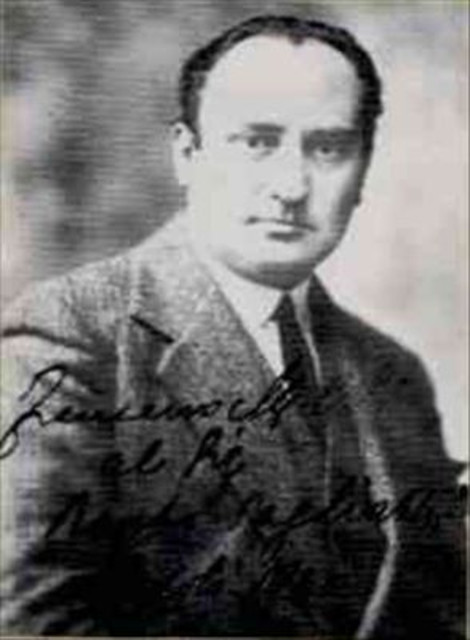
Francesco Merli

Luisa Tetrazzini
Vincenzo Bellezza

Carlo Galeffi

Emilio Sagi-Barba

Giacomo Lauri - Volpi
Lionello Cecil
Charles Cambon
Paul Cabanel
Henri Medus
Marcel Journet

Orchestra and Chorus of La Scala, Milan