Data may be outdated
Last updated: 9 months ago — Click refresh to get the latest statistics.
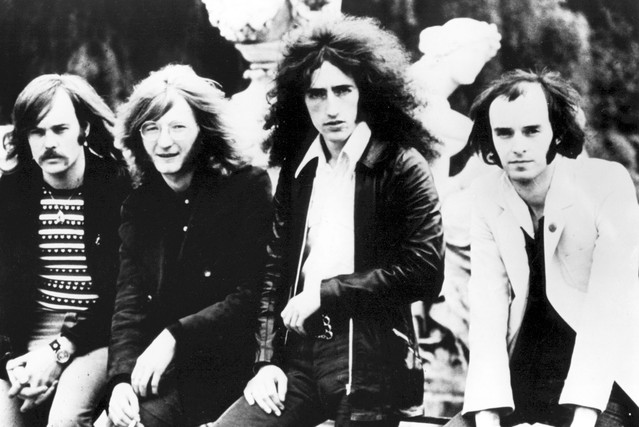
For much of his career, Tony Kaye was mostly known as the man that <a href="spotify:artist:0mkcYaXUbJUs5mJointuzB">Rick Wakeman</a> replaced in <a href="spotify:artist:7AC976RDJzL2asmZuz7qil">Yes</a> in 1971, just in time to become a superstar keyboard player rivaling Keith Emerson. More serious fans of <a href="spotify:artist:7AC976RDJzL2asmZuz7qil">Yes</a> knew him somewhat better, as the inspired if not overly showy keyboard virtuoso on what is usually regarded as the first fully realized <a href="spotify:artist:7AC976RDJzL2asmZuz7qil">Yes</a> LP, The Yes Album. Then, in the 1980s, he was back in <a href="spotify:artist:7AC976RDJzL2asmZuz7qil">Yes</a>, remaining long enough to participate in the eight-man "mega-<a href="spotify:artist:7AC976RDJzL2asmZuz7qil">Yes</a>" lineup that gave <a href="spotify:artist:4r6DXcqtllstKwEx3ndKMj">Kaye</a> his taste of the international success that he'd just missed at the outset of the 1970s, and belatedly raised his recognition level to extraordinary heights. Born Anthony John Selridge on January 11, 1946, Tony Kaye was a natural musician, his grandmother having been a concert pianist and his grandfather a jazz saxophone player. He showed an early affinity for the piano and began taking lessons at age four. He showed a strong interest in classical music as a child, and by age 12 he was giving concerts locally. <a href="spotify:artist:4r6DXcqtllstKwEx3ndKMj">Kaye</a> continued taking formal music lessons up to age 18, but by that time he had developed aspirations other than a career as a classical musician. He'd discovered jazz in his mid-teens, beginning with Dixieland, and was playing in a trad-jazz band while still in school. His interests remained split between jazz and classical until he encountered the work of <a href="spotify:artist:4F7Q5NV6h5TSwCainz8S5A">Duke Ellington</a> and <a href="spotify:artist:2jFZlvIea42ZvcCw4OeEdA">Count Basie</a>, after which he abandoned his goals as a classical musician. At 15, he joined his first working band, the Danny Rogers Orchestra. This accompanied his beginning to study of the art of arranging, which was to serve him well in the years to come. Faced with the choice of becoming a music teacher or a concert pianist -- a goal for which he doubted he had the talent -- <a href="spotify:artist:4r6DXcqtllstKwEx3ndKMj">Kaye</a> chose to bide his time by studying commercial art and design. Meanwhile, he played with his jazz group and immersed himself in R&B, which was booming in Britain at the time. Ultimately the music cost him his spot in school, but by that time his interests had shifted again, to rock & roll. <a href="spotify:artist:4r6DXcqtllstKwEx3ndKMj">Kaye</a>'s earliest rock & roll gigs were played as a member of Johnny Taylor's Star Combo, and then in the lineup of the Federals, a beat instrumental group in the same category as <a href="spotify:artist:3f121mss4A4LwR25ErGzP0">the Dakotas</a>, who recorded for Parlophone Records and got their best crack at success backing <a href="spotify:artist:0JDkhL4rjiPNEp92jAgJnS">Roy Orbison</a> on a British tour in 1965. <a href="spotify:artist:4r6DXcqtllstKwEx3ndKMj">Kaye</a> played organ in the group, and cut four singles with them in 1964 and 1965. His main influence was <a href="spotify:artist:1im4Wcx1u8qxzbRtlRDbnC">Graham Bond</a>, the R&B keyboard player whose work showed <a href="spotify:artist:4r6DXcqtllstKwEx3ndKMj">Kaye</a> how to exploit the organ's sustaining quality, as against the piano. By 1966, <a href="spotify:artist:4r6DXcqtllstKwEx3ndKMj">Kaye</a> had moved on to membership in Jimmy Winston & His Reflections, a band formed around former <a href="spotify:artist:1YqGsKpdixxSVgpfaL2AEQ">Small Faces</a> organist and rhythm guitarist Jimmy Winston -- they stayed together through one single and a name change, to Winston's Fumbs, and <a href="spotify:artist:4r6DXcqtllstKwEx3ndKMj">Kaye</a> had also passed through the lineup of a band called Bittersweet. It was sheer chance that led <a href="spotify:artist:4r6DXcqtllstKwEx3ndKMj">Kaye</a> to a meeting with <a href="spotify:artist:7G3uxJYCXXvkJJMORkc1rk">Chris Squire</a>, who was putting together the lineup of a new group with <a href="spotify:artist:3pcBYlS4js6fFBbPw4XQ9q">Peter Banks</a>, <a href="spotify:artist:2iptQ8hQmUa7kZocEBHt7u">Jon Anderson</a>, and <a href="spotify:artist:1359ogdBoLfQGxKfUDfWaz">Bill Bruford</a>. <a href="spotify:artist:3G7eO5RPVtqem98Qg8kTx2">Squire</a> invited <a href="spotify:artist:4r6DXcqtllstKwEx3ndKMj">Kaye</a> into the lineup of <a href="spotify:artist:7AC976RDJzL2asmZuz7qil">Yes</a>, which became the first big break in his music career. Tony Kaye's time in <a href="spotify:artist:7AC976RDJzL2asmZuz7qil">Yes</a> was a formative period for musician and group alike. Using psychedelia as a starting point, the quartet aimed for a big electric sound that would also have room for elegant harmonies and virtuoso technique. At first, like the rest of the band, <a href="spotify:artist:4r6DXcqtllstKwEx3ndKMj">Kaye</a> was finding his way, trying to get an expansive sound from his instrument, an exercise in futility until he was able to purchase a large Hammond B-3 organ six months after joining. His own sound was fairly tentative but increasingly ambitious, and within the limitations of the piano and organ, <a href="spotify:artist:4r6DXcqtllstKwEx3ndKMj">Kaye</a> added a great deal to the color and tone of the music on the group's first two albums. He persevered through the group's early days, when they were still getting known and putting the fine points on their sound, which meant letting <a href="spotify:artist:3pcBYlS4js6fFBbPw4XQ9q">Peter Banks</a> go, and bringing <a href="spotify:artist:6W7XIO8Ua1RIisnSf0QIoI">Steve Howe</a> into the lineup. <a href="spotify:artist:4r6DXcqtllstKwEx3ndKMj">Kaye</a> got through all of those early travails, and a December 1970 car crash that left him with a broken foot (you can see the cast in the cover shot of The Yes Album. It was with The Yes Album, recorded in the fall of 1970, just before the crash, that <a href="spotify:artist:4r6DXcqtllstKwEx3ndKMj">Kaye</a> (along with the rest of the band) achieved his breakthrough as a musician -- his keyboards (now including a Moog synthesizer) made sounds as animated as <a href="spotify:artist:6W7XIO8Ua1RIisnSf0QIoI">Steve Howe</a>'s guitars, and the interplay between the two musicians was some of the best work the group had ever done. Additionally, The Yes Album finally showed <a href="spotify:artist:4r6DXcqtllstKwEx3ndKMj">Kaye</a> (and the rest of the band) achieving the larger-than-life presence they'd always sought, his organ and synthesizer adding a considerable degree of majesty to the band's overall sound. In its restraint and solid music and musicianship, The Yes Album remains one of the most impressive and listenable albums of the progressive rock era, and not just to fans of progressive rock, and a good portion of that credit must go to Tony Kaye's restrained, tasteful, yet virtuosic playing. Unfortunately for him, the other members of <a href="spotify:artist:7AC976RDJzL2asmZuz7qil">Yes</a> had a somewhat different sound in mind, one that <a href="spotify:artist:4r6DXcqtllstKwEx3ndKMj">Kaye</a> had not been able to provide in his three years with the band. His tenure with the group came to an end in the summer of 1971, after their first American tour and a triumphant run on the British album charts with The Yes Album. The reason for his exit stemmed from personal and musical conflicts with the other members, especially <a href="spotify:artist:2mF4iriJrF0jVfKnmA06Pw">Howe</a>. Increasingly, <a href="spotify:artist:7AC976RDJzL2asmZuz7qil">Yes</a> was striving for a dense, loud, complex sound, almost the progressive rock equivalent of what composer <a href="spotify:artist:7ie36YytMoKtPiL7tUvmoE">Igor Stravinsky</a> generated with an orchestra on works like The Rite of Spring. <a href="spotify:artist:4r6DXcqtllstKwEx3ndKMj">Kaye</a>'s tendency to rely on piano and organ with the minimal use of synthesizers was no longer sufficient for what they saw as their evolving sound, and he was let go. <a href="spotify:artist:4r6DXcqtllstKwEx3ndKMj">Kaye</a> picked himself up nicely enough in 1972 as a member of the original lineup of <a href="spotify:artist:4adMMJI7fSSinRx4ymNnwY">Flash</a>. The group, formed by fellow ex-<a href="spotify:artist:7AC976RDJzL2asmZuz7qil">Yes</a> member <a href="spotify:artist:3pcBYlS4js6fFBbPw4XQ9q">Peter Banks</a>, sounded on their first album like a <a href="spotify:artist:7AC976RDJzL2asmZuz7qil">Yes</a> in exile, as though the band from <a href="spotify:artist:7AC976RDJzL2asmZuz7qil">Yes</a>' Time and a Word album were suddenly trying to outstrip the Fragile album. Still signed to the same management, and associated with the same label as <a href="spotify:artist:7AC976RDJzL2asmZuz7qil">Yes</a>, it was easier for <a href="spotify:artist:4r6DXcqtllstKwEx3ndKMj">Kaye</a> to pick up his career than if he'd been cut loose entirely on his own. It seldom actually happens, but record labels and managements in situations such as that always hope -- as English Decca had when Jimmy Winston was let go from <a href="spotify:artist:1YqGsKpdixxSVgpfaL2AEQ">the Small Faces</a>, thus giving <a href="spotify:artist:4r6DXcqtllstKwEx3ndKMj">Kaye</a> a berth in his backing band the Reflections -- that another successful act can be spawned from a split. In this case, the act was <a href="spotify:artist:3F8mFURk2DqFCTqsZ48HSA">Badger</a>, formed by <a href="spotify:artist:0SgQK24WzZf2pXBXYqHJYF">David Foster</a>, <a href="spotify:artist:7AC976RDJzL2asmZuz7qil">Yes</a> lead singer <a href="spotify:artist:2iptQ8hQmUa7kZocEBHt7u">Jon Anderson</a>'s former bandmate in <a href="spotify:artist:3od2UQAS3iCGYpCALB747x">the Warriors</a>. Foster had collaborated with Anderson on several early original songs and played a tiny bit of guitar (uncredited) on the second album, and played bass and sang in <a href="spotify:artist:3F8mFURk2DqFCTqsZ48HSA">Badger</a>. <a href="spotify:artist:4r6DXcqtllstKwEx3ndKMj">Kaye</a>'s presence on keyboards helped the band get noticed more easily by the rock press, and they made their debut in 1973 with a concert album, One Live Badger, that was well-received critically. Unfortunately, the band went through some personnel and musical changes by the time their did their second album (for Epic Records), which was ignored by the public. <a href="spotify:artist:4r6DXcqtllstKwEx3ndKMj">Kaye</a> was later a member of Detective, which was signed to <a href="spotify:artist:36QJpDe2go2KgaRleHCDTp">Led Zeppelin</a>'s Swan Song label in the late '70s, and served in the reunited <a href="spotify:artist:4pJCawaKSZ40EnxN0YEYw3">Badfinger</a> during this same era, appearing on the Airwaves album. Primarily, however, <a href="spotify:artist:4r6DXcqtllstKwEx3ndKMj">Kaye</a> was a busy session musician whose clients included <a href="spotify:artist:0oSGxfWSnnOXhD2fKuz2Gy">David Bowie</a>. Then, in 1983, at the end of a dizzying series of events in which the <a href="spotify:artist:7AC976RDJzL2asmZuz7qil">Yes</a> lineup collapsed, was revamped almost entirely, collapsed again, and was reconstituted once more, <a href="spotify:artist:4r6DXcqtllstKwEx3ndKMj">Kaye</a> suddenly found himself asked back into the group. He came back into the group for what proved to be a commercial highlight of their history, the 90125 album and the biggest hit single in their history, "Owner of a Lonely Heart." This was <a href="spotify:artist:4r6DXcqtllstKwEx3ndKMj">Kaye</a>'s chance to grab some of the recognition that he'd been cheated of by his dismissal from the group in 1971. With some breaks in their studio work, he remained associated with the band up to and including the 1991 tour that reunited the various disparate factions of the group. Wakeman naturally grabbed the spotlight with his more flamboyant multi-keyboard style, while <a href="spotify:artist:4r6DXcqtllstKwEx3ndKMj">Kaye</a> participated in his usual restrained fashion, confining his playing to the organ, although he also contributed some vocals as well to this "mega-<a href="spotify:artist:7AC976RDJzL2asmZuz7qil">Yes</a>" performing unit. In the years since his second time around with <a href="spotify:artist:7AC976RDJzL2asmZuz7qil">Yes</a>, <a href="spotify:artist:4r6DXcqtllstKwEx3ndKMj">Kaye</a> moved to the United States and remained active in music as a session musician. ~ Bruce Eder, Rovi
Monthly Listeners
2,990
Monthly Listeners History
Track the evolution of monthly listeners over the last 28 days.
Followers
1,758
Followers History
Track the evolution of followers over the last 28 days.
Top Cities
64 listeners

45 listeners

38 listeners
35 listeners
28 listeners

Related Artists
Steve Porcaro (Toto)
Gary Green (Of Gentle Giant)

Larry Fast

Fluido Rosa
John Stack & Numira
Think Floyd

The Machine Performs Pink Floyd

Tortfeasor


Ummagumma

Mark Stein
The London Orion Orchestra
Which One's Pink?
Rick Fenn
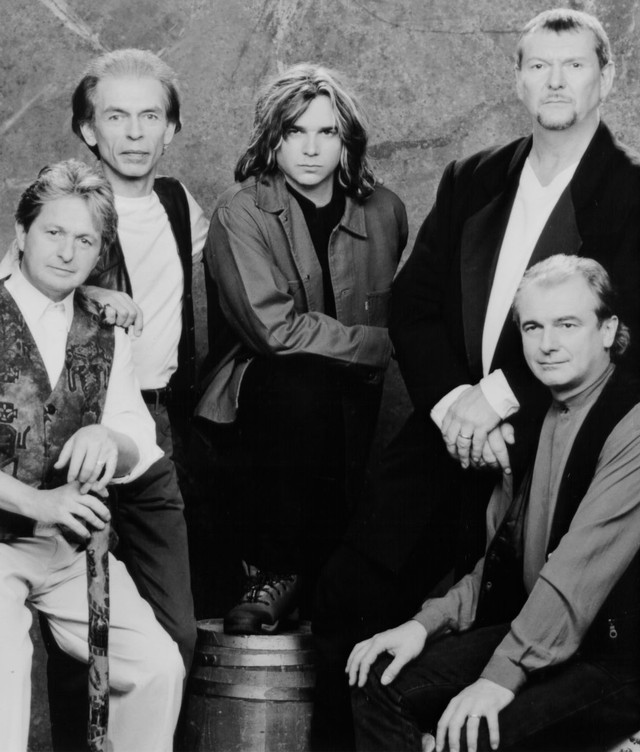
Alan White

Christopher R.Squire
James Murphy

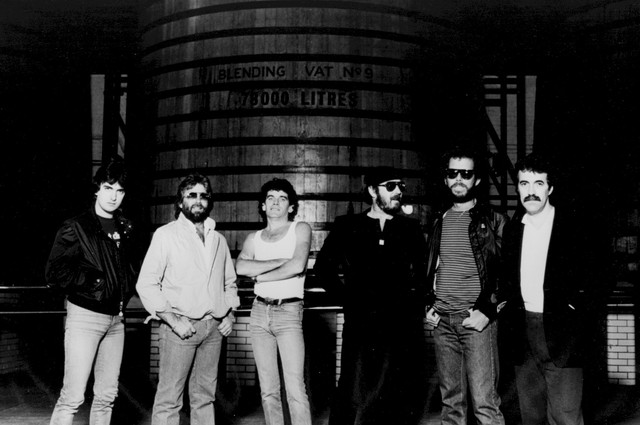
Guy Pratt
Lee Harris
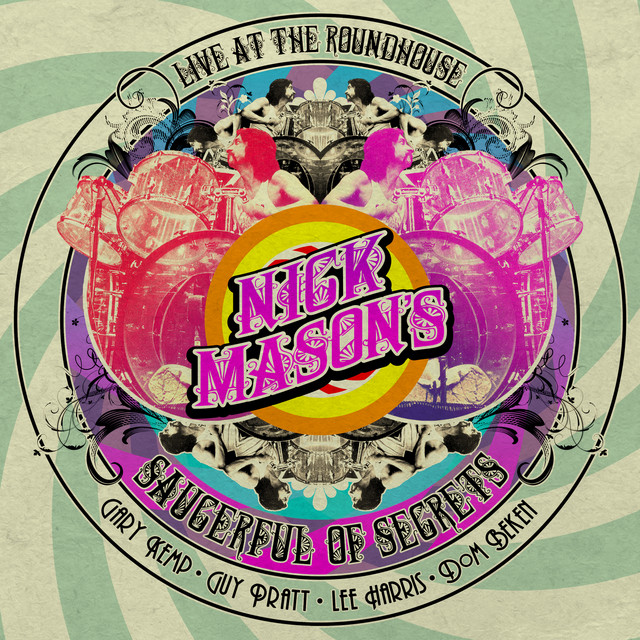
Nick Mason's Saucerful of Secrets



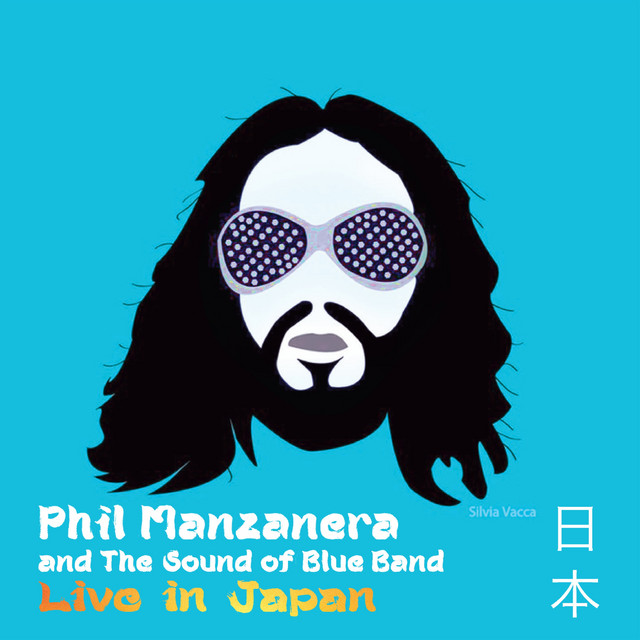
Phil Manzanera and The Sound of Blue Band

Mark Salisbury
Peter Banks
Colin Bass
