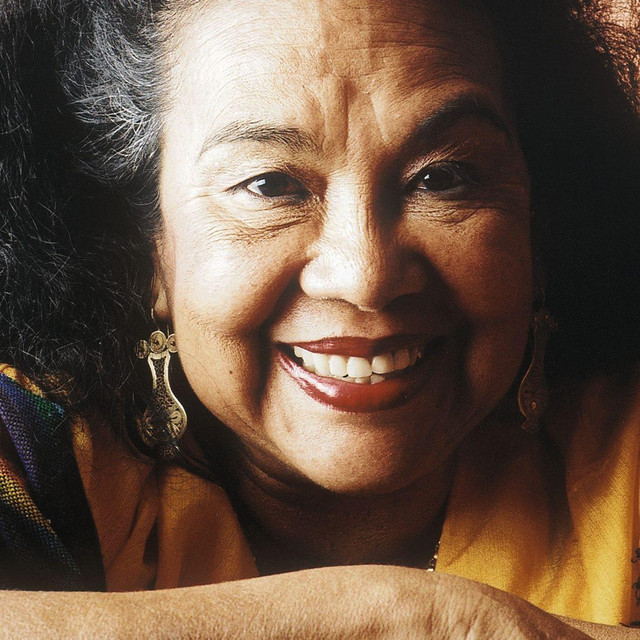
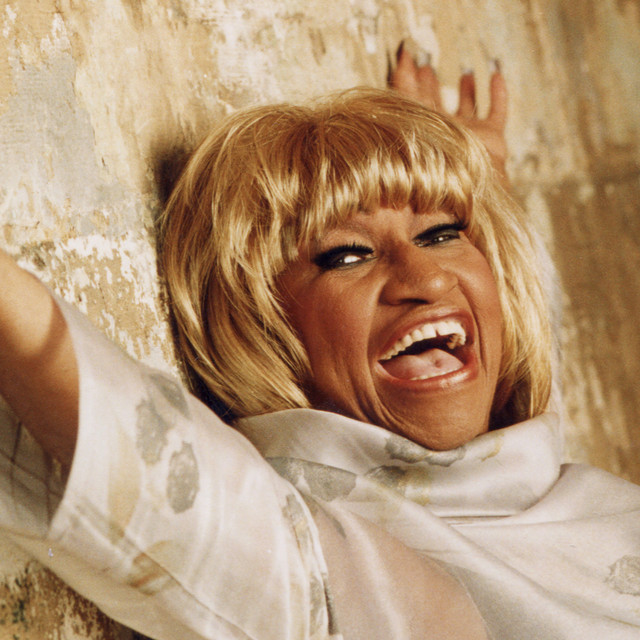
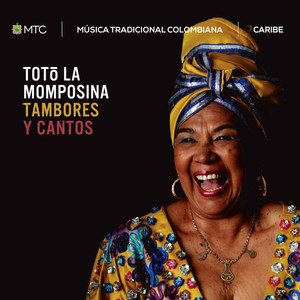
Totó La Momposina exemplifies the living tradition of Colombian folk music, having carefully studied and performed her native song and dance for several decades. Colombia's indigenous music is a heavily rhythmic hybrid of Spanish, native South American, and Afro-Cuban influences, and La Momposina mastered its different styles and rhythmic variations so well that she was invited to perform at the 1982 Nobel Prize ceremony for Colombian novelist Gabriel Garcia Marquez. La Momposina was born in the village of Talaigua, on the island of Mompos, located in the Magdalena River near Colombia's northern coast. Not only was her family musical (her parents were fourth-generation musicians, her father a drummer, her mother a singer and dancer), but her village was blessed with the presence of Ramona Ruiz, a skilled, veteran cantadora (female peasant singer) who helped train La Momposina in her teenage years. La Momposina traveled up and down the Colombian coast, learning as much music and dance as she could -- from village celebrations to the common, everyday songs sung as accompaniment to daily labor. During this extended research period, La Momposina was honing her vocal and performance skills as well, discovering a rich power in her voice that soon made her extremely popular locally. In 1968 (sometime in her twenties), La Momposina formed her own band, continuing to perform at smaller local functions but also expanding her horizons in the hopes of building a professional career. Word of her vocal prowess spread quickly, and by the '70s, she had begun making international appearances, touring Europe and most of the Western Hemisphere. In 1982, she performed at a ceremony honoring Garcia Marquez with the Nobel Prize in Literature, and subsequently spent four years in Paris studying the history of dance at the Sorbonne. During this time, La Momposina recorded her first album, 1985's Totó La Momposina y Sus Tambores (released on <a href="spotify:search:label%3A%22Auvidis%22">Auvidis</a>). She returned to Colombia in 1987, reconnecting with her roots by touring in the more immediate region and also traveling to Cuba for further musical study. In 1991, La Momposina was invited to join <a href="spotify:artist:7C4sUpWGlTy7IANjruj02I">Peter Gabriel</a>'s WOMAD concert festival; she toured the world once again, and subsequently recorded a second album for <a href="spotify:artist:7C4sUpWGlTy7IANjruj02I">Gabriel</a>'s Real World label. La Candela Viva was released in 1993 to much acclaim, and made La Momposina in great demand at music festivals around the world. Carmelina appeared in Europe in 1996, and La Momposina moved to England, traveling between the U.K., Europe, and South America. She continued to perform across the globe, incorporating her children, and grandchildren, into her large performing troupe and elaborate stage show. Her fourth album, Pacanto, was released in 2001. It garnered her a Latin Grammy nomination for Best Traditional Tropical Album.
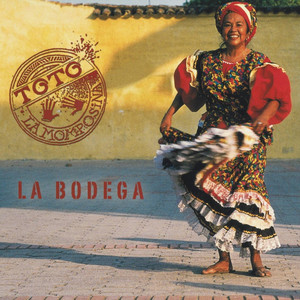
She spent the next eight years touring the globe before returning to live in and work Colombia. In 2006, she received a lifetime achievement award from Womex. She also resumed recording in 2009 and issued La Bodega on <a href="spotify:search:label%3A%22Astar+Artes%22">Astar Artes</a>. In 2013, she was awarded a Latin Grammy for lifetime achievement as well, and released an album for Sony Columbia in 2014's El Asunto.
Back in 2009, Swiss producer and DJ <a href="spotify:artist:3xRCzkcc1kranGVzx6foMG">Michel Cleis</a> had issued a house track called "La Mezcla," which contained two samples off La Momposina's classic La Candela Viva; the tune became a European dance club smash and the response prompted <a href="spotify:artist:3xRCzkcc1kranGVzx6foMG">Cleis</a>' label, Cadenza, to request access to the multi-track tapes for the purpose of creating remixes. Producer John Hollis -- who had been at the original 1991 and 1992 sessions -- with Real World's project manager Amanda Jones and other production associates, listened to the complete session masters anew. There were 20 tracks and 40 takes in all. They subsequently remastered both released and unreleased cuts from the sessions and assembled Tambolero -- a revisioned version of La Candela Viva -- in celebration of La Mamposina's 60th anniversary as a recording and touring artist. It was released globally in the summer of 2015. ~ Steve Huey, Rovi