Data may be outdated
Last updated: 9 months ago — Click refresh to get the latest statistics.
Webster Lewis was an American jazz and disco composer, arranger, vocalist, keyboardist, and clarinetist. Best known for his R&B and post-disco hits during the 1970s and '80s, he was initially regarded as a serious jazzman. His early sideman appearances included taking over for <a href="spotify:artist:6Y6kAZs0W9NNsxNbpImPvq">Larry Young</a> in <a href="spotify:artist:056ewKKC7ayMJeL7y5h2cb">Tony Williams' Lifetime</a> and joining the multi-keyboard lineups on projects led by <a href="spotify:artist:1CkthcIyaPjnbHLcwhbU7c">George Russell</a> with <a href="spotify:artist:4jXfFzeP66Zy67HM2mvIIF">Bill Evans</a>, and the Piano Choir. He issued a handful of charting singles and acclaimed albums for <a href="spotify:search:label%3A%22Epic%22">Epic</a>, including 1979's 8 for the 80's and 1981's Let Me Be the One. He worked as a film and TV composer and served a wide variety of artists as an arranger, producer, and composer into the 1990s; he also taught at Howard University.
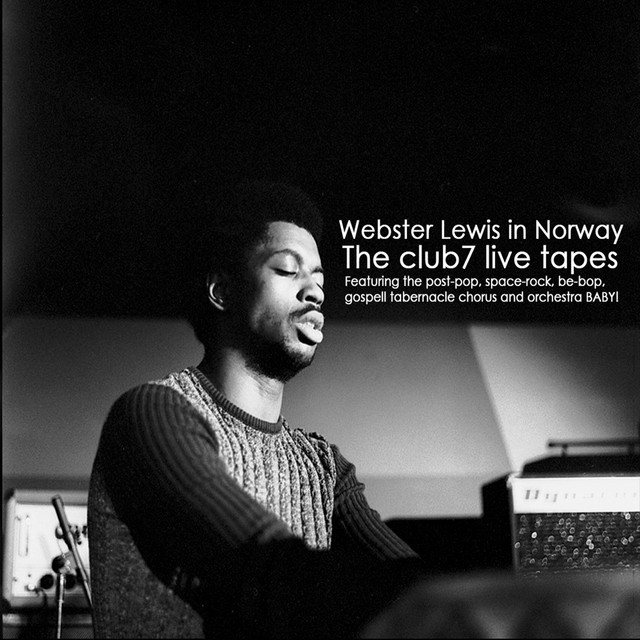
Lewis was born in Baltimore, Maryland in 1943. He began music studies as a child and played piano, clarinet, and other instruments in high school. He graduated from Morgan State College and earned a master's degree from the New England Conservatory of Music, studying with mentor and composer <a href="spotify:artist:4HirYEf3m0K7N1bP2JWcEt">Gunther Schuller</a>. While in Boston and later in New York, Lewis assembled jazz-funk groups and sat in with many others. In 1971, he issued his debut album, Live at Club 7 for Scandinavia's <a href="spotify:search:label%3A%22Sonet%22">Sonet</a> label. After returning to America, he replaced organist <a href="spotify:artist:6Y6kAZs0W9NNsxNbpImPvq">Larry Young</a> in <a href="spotify:artist:056ewKKC7ayMJeL7y5h2cb">Tony Williams' Lifetime</a> for the 1972 album The Old Bum's Rush and worked alongside <a href="spotify:artist:1CkthcIyaPjnbHLcwhbU7c">George Russell</a> and pianist <a href="spotify:artist:4jXfFzeP66Zy67HM2mvIIF">Bill Evans</a> on Living Time, and the former on 1973's Listen to the Silence. Further, he joined the star-studded <a href="spotify:artist:08t8fsEfRI7HSt2MlW2OTX">Stanley Cowell</a>-led roster on the Piano Choir's Handscapes album from <a href="spotify:search:label%3A%22Strata+East%22">Strata East</a> the same year.
Lewis' most enduring legacy is due to the compelling disco/R&B recordings he began releasing in 1976 after signing to <a href="spotify:search:label%3A%22Epic%22">Epic</a>.
"On the Town," the title track of his 1976 label debut, went to number one on the dance charts. Lewis wrote, produced, arranged, and played keys on the set, and hired an elite cast that included trombonist <a href="spotify:artist:04iCc7ybxCf4cQovvIIQX4">Bill Watrous</a>, trumpeters <a href="spotify:artist:3Rsba5XTDhxUyjK4sn1wBj">Randy Brecker</a> and <a href="spotify:artist:5hADqY0YLWaDyc7Ou5BFIo">Lew Soloff</a>, saxophonists <a href="spotify:artist:4PvoN2l7OuhaABa0nDtxPS">Harold Vick</a> and Howard Johnson, and drummers <a href="spotify:artist:1T7xYP9ZRJytj25VAAdsB9">Grady Tate</a> and <a href="spotify:artist:1cF1EPqYh5bucTrzSQQr0y">Victor Lewis</a> in a large cast.
1978's Touch My Love netted three singles though none charted. Instead, DJs locked on to the space age funk track "Barbara Ann," (not the <a href="spotify:artist:3oDbviiivRWhXwIE8hxkVV">Beach Boys</a> song) and made it a de rigueur dancefloor spin across the U.S. and Europe. 1979's 8 for the 80's was co-produced with <a href="spotify:artist:2ZvrvbQNrHKwjT7qfGFFUW">Herbie Hancock</a>, who also appeared on the date, just as Lewis had appeared with most of the <a href="spotify:artist:5JzA5RES9AMM9bK3oDyulT">Headhunters</a> on <a href="spotify:artist:2ZvrvbQNrHKwjT7qfGFFUW">Hancock</a>'s Directstep earlier that year. In addition to the pianist, the studio cast included Paul Jackson, James Gadson, <a href="spotify:artist:6eUXBkQXi2IVfgJgJLxBa1">Wah Wah Watson</a>, and Nathan Watts, as well as a guest spot by the Tower of Power Horns. Among its three club hits was "Give Me Some Emotion," which landed on both the pop and R&B charts. That year Lewis also arranged the strings on <a href="spotify:artist:6Dpx8fRtNa9CEORHIiBQTG">Lamont Dozier</a>'s Bittersweet, and wrote charts and played on two tracks on <a href="spotify:artist:1T0wRBO0CK0vK8ouUMqEl5">Tom Jones</a>'s Rescue Me.
1981's Let Me Be the One was Lewis' final outing for <a href="spotify:search:label%3A%22Epic%22">Epic</a>. Behind the charting title track single and "Kemo-Kimo," the album charted at R&B, dance, and jazz. Its massive studio cast included <a href="spotify:artist:2ZvrvbQNrHKwjT7qfGFFUW">Hancock</a>, percussionist <a href="spotify:artist:74Dnr5flGLfLeyV85l0NUr">Willie Bobo</a>, saxophonist Fred Jackson, Jr., guitarist <a href="spotify:artist:2XFFw5lrnmJmnT9CmsPpGy">David T. Walker</a>, trumpeter <a href="spotify:artist:6ncD8Ffk7sDchcMZUDw68k">Oscar Brashear</a>, and trombonist <a href="spotify:artist:2uE66NiUti6Wpz90SD4eam">Fred Wesley</a>. That same year, the European label <a href="spotify:search:label%3A%22Unlimited+Gold%22">Unlimited Gold</a> issued Love Unlimited Orchestra Presents Mr. Webster Lewis: Welcome Aboard. It showcased Lewis leading the group in Brazil, and co-producing and arranging with <a href="spotify:artist:3rfgbfpPSfXY40lzRK7Syt">Barry White</a>. Both of its singles, "Welcome Aboard" and "Night Life in the City" charted in Europe and Asia.
Lewis subsequently produced albums, composed, and arranged for <a href="spotify:artist:742YR9ZgF0tCO5juBfvPAU">Gwen McCrae</a>, <a href="spotify:artist:0hirZ8kPPdM9pzXpoagB4w">Marlena Shaw</a>, <a href="spotify:artist:03WrOkxi8Ktm2tBYI1Z7vV">Michael Wycoff</a>, <a href="spotify:artist:0TF2NxkJZPQoX1H53rEFM1">Gladys Knight & The Pips</a>, <a href="spotify:artist:4UgoOhsP6AlN1SIkFRBCit">Kimiko Kasai</a>, <a href="spotify:artist:71cyZ6pH0KrM2MdtO8RGmy">Merry Clayton</a>, <a href="spotify:artist:3sgUnR8TF35euWEV07RPyO">Thelma Houston</a>, and <a href="spotify:artist:2yrbLiuBmc9j81lTX3XUuI">the Jacksons</a>. The '80s also saw Lewis enter the world of film scoring. He composed three for director George Bowers: The Hearse (1980), 1981's Body & Soul, and 1983's My Tutor. He also scored Stan Lathan's The Sky Is Grey, before moving off into producing and composing for television commercials.
While Lewis spent most of the '90s in the studio composing arranging, and producing music for television commercials, he continued writing for R&B artists, netting prime contributions to albums by Yo Yo, <a href="spotify:artist:69k2JfIQxMpBbc1wtmHWZY">Will Downing</a>, <a href="spotify:artist:4CbuwI3bEF7gQOwpxBKtal">London Elektricity</a>, and others. Between 1995 and 1999 he served as a visiting professor at Howard University in Washington, D.C., where he taught jazz voice and arrangement classes. Lewis passed in 2002 from complications of diabetes and pneumonia. His <a href="spotify:search:label%3A%22Epic%22">Epic</a> and <a href="spotify:search:label%3A%22Sonet%22">Sonet</a> catalogs have been reissued several times in Europe and Asia, though never in his home country of the United States. In December 2022, the U.K.'s <a href="spotify:search:label%3A%22Expansion%22">Expansion</a> label released the 16-track remastered compilation, Give Me Some Emotion: The Epic Anthology 1976-1981. ~ Thom Jurek & Eugene Chadbourne, Rovi
Lewis was born in Baltimore, Maryland in 1943. He began music studies as a child and played piano, clarinet, and other instruments in high school. He graduated from Morgan State College and earned a master's degree from the New England Conservatory of Music, studying with mentor and composer <a href="spotify:artist:4HirYEf3m0K7N1bP2JWcEt">Gunther Schuller</a>. While in Boston and later in New York, Lewis assembled jazz-funk groups and sat in with many others. In 1971, he issued his debut album, Live at Club 7 for Scandinavia's <a href="spotify:search:label%3A%22Sonet%22">Sonet</a> label. After returning to America, he replaced organist <a href="spotify:artist:6Y6kAZs0W9NNsxNbpImPvq">Larry Young</a> in <a href="spotify:artist:056ewKKC7ayMJeL7y5h2cb">Tony Williams' Lifetime</a> for the 1972 album The Old Bum's Rush and worked alongside <a href="spotify:artist:1CkthcIyaPjnbHLcwhbU7c">George Russell</a> and pianist <a href="spotify:artist:4jXfFzeP66Zy67HM2mvIIF">Bill Evans</a> on Living Time, and the former on 1973's Listen to the Silence. Further, he joined the star-studded <a href="spotify:artist:08t8fsEfRI7HSt2MlW2OTX">Stanley Cowell</a>-led roster on the Piano Choir's Handscapes album from <a href="spotify:search:label%3A%22Strata+East%22">Strata East</a> the same year.
Lewis' most enduring legacy is due to the compelling disco/R&B recordings he began releasing in 1976 after signing to <a href="spotify:search:label%3A%22Epic%22">Epic</a>.
"On the Town," the title track of his 1976 label debut, went to number one on the dance charts. Lewis wrote, produced, arranged, and played keys on the set, and hired an elite cast that included trombonist <a href="spotify:artist:04iCc7ybxCf4cQovvIIQX4">Bill Watrous</a>, trumpeters <a href="spotify:artist:3Rsba5XTDhxUyjK4sn1wBj">Randy Brecker</a> and <a href="spotify:artist:5hADqY0YLWaDyc7Ou5BFIo">Lew Soloff</a>, saxophonists <a href="spotify:artist:4PvoN2l7OuhaABa0nDtxPS">Harold Vick</a> and Howard Johnson, and drummers <a href="spotify:artist:1T7xYP9ZRJytj25VAAdsB9">Grady Tate</a> and <a href="spotify:artist:1cF1EPqYh5bucTrzSQQr0y">Victor Lewis</a> in a large cast.
1978's Touch My Love netted three singles though none charted. Instead, DJs locked on to the space age funk track "Barbara Ann," (not the <a href="spotify:artist:3oDbviiivRWhXwIE8hxkVV">Beach Boys</a> song) and made it a de rigueur dancefloor spin across the U.S. and Europe. 1979's 8 for the 80's was co-produced with <a href="spotify:artist:2ZvrvbQNrHKwjT7qfGFFUW">Herbie Hancock</a>, who also appeared on the date, just as Lewis had appeared with most of the <a href="spotify:artist:5JzA5RES9AMM9bK3oDyulT">Headhunters</a> on <a href="spotify:artist:2ZvrvbQNrHKwjT7qfGFFUW">Hancock</a>'s Directstep earlier that year. In addition to the pianist, the studio cast included Paul Jackson, James Gadson, <a href="spotify:artist:6eUXBkQXi2IVfgJgJLxBa1">Wah Wah Watson</a>, and Nathan Watts, as well as a guest spot by the Tower of Power Horns. Among its three club hits was "Give Me Some Emotion," which landed on both the pop and R&B charts. That year Lewis also arranged the strings on <a href="spotify:artist:6Dpx8fRtNa9CEORHIiBQTG">Lamont Dozier</a>'s Bittersweet, and wrote charts and played on two tracks on <a href="spotify:artist:1T0wRBO0CK0vK8ouUMqEl5">Tom Jones</a>'s Rescue Me.
1981's Let Me Be the One was Lewis' final outing for <a href="spotify:search:label%3A%22Epic%22">Epic</a>. Behind the charting title track single and "Kemo-Kimo," the album charted at R&B, dance, and jazz. Its massive studio cast included <a href="spotify:artist:2ZvrvbQNrHKwjT7qfGFFUW">Hancock</a>, percussionist <a href="spotify:artist:74Dnr5flGLfLeyV85l0NUr">Willie Bobo</a>, saxophonist Fred Jackson, Jr., guitarist <a href="spotify:artist:2XFFw5lrnmJmnT9CmsPpGy">David T. Walker</a>, trumpeter <a href="spotify:artist:6ncD8Ffk7sDchcMZUDw68k">Oscar Brashear</a>, and trombonist <a href="spotify:artist:2uE66NiUti6Wpz90SD4eam">Fred Wesley</a>. That same year, the European label <a href="spotify:search:label%3A%22Unlimited+Gold%22">Unlimited Gold</a> issued Love Unlimited Orchestra Presents Mr. Webster Lewis: Welcome Aboard. It showcased Lewis leading the group in Brazil, and co-producing and arranging with <a href="spotify:artist:3rfgbfpPSfXY40lzRK7Syt">Barry White</a>. Both of its singles, "Welcome Aboard" and "Night Life in the City" charted in Europe and Asia.
Lewis subsequently produced albums, composed, and arranged for <a href="spotify:artist:742YR9ZgF0tCO5juBfvPAU">Gwen McCrae</a>, <a href="spotify:artist:0hirZ8kPPdM9pzXpoagB4w">Marlena Shaw</a>, <a href="spotify:artist:03WrOkxi8Ktm2tBYI1Z7vV">Michael Wycoff</a>, <a href="spotify:artist:0TF2NxkJZPQoX1H53rEFM1">Gladys Knight & The Pips</a>, <a href="spotify:artist:4UgoOhsP6AlN1SIkFRBCit">Kimiko Kasai</a>, <a href="spotify:artist:71cyZ6pH0KrM2MdtO8RGmy">Merry Clayton</a>, <a href="spotify:artist:3sgUnR8TF35euWEV07RPyO">Thelma Houston</a>, and <a href="spotify:artist:2yrbLiuBmc9j81lTX3XUuI">the Jacksons</a>. The '80s also saw Lewis enter the world of film scoring. He composed three for director George Bowers: The Hearse (1980), 1981's Body & Soul, and 1983's My Tutor. He also scored Stan Lathan's The Sky Is Grey, before moving off into producing and composing for television commercials.
While Lewis spent most of the '90s in the studio composing arranging, and producing music for television commercials, he continued writing for R&B artists, netting prime contributions to albums by Yo Yo, <a href="spotify:artist:69k2JfIQxMpBbc1wtmHWZY">Will Downing</a>, <a href="spotify:artist:4CbuwI3bEF7gQOwpxBKtal">London Elektricity</a>, and others. Between 1995 and 1999 he served as a visiting professor at Howard University in Washington, D.C., where he taught jazz voice and arrangement classes. Lewis passed in 2002 from complications of diabetes and pneumonia. His <a href="spotify:search:label%3A%22Epic%22">Epic</a> and <a href="spotify:search:label%3A%22Sonet%22">Sonet</a> catalogs have been reissued several times in Europe and Asia, though never in his home country of the United States. In December 2022, the U.K.'s <a href="spotify:search:label%3A%22Expansion%22">Expansion</a> label released the 16-track remastered compilation, Give Me Some Emotion: The Epic Anthology 1976-1981. ~ Thom Jurek & Eugene Chadbourne, Rovi
Monthly Listeners
10,356
Monthly Listeners History
Track the evolution of monthly listeners over the last 28 days.
Followers
2,561
Followers History
Track the evolution of followers over the last 28 days.
Top Cities
629 listeners

140 listeners
139 listeners

137 listeners
116 listeners