Data may be outdated
Last updated: 9 months ago — Click refresh to get the latest statistics.
The preeminent Chicago blues bassist of the postwar era, Willie Kent was the city's last surviving link to the Mississippi Delta tradition, backing a who's who of immortals including <a href="spotify:artist:4y6J8jwRAwO4dssiSmN91R">Muddy Waters</a>, <a href="spotify:artist:0Wxy5Qka8BN9crcFkiAxSR">Howlin' Wolf</a>, and <a href="spotify:artist:6XYy5PbBFvsABSY2ZS6R8u">Junior Parker</a> as well as fronting his own long-running band, the Gents. Born in Inverness, MS, on February 24, 1936, Kent was the product of a sharecropping family, and was enlisted to pick cotton at the age of six. While local musician Dewitt Munson afforded his first exposure to the blues, as a teen he began dialing in Helena, AR's influential radio station KFFA, where the King Biscuit Time broadcast served as his introduction to formative influences including <a href="spotify:artist:7dSnChJjb0jdfulJsIijoC">Arthur "Big Boy" Crudup</a>, <a href="spotify:artist:1qxTNsrSi4fNXVO0sbMsl4">Sonny Boy Williamson</a>, and <a href="spotify:artist:1ycL0Ct3hz0glGDIwsUyNG">Robert Nighthawk</a>. By age 11, Kent was a surreptitious fixture at the Highway 61 club the Harlem Inn, catching acts headlined by <a href="spotify:artist:0Wxy5Qka8BN9crcFkiAxSR">Howlin' Wolf</a> and <a href="spotify:artist:0FAxkBiT0g3jKF2AaKEipb">Ike Turner</a>. Two years later, he left home for Memphis, and after a brief tenure at a Florida gas station, he migrated to Chicago at the age of 16. There Kent bought his first guitar, which he loaned to musician Willie Hudson in exchange for lessons. In 1959, he joined Hudson's band Ralph & the Red Tops as a chauffeur, occasionally appearing on-stage as a vocalist. Whenever Hudson's bassist brother showed up for a gig too drunk to perform, Kent was summoned as his replacement, eventually taking over the position for good.
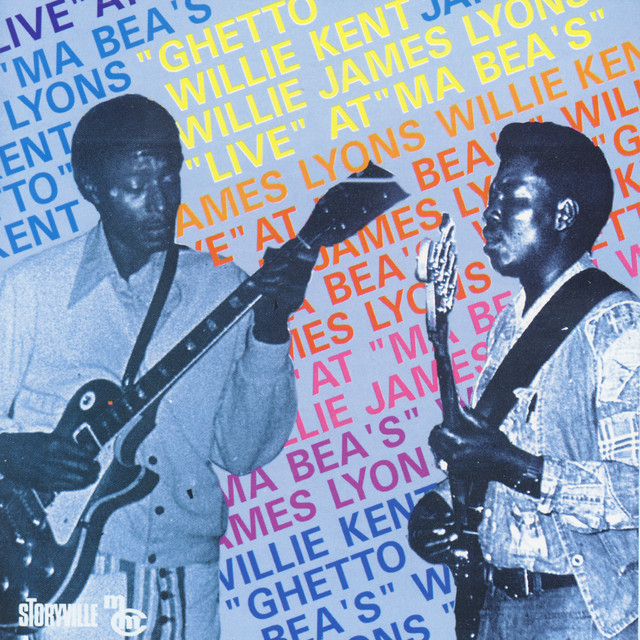
Upon joining <a href="spotify:artist:0MPtuQaV2GiRdLjAkPOaan">Little Milton</a>'s band in 1961, Kent's notoriety grew, and he became a steady presence at Kansas City Red's legendary "Blue Monday" parties. Kent was renowned as much for his talent as for his professionalism, a rare commodity in the blues world, and he regularly sat in with greats spanning from <a href="spotify:artist:4y6J8jwRAwO4dssiSmN91R">Muddy Waters</a> to <a href="spotify:artist:22JuR9OeENcP54XN5TlNWS">Little Walter</a>. After leaving <a href="spotify:artist:0MPtuQaV2GiRdLjAkPOaan">Little Milton</a>, he tenured with Arthur Stallworth & the Chicago Playboys as the 1960s came to a close, followed by stints in support of <a href="spotify:artist:3b0MiHp4LNaHJqDeu0YyLZ">Hip Linkchain</a> and <a href="spotify:artist:69mMUlfVNVGQsw733rBShc">Jimmy Dawkins</a>. After returning from a European tour, <a href="spotify:artist:69mMUlfVNVGQsw733rBShc">Dawkins</a> relinquished his headlining gig at the West Side blues club Ma Bea's Lounge to Kent, who for the first time assembled his own band, Sugar Bear & the Beehives, with guitarist Willie James Lyons and drummer Robert Plunkett. Ma Bea's would serve as the setting for Kent's debut LP, 1975's live release Ghetto, and remained his home for over six years. In 1982, he returned to sideman duties, joining <a href="spotify:artist:0jr3aWcRKkO3LqX09eWbot">Eddie Taylor</a> and contributing to his acclaimed 1985 swan song Bad Boy. After <a href="spotify:artist:0jr3aWcRKkO3LqX09eWbot">Taylor</a> died that Christmas, Kent recruited his guitarist <a href="spotify:artist:1FIws8DXI9Bfv29LBhcRWX">Johnny B. Moore</a> and drummer Tim Taylor to form Willie Kent & the Gents: as their fellow bluesmen adopted an increasingly slick sensibility inspired by commercial R&B, the Gents championed the classic Delta 12-bar tradition, emerging as a favorite of blues purists at home and abroad.
After a series of heart ailments forced Kent to undergo triple bypass surgery in 1989, he spent his recovery examining his life and career, finally abandoning his longtime trucking gig in favor of pursuing music full-time. I'm What You Need, his first solo LP in 14 years, soon followed on the Big Boy label and proved the first in a flurry of releases that next included his Delmark debut, Ain't It Nice, which earned the Library of Congress Award for Best Folk/Blues Album of 1991. Kent also signed to the Austrian label Wolf for a pair of LPs, 1991's King of Chicago's West Side Blues and Live at B.L.U.E.S. in Chicago. With so many new records to his credit, it was inevitable that Kent finally earned the attention of blues fans and critics across the globe, and in 1995, he won the W.C. Handy Award for Best Blues Instrumentalist, Bass. Two years later, he earned the award again, and went on to claim the prize in nine consecutive years. Kent also notched five consecutive Most Outstanding Blues Musician, Bass honors from the magazine Living Blues, and with 1998's Delmark release Make Room for the Blues took home Chicago's Album of the Year prize. In early 2005, Kent was diagnosed with cancer, but continued his busy live schedule in spite of chemotherapy treatments. He lost his battle with the disease on March 2, 2006, just a week past his 70th birthday. ~ Jason Ankeny, Rovi
Upon joining <a href="spotify:artist:0MPtuQaV2GiRdLjAkPOaan">Little Milton</a>'s band in 1961, Kent's notoriety grew, and he became a steady presence at Kansas City Red's legendary "Blue Monday" parties. Kent was renowned as much for his talent as for his professionalism, a rare commodity in the blues world, and he regularly sat in with greats spanning from <a href="spotify:artist:4y6J8jwRAwO4dssiSmN91R">Muddy Waters</a> to <a href="spotify:artist:22JuR9OeENcP54XN5TlNWS">Little Walter</a>. After leaving <a href="spotify:artist:0MPtuQaV2GiRdLjAkPOaan">Little Milton</a>, he tenured with Arthur Stallworth & the Chicago Playboys as the 1960s came to a close, followed by stints in support of <a href="spotify:artist:3b0MiHp4LNaHJqDeu0YyLZ">Hip Linkchain</a> and <a href="spotify:artist:69mMUlfVNVGQsw733rBShc">Jimmy Dawkins</a>. After returning from a European tour, <a href="spotify:artist:69mMUlfVNVGQsw733rBShc">Dawkins</a> relinquished his headlining gig at the West Side blues club Ma Bea's Lounge to Kent, who for the first time assembled his own band, Sugar Bear & the Beehives, with guitarist Willie James Lyons and drummer Robert Plunkett. Ma Bea's would serve as the setting for Kent's debut LP, 1975's live release Ghetto, and remained his home for over six years. In 1982, he returned to sideman duties, joining <a href="spotify:artist:0jr3aWcRKkO3LqX09eWbot">Eddie Taylor</a> and contributing to his acclaimed 1985 swan song Bad Boy. After <a href="spotify:artist:0jr3aWcRKkO3LqX09eWbot">Taylor</a> died that Christmas, Kent recruited his guitarist <a href="spotify:artist:1FIws8DXI9Bfv29LBhcRWX">Johnny B. Moore</a> and drummer Tim Taylor to form Willie Kent & the Gents: as their fellow bluesmen adopted an increasingly slick sensibility inspired by commercial R&B, the Gents championed the classic Delta 12-bar tradition, emerging as a favorite of blues purists at home and abroad.
After a series of heart ailments forced Kent to undergo triple bypass surgery in 1989, he spent his recovery examining his life and career, finally abandoning his longtime trucking gig in favor of pursuing music full-time. I'm What You Need, his first solo LP in 14 years, soon followed on the Big Boy label and proved the first in a flurry of releases that next included his Delmark debut, Ain't It Nice, which earned the Library of Congress Award for Best Folk/Blues Album of 1991. Kent also signed to the Austrian label Wolf for a pair of LPs, 1991's King of Chicago's West Side Blues and Live at B.L.U.E.S. in Chicago. With so many new records to his credit, it was inevitable that Kent finally earned the attention of blues fans and critics across the globe, and in 1995, he won the W.C. Handy Award for Best Blues Instrumentalist, Bass. Two years later, he earned the award again, and went on to claim the prize in nine consecutive years. Kent also notched five consecutive Most Outstanding Blues Musician, Bass honors from the magazine Living Blues, and with 1998's Delmark release Make Room for the Blues took home Chicago's Album of the Year prize. In early 2005, Kent was diagnosed with cancer, but continued his busy live schedule in spite of chemotherapy treatments. He lost his battle with the disease on March 2, 2006, just a week past his 70th birthday. ~ Jason Ankeny, Rovi
Monthly Listeners
911
Monthly Listeners History
Track the evolution of monthly listeners over the last 28 days.
Followers
1,737
Followers History
Track the evolution of followers over the last 28 days.
Top Cities
12 listeners

12 listeners

12 listeners

12 listeners

10 listeners
Related Artists


Steve Guyger


Lil Ed Williams


Eddie C. Campbell


The James Cotton Blues Band

Charlie Sayles

Carey Bell's Blues Harp Band

Chicago Beau

George "Harmonica" Smith

Robert Lucas

Big George Brock
Paul Delay

Rudi Richard

Louis Myers


Juke Boy Bonner

Little Sammy Davis

The Aces