Data may be outdated
Last updated: 9 months ago — Click refresh to get the latest statistics.
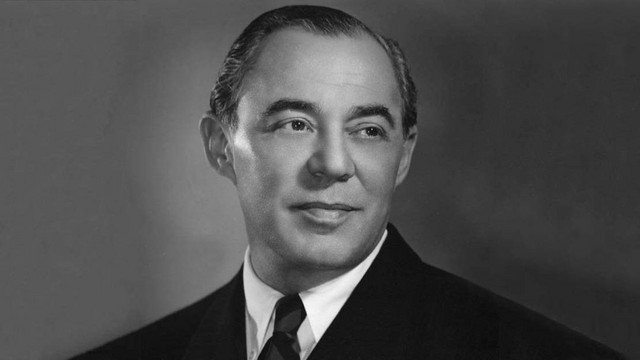
One of the top American pop lyricists of the 1930s and 1940s, E.Y. "Yip" Harburg wrote many hits for Broadway and Hollywood with his main collaborators, composers <a href="spotify:artist:4ZBiItqbJlCp8CwbC5gTke">Jay Gorney</a> and <a href="spotify:artist:7MOUyX1yT017l1Zt0mExIA">Harold Arlen</a>, teaming with the latter on the well-known songs of The Wizard of Oz. Born in 1896 in New York City., Harburg grew up in lower Manhattan and worked on his high school newspaper with <a href="spotify:artist:6Yd6jR0AcWlI8JjJ954IDV">Ira Gershwin</a>. Both he and <a href="spotify:artist:6Yd6jR0AcWlI8JjJ954IDV">Gershwin</a> went on to attend the City College of New York (C.C.N.Y.), and it was there that he began writing lyrics. After graduation, Harburg worked as a journalist in South America, then returned to New York and began an electrical appliance business, which lasted until the stock market crash of 1929. It was then that Harburg focused on work as a lyricist and, through <a href="spotify:artist:6Yd6jR0AcWlI8JjJ954IDV">Gershwin</a>, met his first long-term collaborator, composer <a href="spotify:artist:4ZBiItqbJlCp8CwbC5gTke">Gorney</a>. The songwriting duo wrote for film and the stage beginning with Earl Carroll's Sketchbook of 1929, and still collaborating as late as the early '60s for the (unsuccessful) stage show The Happiest Girl in the World. The biggest hit for the duo was "What Wouldn't I Do for That Man" (1929), which was sung by <a href="spotify:artist:3H6ORBd0KbGgnST31Kp28I">Helen Morgan</a> in two different Paramount films that year. Harburg and <a href="spotify:artist:4ZBiItqbJlCp8CwbC5gTke">Gorney</a> were also responsible for a defining song of the Depression, "Brother, Can You Spare a Dime?" (1932). Through the 1930s, Harburg also worked with composer <a href="spotify:artist:66wHlBv24mr1yH7F4aF6yk">Vernon Duke</a>, with whom he wrote "April in Paris" (1932). Harburg's main collaborator, however, was composer <a href="spotify:artist:7MOUyX1yT017l1Zt0mExIA">Harold Arlen</a>. The duo wrote "It's Only a Paper Moon" in 1933 and a year later, wrote hit songs for the stage show (and later Paramount film) Life Begins at 8:40 with the help of lyricists <a href="spotify:artist:6Yd6jR0AcWlI8JjJ954IDV">Ira Gershwin</a> and <a href="spotify:artist:3vvSZOZ80V7KotrOORpXF7">Billy Rose</a>. Among the popular tunes from this production are "You're a Builder Upper" and "Let's Take a Walk Around the Block." Harburg and <a href="spotify:artist:7MOUyX1yT017l1Zt0mExIA">Arlen</a> wrote for many more Broadway and Hollywood productions, but their crowning achievement was their work for the 1939 cinema classic The Wizard of Oz, which included the Academy Award-winning song "Somewhere Over the Rainbow," as well as many other hits. Harburg continued to write songs for Hollywood and Broadway productions through the early '70s and over the years, worked with many other composers, including <a href="spotify:artist:0mzeuEu2tXNjhVNc1sKVWI">Johnny Green</a>, Lewis Gensler, <a href="spotify:artist:2I94yBi5nYiyVs00T7NxWA">Burton Lane</a>, and <a href="spotify:artist:09E7wcrEyqU2n1rnhzVT0h">Jerome Kern</a>. Harburg also wrote English lyrics for many French, German, and Spanish songs; authored the book Rhymes for the Irreverent; and is a member of the Songwriters Hall of Fame. ~ Joslyn Layne, Rovi
Monthly Listeners
51,170
Monthly Listeners History
Track the evolution of monthly listeners over the last 28 days.
Followers
887
Followers History
Track the evolution of followers over the last 28 days.
Top Cities
1,101 listeners

567 listeners

540 listeners
476 listeners
467 listeners

Related Artists






Jimmy Shirl

Arlen




Wayne Hector
Jonathan & Charlotte



Mirusia




Barbara Padilla