Country
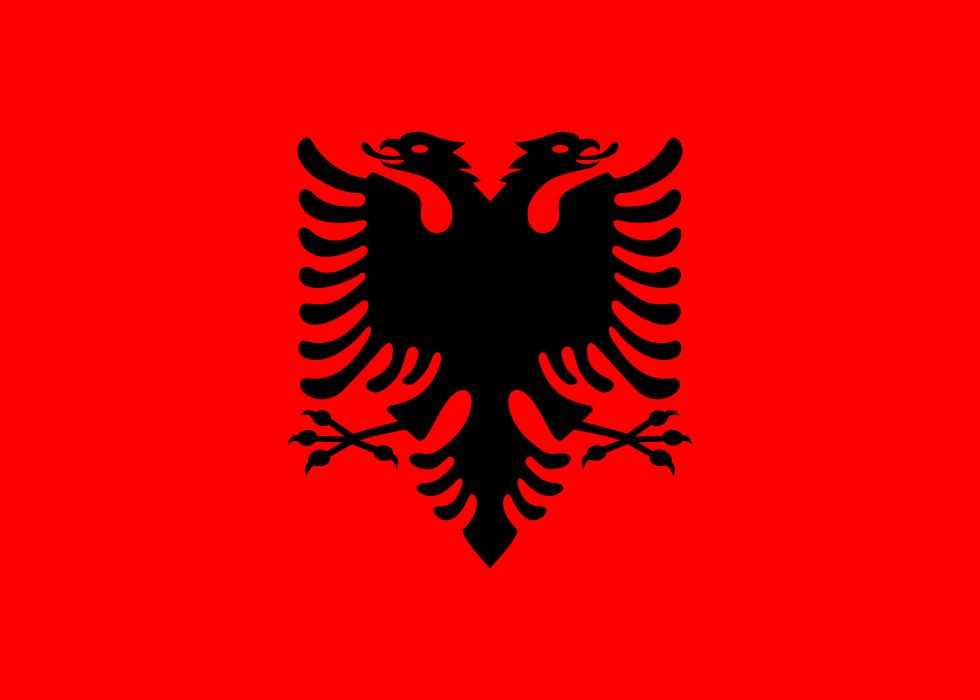
Albania
Top Artists from Albania
Showing 25 of 51 artists











About Albania
Nestled at the crossroads of the Adriatic and Ionian seas, Albania is a country of dramatic landscapes, rugged mountains, and a coastline that has long shaped its music. For music enthusiasts, Albania offers a rare blend: a living tradition of polyphonic singing alongside a vibrant, contemporary scene that thrives in Tirana, Durrës, Shkodër, and beyond. With a population of about 2.8 million, this is a nation where community and song remain central to life.
A cornerstone of Albanian music is iso-polyphony, a three- or four-voice tradition characteristic of the south, notably in Labëria. UNESCO inscribed Albanian iso-polyphony in 2005 as an intangible heritage of humanity, recognizing its haunting overlapping lines and close-knit group singing. In villages and mountain valleys, evenings are often shaped by qifteli and lahuta melodies, using pentatonic scales that feel ancient and intimate, even as tunes move toward a modern pop groove.
The country’s official stages and festivals pulse with both preserved tradition and new energy. Festival i Këngës, held each year in Tirana, has long served as Albania’s national festival and a springboard to international exposure, including the country’s Eurovision involvement. The Gjirokastër National Folklore Festival is another landmark, drawing ensembles from across Albania and neighboring regions to showcase traditional costumes, dancing, and polyphony. In Elbasan, Dita e Verës (Day of Spring) becomes a city-wide celebration with live folk performances, parades, and street music that evoke the season’s renewal.
On the contemporary front, Albania’s pop, folk-pop, and rock scenes are buoyant and varied. In Albania proper, singers such as Anxhela Peristeri, Arilena Ara, Soni Malaj, and Kejsi Tola continue to draw audiences in festivals and clubs alike. Anxhela Peristeri’s triumph at Festival i Këngës and subsequent Eurovision entry brought national pride and a new wave of attention to the Albanian language in pop music. Across the diaspora and in neighboring Balkans, artists of Albanian heritage—Dua Lipa and Rita Ora, for instance—have become global icons, helping to bring Albanian rhythms, language, and mood into mainstream pop. Local producers in Tirana and coastal towns fuse traditional motifs with electronic, R&B, and hip-hop textures, creating a distinctly contemporary Albanian voice.
Venues in Tirana, Durrës, and other cities host everything from orchestral concerts to open-air summer gigs, with the Arena Kombëtare (the national stadium) sometimes serving as a colossal stage for major tours, while intimate theaters and cultural centers provide space for new acts and classic repertoire alike. While rooted in soulful tradition, Albanian music continues to evolve, inviting listeners to hear its past while embracing the future. Albania remains a vibrant laboratory where ancient polyphony meets modern rhythm, and music lovers will find a welcoming, dynamic scene at every corner.
A cornerstone of Albanian music is iso-polyphony, a three- or four-voice tradition characteristic of the south, notably in Labëria. UNESCO inscribed Albanian iso-polyphony in 2005 as an intangible heritage of humanity, recognizing its haunting overlapping lines and close-knit group singing. In villages and mountain valleys, evenings are often shaped by qifteli and lahuta melodies, using pentatonic scales that feel ancient and intimate, even as tunes move toward a modern pop groove.
The country’s official stages and festivals pulse with both preserved tradition and new energy. Festival i Këngës, held each year in Tirana, has long served as Albania’s national festival and a springboard to international exposure, including the country’s Eurovision involvement. The Gjirokastër National Folklore Festival is another landmark, drawing ensembles from across Albania and neighboring regions to showcase traditional costumes, dancing, and polyphony. In Elbasan, Dita e Verës (Day of Spring) becomes a city-wide celebration with live folk performances, parades, and street music that evoke the season’s renewal.
On the contemporary front, Albania’s pop, folk-pop, and rock scenes are buoyant and varied. In Albania proper, singers such as Anxhela Peristeri, Arilena Ara, Soni Malaj, and Kejsi Tola continue to draw audiences in festivals and clubs alike. Anxhela Peristeri’s triumph at Festival i Këngës and subsequent Eurovision entry brought national pride and a new wave of attention to the Albanian language in pop music. Across the diaspora and in neighboring Balkans, artists of Albanian heritage—Dua Lipa and Rita Ora, for instance—have become global icons, helping to bring Albanian rhythms, language, and mood into mainstream pop. Local producers in Tirana and coastal towns fuse traditional motifs with electronic, R&B, and hip-hop textures, creating a distinctly contemporary Albanian voice.
Venues in Tirana, Durrës, and other cities host everything from orchestral concerts to open-air summer gigs, with the Arena Kombëtare (the national stadium) sometimes serving as a colossal stage for major tours, while intimate theaters and cultural centers provide space for new acts and classic repertoire alike. While rooted in soulful tradition, Albanian music continues to evolve, inviting listeners to hear its past while embracing the future. Albania remains a vibrant laboratory where ancient polyphony meets modern rhythm, and music lovers will find a welcoming, dynamic scene at every corner.