
Country
Armenia
Top Artists from Armenia
Showing 25 of 63 artists



















About Armenia
Armenia sits at the crossroads of Europe and the Caucasus, a small nation of rugged beauty and a bold musical heartbeat. With a population of roughly 3 million, it has long fused ancient chant, folk polyphony, and a restless curiosity for new sounds into a uniquely communicative soundscape. For music enthusiasts, Armenia offers a living archive and a generative studio — a place where centuries-old tradition meets contemporary experimentation.
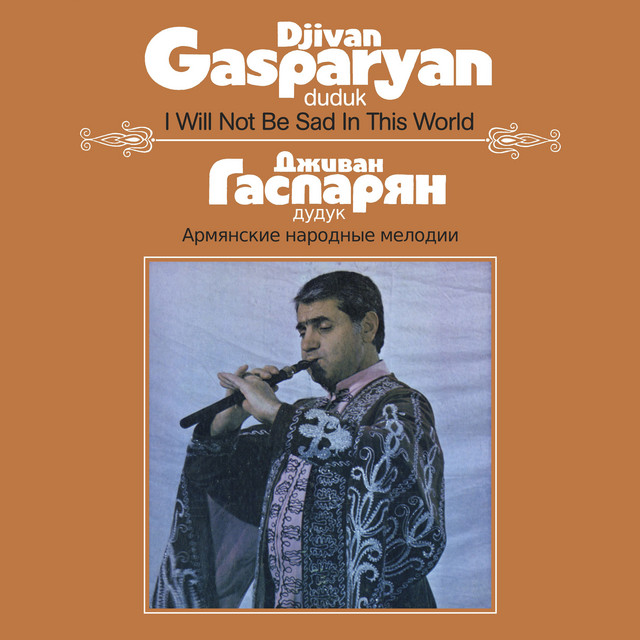
The bedrock is traditional music: liturgical chant from the Armenian Apostolic Church, polyphonic folk songs learned by heart, and instrumental voices that still stir gatherings in villages and city squares. The duduk, a double-reed wooden flute whose warm, plaintive timber can hold a listener in a single phrase, has become one of Armenia’s most enduring emissaries to the world. Djivan Gasparyan, the quintessential duduk master, has carried Armenian timbre onto concert stages and film scores from Europe to Hollywood, drawing admiration from audiences who may never have heard Armenian scales before. Alongside this, bagpipes-like zurna, the kanun’s glinting strings, and intimate dances such as the kochari frame a culture where music is communal, celebratory, and expressive.
At the contemporary edge, Armenia is represented by artists who cross borders with ease. Serj Tankian of System of a Down has helped bring Armenian musicality and history to global rock audiences while also pursuing political and artistic projects rooted in cultural memory. Sirusho captivated the Eurovision stage in 2008 with Qélé, Qélé and helped place Armenian folk-inflected pop on the world map. Iveta Mukuchyan followed with a bold, modern pop sensibility in Eurovision 2016, while Aram MP3 and other artists continue to blend electronic, hip hop, and traditional motifs. The legacy also includes Charles Aznavour, the Armenian-French icon whose career bridged two continents and two languages, underscoring how Armenian roots can radiate internationally.
Armenia’s venues tell the same story as its artists: the hallmarks of a nation with a long aristocratic tradition in music studios and stages. The National Opera and Ballet Theatre in Yerevan anchors large-scale classical productions, while the Komitas Concert Hall hosts intimate chamber and folk-inspired programming. The country’s clubs and bars in Yerevan, Gyumri, and Vanadzor foster a lively indie and electronic scene, and the Armenian diaspora—especially in the United States, Russia, Lebanon, and Europe—continually spices collaborations and new projects.
In global music terms, Armenia’s influence is subtle but resonant. The duduk and Armenian modal colorings have informed orchestral and film scores, and the country’s performers often serve as cultural ambassadors. For any music lover, Armenia offers a rich blend of history, craft, and experimentation: a nation where ancient vowels and new tempos exist in the same breath.
Armenia’s landscapes shape its music: high plateaus, monasteries, and valleys echoing with chants that artists translate into contemporary arrangements. Community and church choirs keep a polyphonic heritage alive, while modern producers fuse electronic textures with ethnic melodies, creating a distinctive, cinematic sound. Local composers, writing with native warmth, draw international audiences and broaden Armenia’s musical reach for a growing global audience and impact.
The bedrock is traditional music: liturgical chant from the Armenian Apostolic Church, polyphonic folk songs learned by heart, and instrumental voices that still stir gatherings in villages and city squares. The duduk, a double-reed wooden flute whose warm, plaintive timber can hold a listener in a single phrase, has become one of Armenia’s most enduring emissaries to the world. Djivan Gasparyan, the quintessential duduk master, has carried Armenian timbre onto concert stages and film scores from Europe to Hollywood, drawing admiration from audiences who may never have heard Armenian scales before. Alongside this, bagpipes-like zurna, the kanun’s glinting strings, and intimate dances such as the kochari frame a culture where music is communal, celebratory, and expressive.
At the contemporary edge, Armenia is represented by artists who cross borders with ease. Serj Tankian of System of a Down has helped bring Armenian musicality and history to global rock audiences while also pursuing political and artistic projects rooted in cultural memory. Sirusho captivated the Eurovision stage in 2008 with Qélé, Qélé and helped place Armenian folk-inflected pop on the world map. Iveta Mukuchyan followed with a bold, modern pop sensibility in Eurovision 2016, while Aram MP3 and other artists continue to blend electronic, hip hop, and traditional motifs. The legacy also includes Charles Aznavour, the Armenian-French icon whose career bridged two continents and two languages, underscoring how Armenian roots can radiate internationally.
Armenia’s venues tell the same story as its artists: the hallmarks of a nation with a long aristocratic tradition in music studios and stages. The National Opera and Ballet Theatre in Yerevan anchors large-scale classical productions, while the Komitas Concert Hall hosts intimate chamber and folk-inspired programming. The country’s clubs and bars in Yerevan, Gyumri, and Vanadzor foster a lively indie and electronic scene, and the Armenian diaspora—especially in the United States, Russia, Lebanon, and Europe—continually spices collaborations and new projects.
In global music terms, Armenia’s influence is subtle but resonant. The duduk and Armenian modal colorings have informed orchestral and film scores, and the country’s performers often serve as cultural ambassadors. For any music lover, Armenia offers a rich blend of history, craft, and experimentation: a nation where ancient vowels and new tempos exist in the same breath.
Armenia’s landscapes shape its music: high plateaus, monasteries, and valleys echoing with chants that artists translate into contemporary arrangements. Community and church choirs keep a polyphonic heritage alive, while modern producers fuse electronic textures with ethnic melodies, creating a distinctive, cinematic sound. Local composers, writing with native warmth, draw international audiences and broaden Armenia’s musical reach for a growing global audience and impact.