Country
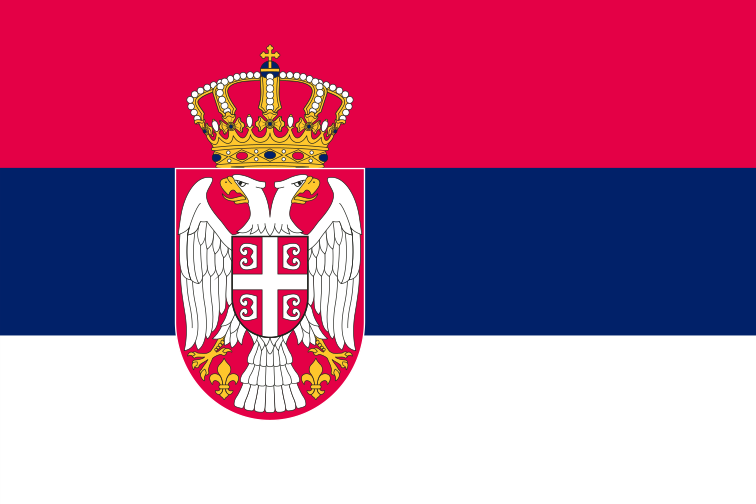
Serbia
Top Artists from Serbia
Showing 25 of 251 artists







About Serbia
Serbia sits at the crossroads of Europe and the Balkans, a country where music is not just entertainment but a social language that binds centuries of tradition with contemporary bravado. With a population of roughly 6.7 million, Serbia's audiences span smoky basements, intimate clubs, and colossal arenas, and its artists routinely cross borders to perform at festivals from Berlin to Belgrade.
Belgrade, the capital, hums with an electric nightlife and a fearless appetite for new sounds. The Danube and Sava rivers host riverfront clubs, while storied spaces such as Dom Omladine Beograda, Sava Center, and the modern Štark Arena welcome everything from indie gigs to international tours. Outside the capital, Novi Sad hosts Exit, one of Europe's most lauded summer festivals, perched on the Petrovaradin Fortress and famed for its late-night mayhem and cross-genre lineups. The brass-bright heart of rural Serbia still beats at Guča, where thousands gather for the Trumpet Festival each August, a ritual of soul-lifting marches and dancing in the sunshine.
Serbian music is a tapestry woven from folk melodies, Roma-influenced brass, gastral rock, and sleek pop. Icons who shaped not only a nation but a regional sound include rock veterans Riblja Čorba and Bajaga i Instruktori, who kept guitar-driven storytelling alive across decades; and Ekatarina Velika, whose post-punk poetry influenced a generation. Within the pop spectrum, turbo-folk enjoyed widespread appeal in the 1990s and 2000s, though today’s artists blend traditional melodies with more contemporary dance influences. In the pop and crossover worlds, Željko Joksimović rose to international recognition with Lane moje and later became a Eurovision standard-bearer for the region, while Marija Šerifović's Molitva delivered Serbia its Eurovision victory in 2007. More recently, Konstrakta pushed Serbia into global streaming conversations with a distinctive, cerebral performance that married art pop and social critique.
Serbia's electronic and club scenes also shine, turning Belgrade and other cities into springboards for DJs, live producers, and collective venues that fuse underground experimentation with mainstream appeal. The country remains a fertile ground for collaborations that blend traditional rhythms with futuristic synths, helping Serbia become a bridge between Eastern European introspection and Western club energy.
Serbia also sustains a vibrant ecosystem that feeds the next wave of musicians. Conservatories and universities in Belgrade, Novi Sad, and Niš train composers, performers, and producers, while independent labels, collectives, and DIY venues sustain a thriving scene beyond the main stages. The Balkan brass tradition persists in modern ensembles that fuse horn-driven melodies with electronic textures, and a growing roster of Serbian artists tours internationally, building fan bases in North America, Western Europe, and Asia. This cross-pollination keeps the music alive at the same time as long-standing classics remain in rotation on radio and in urban clubs.
Whether it's the roar of a guitar at a Dom Omladine show, the communal joy of a brass band on a village square, or the synchronized dance of festival crowds at Exit and Guča, Serbia invites music enthusiasts to listen deeply, dance loudly, and watch a country keep reinventing its sound.
Belgrade, the capital, hums with an electric nightlife and a fearless appetite for new sounds. The Danube and Sava rivers host riverfront clubs, while storied spaces such as Dom Omladine Beograda, Sava Center, and the modern Štark Arena welcome everything from indie gigs to international tours. Outside the capital, Novi Sad hosts Exit, one of Europe's most lauded summer festivals, perched on the Petrovaradin Fortress and famed for its late-night mayhem and cross-genre lineups. The brass-bright heart of rural Serbia still beats at Guča, where thousands gather for the Trumpet Festival each August, a ritual of soul-lifting marches and dancing in the sunshine.
Serbian music is a tapestry woven from folk melodies, Roma-influenced brass, gastral rock, and sleek pop. Icons who shaped not only a nation but a regional sound include rock veterans Riblja Čorba and Bajaga i Instruktori, who kept guitar-driven storytelling alive across decades; and Ekatarina Velika, whose post-punk poetry influenced a generation. Within the pop spectrum, turbo-folk enjoyed widespread appeal in the 1990s and 2000s, though today’s artists blend traditional melodies with more contemporary dance influences. In the pop and crossover worlds, Željko Joksimović rose to international recognition with Lane moje and later became a Eurovision standard-bearer for the region, while Marija Šerifović's Molitva delivered Serbia its Eurovision victory in 2007. More recently, Konstrakta pushed Serbia into global streaming conversations with a distinctive, cerebral performance that married art pop and social critique.
Serbia's electronic and club scenes also shine, turning Belgrade and other cities into springboards for DJs, live producers, and collective venues that fuse underground experimentation with mainstream appeal. The country remains a fertile ground for collaborations that blend traditional rhythms with futuristic synths, helping Serbia become a bridge between Eastern European introspection and Western club energy.
Serbia also sustains a vibrant ecosystem that feeds the next wave of musicians. Conservatories and universities in Belgrade, Novi Sad, and Niš train composers, performers, and producers, while independent labels, collectives, and DIY venues sustain a thriving scene beyond the main stages. The Balkan brass tradition persists in modern ensembles that fuse horn-driven melodies with electronic textures, and a growing roster of Serbian artists tours internationally, building fan bases in North America, Western Europe, and Asia. This cross-pollination keeps the music alive at the same time as long-standing classics remain in rotation on radio and in urban clubs.
Whether it's the roar of a guitar at a Dom Omladine show, the communal joy of a brass band on a village square, or the synchronized dance of festival crowds at Exit and Guča, Serbia invites music enthusiasts to listen deeply, dance loudly, and watch a country keep reinventing its sound.