Country
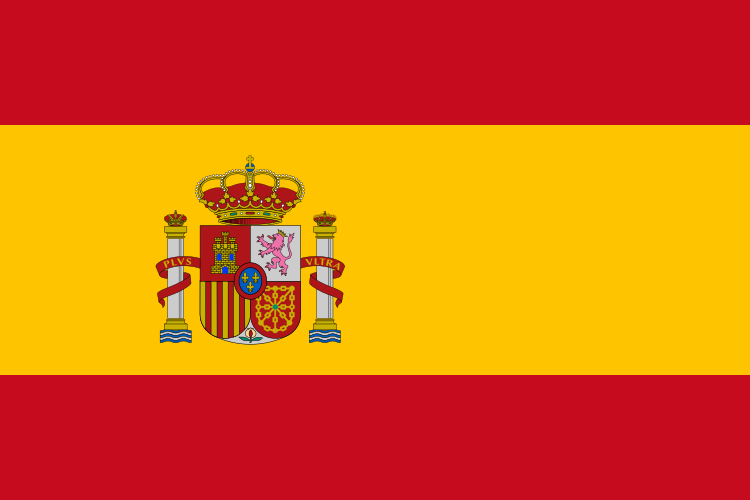
Spain
Top Artists from Spain
Showing 25 of 2,735 artists







About Spain
Spain is a country of sun-drenched coasts, medieval streets, and a living music tradition that threads through daily life from tavern to festival field. With a population of about 47 million, its regional diversity—from the Basque Country and Catalonia to Andalusia and Galicia—breeds a remarkably varied soundscape that has long fascinated music enthusiasts around the world.
Flamenco sits at the heart of Spain’s sonic identity. Born in the songs, dances, and cante jondo of Andalusia, flamenco blends deeply expressive singing, percussive guitar, and rhythmic dance. The world’s most famous cante, cante jondo, and the virtuosic flamenco guitar—think bulerías, soleá, fandangos, and alegrías—have spawned legendary figures. Camarón de la Isla elevated the art in the 1970s and 80s, while Paco de Lucía transformed guitar technique and jazz-infused approaches, expanding flamenco beyond regional borders. Contemporary masters such as Vicente Amigo and Tomatito continue this lineage, and artists like Rosalía fuse flamenco with pop, R&B, and electronic textures, pushing the tradition into new urban territories without losing its fire.
Spain’s long tradition of classical music and guitar is equally influential. From the plaintive tones of guitar maestros Francisco Tárrega and the lush piano and orchestral color of Isaac Albéniz and Enrique Granados to the dramatic operatic lines of conductors and singers who trained in Madrid’s and Barcelona’s conservatories, Spain has repeatedly fed the wider European and Latin American repertoire. The country’s operatic stages are storied venues, with the Teatro Real in Madrid and the Gran Teatre del Liceu in Barcelona hosting world-class productions, while the Palau de la Música Catalana and other concert halls in Catalonia celebrate both modern performance and historic acoustics.
In contemporary popular music, Spain has repeatedly produced globally recognized artists. Latin pop icons such as Alejandro Sanz, Julio Iglesias, and Enrique Iglesias have helped bring Spanish-language songwriting to international radio and arenas. In recent years, Rosalía has become a global force with a hybrid approach that fuses flamenco with trap, reggaeton, and modern pop, earning international awards and reshaping how flamenco can sound in the 21st century. Other notable acts include C. Tangana, Vicente Amigo’s flamenco-jazz collaborations, and rock and indie voices that emerge from Madrid, Barcelona, and the Basque country.
Spain also hosts some of Europe’s most exciting music gatherings. Primavera Sound in Barcelona and Sónar, Barcelona’s landmark electronic/music festival, have crafted a European-scale platform for avant-garde and mainstream acts alike. Madrid’s Mad Cool Festival draws global rock and pop stars, while Bilbao BBK Live, Arenal Sound in Burriana, and FIB Benicàssim (historically influential for indie and electronic artists) have created enduring summer rituals for festivalgoers. These events, along with a vivid network of venues and clubs, sustain Spain’s role as a melting pot where traditional rhythms meet modern experimentation, inviting music lovers to explore something new at every corner.
Flamenco sits at the heart of Spain’s sonic identity. Born in the songs, dances, and cante jondo of Andalusia, flamenco blends deeply expressive singing, percussive guitar, and rhythmic dance. The world’s most famous cante, cante jondo, and the virtuosic flamenco guitar—think bulerías, soleá, fandangos, and alegrías—have spawned legendary figures. Camarón de la Isla elevated the art in the 1970s and 80s, while Paco de Lucía transformed guitar technique and jazz-infused approaches, expanding flamenco beyond regional borders. Contemporary masters such as Vicente Amigo and Tomatito continue this lineage, and artists like Rosalía fuse flamenco with pop, R&B, and electronic textures, pushing the tradition into new urban territories without losing its fire.
Spain’s long tradition of classical music and guitar is equally influential. From the plaintive tones of guitar maestros Francisco Tárrega and the lush piano and orchestral color of Isaac Albéniz and Enrique Granados to the dramatic operatic lines of conductors and singers who trained in Madrid’s and Barcelona’s conservatories, Spain has repeatedly fed the wider European and Latin American repertoire. The country’s operatic stages are storied venues, with the Teatro Real in Madrid and the Gran Teatre del Liceu in Barcelona hosting world-class productions, while the Palau de la Música Catalana and other concert halls in Catalonia celebrate both modern performance and historic acoustics.
In contemporary popular music, Spain has repeatedly produced globally recognized artists. Latin pop icons such as Alejandro Sanz, Julio Iglesias, and Enrique Iglesias have helped bring Spanish-language songwriting to international radio and arenas. In recent years, Rosalía has become a global force with a hybrid approach that fuses flamenco with trap, reggaeton, and modern pop, earning international awards and reshaping how flamenco can sound in the 21st century. Other notable acts include C. Tangana, Vicente Amigo’s flamenco-jazz collaborations, and rock and indie voices that emerge from Madrid, Barcelona, and the Basque country.
Spain also hosts some of Europe’s most exciting music gatherings. Primavera Sound in Barcelona and Sónar, Barcelona’s landmark electronic/music festival, have crafted a European-scale platform for avant-garde and mainstream acts alike. Madrid’s Mad Cool Festival draws global rock and pop stars, while Bilbao BBK Live, Arenal Sound in Burriana, and FIB Benicàssim (historically influential for indie and electronic artists) have created enduring summer rituals for festivalgoers. These events, along with a vivid network of venues and clubs, sustain Spain’s role as a melting pot where traditional rhythms meet modern experimentation, inviting music lovers to explore something new at every corner.