Genre
cedm
Top Cedm Artists
Showing 25 of 2,107 artists











About Cedm
CEDM stands for Christian Electronic Dance Music, a branch of the EDM spectrum that fuses the club-ready energy of electronic production with explicitly faith-centered lyrics and themes. It has carved out its own niche by keeping the dancefloor momentum intact while delivering messages of hope, worship, and spiritual reflection. The genre appeals to listeners who love the texture and tempo of EDM but want the lyrics to align with Christian faith and values. In practice, CEDM often sits at the intersection of energetic pop-EDM and worship-forward electronic music.
Origins and birth of the sound
CEDM emerged in the late 2000s and early 2010s as Christian artists and producers sought ways to reach younger audiences who were already drawn to EDM clubs and festival culture. Building on earlier Christian house, techno, and synth-pop influences, the scene matured through collaborations with worship ministries, Christian labels, and independent producers who leveraged digital distribution. The goal was to preserve the infectious drive of EDM while offering uplifting, faith-affirming content that could be used in both church settings and secular venues.
Sound and production approach
The sonic DNA of CEDM centers on four-on-the-floor drum patterns, bright synths, and punchy basslines, but it also embraces melodic hooks and anthemic choruses that translate well to festival stages. Tempos typically sit in the 128–140 BPM range, accommodating everything from uplifting trance-like progressions to heavier, bass-forward tracks. Producers employ sidechain dynamics, expansive build-ups, and climatic drops, but with melodies and vocal lines that emphasize praise, redemption, or personal transformation. Subgenres within CEDM range from vocal-driven pop-EDM to melodic house and even light forms of melodic dubstep, ensuring the genre can function as both arena-ready club music and a recommendable soundtrack for worship-oriented events.
Key figures and ambassadors
Prominent acts that helped define the sound include Capital Kings, a US-based duo whose early releases became touchstones for Christian EDM, and producer-artist David Thulin, who blends electronic textures with worshipful vocal takes. These pioneers demonstrated that faith-aligned messages could ride mainstream EDM aesthetics and still feel authentic within a Christian context. Today, a growing roster of producers—across North America, Europe, and beyond—continues to push the genre forward, collaborating with worship artists and mainstream EDM talent on crossover tracks and remixes.
Geography and audience
CEDM has found its strongest roots in the United States and the United Kingdom, where Christian radio, festival circuits, and church youth ministries support a thriving ecosystem. It has also built vibrant communities in Brazil, the Philippines, Australia, Sweden, South Korea, and parts of Africa, where electronic music scenes intersect with faith-based initiatives. In these regions, the genre often appears at church conferences, youth events, and boutique festivals, as well as online platforms that curate Christian electronic music.
Live and media presence
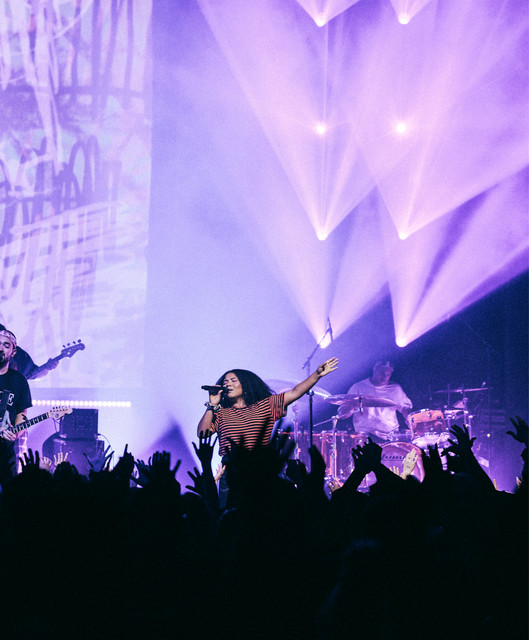
In concert and festival settings, CEDM sets frequently feature visual storytelling, stage worship elements, and live vocal performances, creating a bridge between club culture and worship experiences. Online, dedicated playlists and channels provide a home for vocal-led tracks, high-energy club bangers, and remixes of popular worship songs, ensuring the sound remains accessible to both dance music aficionados and faith-minded fans. For enthusiasts, CEDM offers a lens into how faith-informed artistry can ride the basslines and synth textures powering global EDM while staying rooted in a message of hope.
Origins and birth of the sound
CEDM emerged in the late 2000s and early 2010s as Christian artists and producers sought ways to reach younger audiences who were already drawn to EDM clubs and festival culture. Building on earlier Christian house, techno, and synth-pop influences, the scene matured through collaborations with worship ministries, Christian labels, and independent producers who leveraged digital distribution. The goal was to preserve the infectious drive of EDM while offering uplifting, faith-affirming content that could be used in both church settings and secular venues.
Sound and production approach
The sonic DNA of CEDM centers on four-on-the-floor drum patterns, bright synths, and punchy basslines, but it also embraces melodic hooks and anthemic choruses that translate well to festival stages. Tempos typically sit in the 128–140 BPM range, accommodating everything from uplifting trance-like progressions to heavier, bass-forward tracks. Producers employ sidechain dynamics, expansive build-ups, and climatic drops, but with melodies and vocal lines that emphasize praise, redemption, or personal transformation. Subgenres within CEDM range from vocal-driven pop-EDM to melodic house and even light forms of melodic dubstep, ensuring the genre can function as both arena-ready club music and a recommendable soundtrack for worship-oriented events.
Key figures and ambassadors
Prominent acts that helped define the sound include Capital Kings, a US-based duo whose early releases became touchstones for Christian EDM, and producer-artist David Thulin, who blends electronic textures with worshipful vocal takes. These pioneers demonstrated that faith-aligned messages could ride mainstream EDM aesthetics and still feel authentic within a Christian context. Today, a growing roster of producers—across North America, Europe, and beyond—continues to push the genre forward, collaborating with worship artists and mainstream EDM talent on crossover tracks and remixes.
Geography and audience
CEDM has found its strongest roots in the United States and the United Kingdom, where Christian radio, festival circuits, and church youth ministries support a thriving ecosystem. It has also built vibrant communities in Brazil, the Philippines, Australia, Sweden, South Korea, and parts of Africa, where electronic music scenes intersect with faith-based initiatives. In these regions, the genre often appears at church conferences, youth events, and boutique festivals, as well as online platforms that curate Christian electronic music.
Live and media presence
In concert and festival settings, CEDM sets frequently feature visual storytelling, stage worship elements, and live vocal performances, creating a bridge between club culture and worship experiences. Online, dedicated playlists and channels provide a home for vocal-led tracks, high-energy club bangers, and remixes of popular worship songs, ensuring the sound remains accessible to both dance music aficionados and faith-minded fans. For enthusiasts, CEDM offers a lens into how faith-informed artistry can ride the basslines and synth textures powering global EDM while staying rooted in a message of hope.