Genre
classical piano trio
Top Classical piano trio Artists
Showing 25 of 39 artists






About Classical piano trio
The classical piano trio is the most intimate and flexible of the standard chamber-ensemble formats, built from three equal voices: piano, violin, and cello. Its sound world is at once lyrical and compact, capable of sparkling dialogue, hushed refinement, and sweeping dramatic arcs. Because the piano can both accompany and lead, a true piano trio treats all three instruments as equal partners, weaving lines that trade, overlap, and fuse into a single musical conversation.
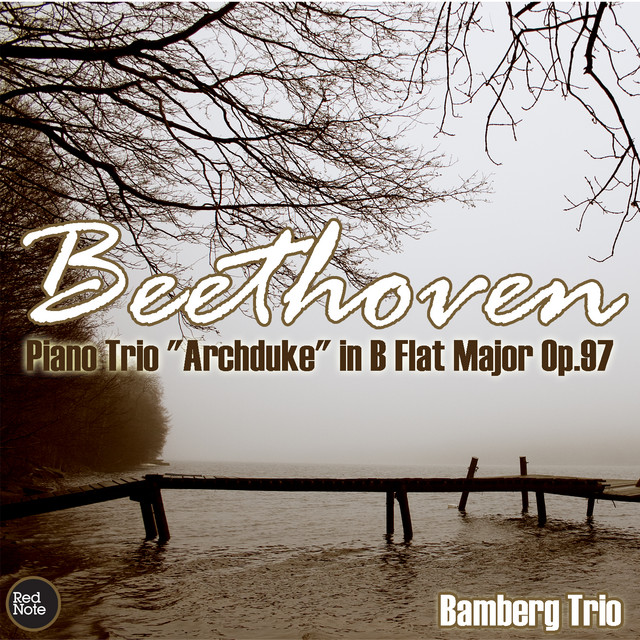
The origin story of the piano trio begins in the late 18th century in Vienna, where the fin-de-siècle energy of the Classical era fostered new forms for small ensembles. Early pioneers such as Haydn and Mozart helped establish the genre’s conventions—three instruments, often in a fast-slow-fast movement layout—while expanding the expressive range of the ensemble. Beethoven then raised the stakes in the early 19th century, turning the medium into a vehicle for architectural structure, psychological depth, and bold sonorities. The Archduke Trio (the Piano Trio in D major, Op. 97) remains a landmark example of how three instruments can fuse into a single, monumental voice. From there, the tradition bloomed through the Romantic era, as composers explored more expansive melodies, richer textures, and subtler emotional shades.
Romantic masters such as Schubert, Mendelssohn, and Brahms carried the form to new heights. Schubert’s piano trios are prized for their song-like canta and lyrical generosity, while Mendelssohn’s and Brahms’s works balance vigorous energy with intimate tenderness, often pushing the ensemble toward a quasi-symmetrical conversation rather than a simple piano accompaniment. The later 19th century also saw contributions from Dvořák and Fauré, who brought folk-inflected color and refined, arching lines to the mix, and later Debussy and Ravel helped push the vocabulary toward impressionistic clarity and precision. The piano trio thus became a core repertoire in concert life, demanding virtuosity, empathy, and tight ensemble playing from performers.
In the 20th century, composers expanded the palette still further. Debussy’s trio evokes mood and color with delicate, floating textures; Ravel’s version leans on lucid architecture and crisp orchestral clarity; Shostakovich and Prokofiev, among others, tested the medium with sharper dissonances and pointed, sometimes tempestuous lines. Today, the genre remains popular across Europe, the United States, and beyond, flourishing in conservatories, recital halls, and festival circuits. It’s anchored in the strong European tradition, but it has found devoted audiences in Japan, Korea, and many other countries, where new ensembles and younger composers continually refresh the repertoire.
For listeners, a pianist-violinist-cellist trio offers a wealth of listening pathways: the quick-witted exchanges of a spirited movement, the heartfelt cantabile of a slow, songful aria, and the dramatic architecture of a multi-movement cycle. Recommended touchstones include Beethoven’s Archduke Trio for awe-inspiring structure, Schubert’s lyrical late-Romantic explorations, Brahms’s robust emotional range, Dvořák’s warm color, Fauré’s refined tenderness, and Debussy’s and Ravel’s coloristic finesse. The classical piano trio remains one of the most expressive and rewarding forms in chamber music, inviting both disciplined listening and joyful immersion.
The origin story of the piano trio begins in the late 18th century in Vienna, where the fin-de-siècle energy of the Classical era fostered new forms for small ensembles. Early pioneers such as Haydn and Mozart helped establish the genre’s conventions—three instruments, often in a fast-slow-fast movement layout—while expanding the expressive range of the ensemble. Beethoven then raised the stakes in the early 19th century, turning the medium into a vehicle for architectural structure, psychological depth, and bold sonorities. The Archduke Trio (the Piano Trio in D major, Op. 97) remains a landmark example of how three instruments can fuse into a single, monumental voice. From there, the tradition bloomed through the Romantic era, as composers explored more expansive melodies, richer textures, and subtler emotional shades.
Romantic masters such as Schubert, Mendelssohn, and Brahms carried the form to new heights. Schubert’s piano trios are prized for their song-like canta and lyrical generosity, while Mendelssohn’s and Brahms’s works balance vigorous energy with intimate tenderness, often pushing the ensemble toward a quasi-symmetrical conversation rather than a simple piano accompaniment. The later 19th century also saw contributions from Dvořák and Fauré, who brought folk-inflected color and refined, arching lines to the mix, and later Debussy and Ravel helped push the vocabulary toward impressionistic clarity and precision. The piano trio thus became a core repertoire in concert life, demanding virtuosity, empathy, and tight ensemble playing from performers.
In the 20th century, composers expanded the palette still further. Debussy’s trio evokes mood and color with delicate, floating textures; Ravel’s version leans on lucid architecture and crisp orchestral clarity; Shostakovich and Prokofiev, among others, tested the medium with sharper dissonances and pointed, sometimes tempestuous lines. Today, the genre remains popular across Europe, the United States, and beyond, flourishing in conservatories, recital halls, and festival circuits. It’s anchored in the strong European tradition, but it has found devoted audiences in Japan, Korea, and many other countries, where new ensembles and younger composers continually refresh the repertoire.
For listeners, a pianist-violinist-cellist trio offers a wealth of listening pathways: the quick-witted exchanges of a spirited movement, the heartfelt cantabile of a slow, songful aria, and the dramatic architecture of a multi-movement cycle. Recommended touchstones include Beethoven’s Archduke Trio for awe-inspiring structure, Schubert’s lyrical late-Romantic explorations, Brahms’s robust emotional range, Dvořák’s warm color, Fauré’s refined tenderness, and Debussy’s and Ravel’s coloristic finesse. The classical piano trio remains one of the most expressive and rewarding forms in chamber music, inviting both disciplined listening and joyful immersion.