Genre
demoscene
Top Demoscene Artists
Showing 25 of 36 artists
















About Demoscene
Demoscene is a music-forward subculture of computer art where real-time audiovisual demos are the main performance. It’s not about games or demos-as-advertisements; it’s about pushing hardware to its limits while blending programming, visuals, and sound into a single, live-executed piece. The music is not just accompaniment—it's an integral, often generated live or tightly synchronized with graphics, crafted under the discipline of size and timing constraints that define the scene.
Origins trace back to the late 1980s in Europe, where home computers like the Commodore 64, Amiga, and Atari ST catalyzed a tight-knit community of coders, graphists, and musicians who formed cracks and then, more innocently, “demos.” Early productions were short, spectacular bursts of code and art shown at informal gatherings; over the early 1990s, dedicated demoparties—specialized weekend events with generous demos, competitions, and live performances—became the beating heart of the culture. The most iconic hubs have been in Northern Europe: Finland, Sweden, Denmark, Norway, and the Netherlands, with vibrant scenes also growing in Germany, the UK, and Russia. Today the demoscene is truly global, but its strongest legacies remain centered in those northern European scenes.
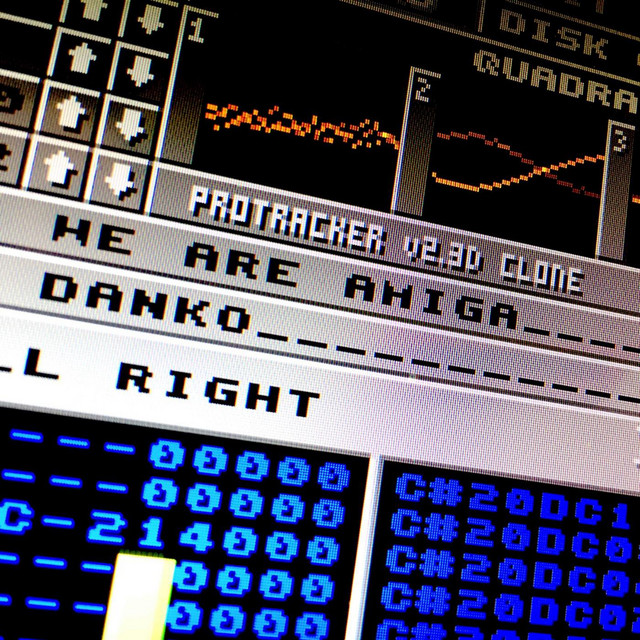
Musically, the demoscene popularized tracker-based, modular sounds that thrived under tight constraints. Tunes were often created in MOD, XM, and IT formats, using software like ProTracker, FastTracker II, Scream Tracker, or Impulse Tracker. The music is designed to be compact yet expressive, and it often employs bright chiptune textures, lush arpeggios, and evolving, algorithmic soundscapes that synchronize with shifting visuals. The result is a sound that feels both retro-futuristic and highly technical—a hallmark that still appeals to many electronic-music enthusiasts today. Some demos push even smaller formats (64K, 4K intros) where musicians must write memorable audio within extreme size limits, making every note and sample count.
Among the genre’s ambassadors and enduring legends, Future Crew from Finland stands as a flagship. Their ambitious productions, including the widely cited Second Reality on the PC, helped define what a modern demo could be in terms of graphic complexity, timing, and integrated sound. Other venerable demogroups—such as Razor 1911, one of the scene’s oldest outfits, and Fairlight, a pioneering group with a storied Amiga and PC catalog—also shaped the architecture and aesthetic of the era. These groups didn’t merely release demos; they set standards for audiovisual storytelling under strict technical constraints, inspiring generations of composers and coders alike.
Demoscene culture is chapters of collaborative creativity. The parties—Assembly in Helsinki, The Party in Denmark, and countless regional meets—became laboratories for experimentation and performance, where music, code, and graphics were crafted in real time before an audience. For music enthusiasts, the demoscene is a bridge between electronic music production, live coding, and pixel-perfect visuals: a place where sound design meets programmatic artistry, and where the past’s 8- or 16-bit charm meets the present’s real-time multimedia experimentation. If you’re drawn to music forged in the furnace of live computation, the demoscene offers a rich, historically deep, and continually evolving sonic landscape.
Origins trace back to the late 1980s in Europe, where home computers like the Commodore 64, Amiga, and Atari ST catalyzed a tight-knit community of coders, graphists, and musicians who formed cracks and then, more innocently, “demos.” Early productions were short, spectacular bursts of code and art shown at informal gatherings; over the early 1990s, dedicated demoparties—specialized weekend events with generous demos, competitions, and live performances—became the beating heart of the culture. The most iconic hubs have been in Northern Europe: Finland, Sweden, Denmark, Norway, and the Netherlands, with vibrant scenes also growing in Germany, the UK, and Russia. Today the demoscene is truly global, but its strongest legacies remain centered in those northern European scenes.
Musically, the demoscene popularized tracker-based, modular sounds that thrived under tight constraints. Tunes were often created in MOD, XM, and IT formats, using software like ProTracker, FastTracker II, Scream Tracker, or Impulse Tracker. The music is designed to be compact yet expressive, and it often employs bright chiptune textures, lush arpeggios, and evolving, algorithmic soundscapes that synchronize with shifting visuals. The result is a sound that feels both retro-futuristic and highly technical—a hallmark that still appeals to many electronic-music enthusiasts today. Some demos push even smaller formats (64K, 4K intros) where musicians must write memorable audio within extreme size limits, making every note and sample count.
Among the genre’s ambassadors and enduring legends, Future Crew from Finland stands as a flagship. Their ambitious productions, including the widely cited Second Reality on the PC, helped define what a modern demo could be in terms of graphic complexity, timing, and integrated sound. Other venerable demogroups—such as Razor 1911, one of the scene’s oldest outfits, and Fairlight, a pioneering group with a storied Amiga and PC catalog—also shaped the architecture and aesthetic of the era. These groups didn’t merely release demos; they set standards for audiovisual storytelling under strict technical constraints, inspiring generations of composers and coders alike.
Demoscene culture is chapters of collaborative creativity. The parties—Assembly in Helsinki, The Party in Denmark, and countless regional meets—became laboratories for experimentation and performance, where music, code, and graphics were crafted in real time before an audience. For music enthusiasts, the demoscene is a bridge between electronic music production, live coding, and pixel-perfect visuals: a place where sound design meets programmatic artistry, and where the past’s 8- or 16-bit charm meets the present’s real-time multimedia experimentation. If you’re drawn to music forged in the furnace of live computation, the demoscene offers a rich, historically deep, and continually evolving sonic landscape.