Genre
early music
Top Early music Artists
Showing 25 of 177 artists






About Early music
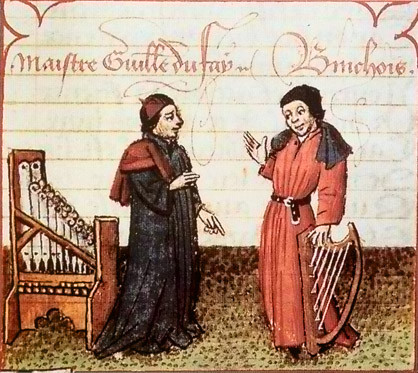
Early music is the umbrella term for the music of the medieval, Renaissance, and early Baroque periods—the repertoire roughly spanning from the 5th century up to the mid-18th century. But it is more than a historical catalog: it represents a concerted attempt to hear the past as it might have sounded to its own listeners. In practice, “early music” today is often performed with historically informed approaches that seek to recreate timbres, tuning, and performance practices of the era, using period instruments such as the harpsichord, viola da gamba, theorbo, sackbuts, cornetts, and natural trumpets, and sometimes with alternative temperaments and rhetorical ornamentation faithful to the era’s conventions.
The modern birth of early music as a conscious movement sits in the 20th century, though its roots run deeper. The early 1900s revival led by Arnold Dolmetsch reintroduced interest in period instruments and repertoire, laying the groundwork for later scholarship. The “true” HIP (historically informed performance) revolution began in earnest after World War II, with visionaries like Nikolaus Harnoncourt and Gustav Leonhardt directing ensembles that performed Bach and other masters on period instruments, often with new, scholarly editions and performance practices. From the 1960s onward, ensembles dedicated to historically informed practice—The Academy of Ancient Music, The English Concert, Les Arts Florissants, and many others—helped establish a distinct, vibrant field rather than a nostalgic curiosity.
Key ambassadors of early music include musicians who became household names for aficionados of the genre. Jordi Savall has done more than any single artist to popularize early music worldwide through his ensembles Hespèrion XX/XXI, La Capella Reial de Catalunya, and his vivid explorations of historical repertoires across cultures. Philharmonic-scale conductors and vocalists such as Nikolaus Harnoncourt, Gustav Leonhardt, Ton Koopman, and René Jacobs pushed the envelope of how Bach, Monteverdi, and their contemporaries could sound on period instruments. Philip Herreweghe, William Christie, and Marc Minkowski built influential laboratories of sound with Les Arts Florissants, La Chapelle Royale, and the Musiciens du Louvre; Emma Kirkby and other early-music vocalists helped crystallize a style of singing that emphasized clarity of text and stylistic nuance. In short, the ambassadors are a global pantheon of conductors, instrumentalists, and singers who have made HIP the norm rather than the exception in many concert halls.
Repertory spans a remarkable range: chant and sacred polyphony from medieval and Renaissance composers like Machaut, Dufay, and Josquin; the grand, liturgical world of Palestrina and Victoria; the late Renaissance motet tradition; and the early Baroque with Monteverdi, Schütz, and core composers of the early 18th century such as Bach, Vivaldi, and their peers. The genre thrives in Europe—especially the United Kingdom, the Netherlands, Germany, and France—where dense historical libraries, conservatories, and festival cultures sustain it. North America, parts of Scandinavia, Australia, and Japan also host vigorous scenes, recording industries, and international festivals.
For enthusiasts, early music offers a distinctive, often illuminating listening experience: the bite of a viola da gamba, the glittering clarity of a well-voiced choir, the immediacy of a theorbo continuo, and the sense of living history in performance choices about tempo, ornament, and timbre. It’s a musical dialogue across centuries—one that invites listeners to hear how early composers shaped form, text, and emotion with the resources and sensibilities of their own time.
The modern birth of early music as a conscious movement sits in the 20th century, though its roots run deeper. The early 1900s revival led by Arnold Dolmetsch reintroduced interest in period instruments and repertoire, laying the groundwork for later scholarship. The “true” HIP (historically informed performance) revolution began in earnest after World War II, with visionaries like Nikolaus Harnoncourt and Gustav Leonhardt directing ensembles that performed Bach and other masters on period instruments, often with new, scholarly editions and performance practices. From the 1960s onward, ensembles dedicated to historically informed practice—The Academy of Ancient Music, The English Concert, Les Arts Florissants, and many others—helped establish a distinct, vibrant field rather than a nostalgic curiosity.
Key ambassadors of early music include musicians who became household names for aficionados of the genre. Jordi Savall has done more than any single artist to popularize early music worldwide through his ensembles Hespèrion XX/XXI, La Capella Reial de Catalunya, and his vivid explorations of historical repertoires across cultures. Philharmonic-scale conductors and vocalists such as Nikolaus Harnoncourt, Gustav Leonhardt, Ton Koopman, and René Jacobs pushed the envelope of how Bach, Monteverdi, and their contemporaries could sound on period instruments. Philip Herreweghe, William Christie, and Marc Minkowski built influential laboratories of sound with Les Arts Florissants, La Chapelle Royale, and the Musiciens du Louvre; Emma Kirkby and other early-music vocalists helped crystallize a style of singing that emphasized clarity of text and stylistic nuance. In short, the ambassadors are a global pantheon of conductors, instrumentalists, and singers who have made HIP the norm rather than the exception in many concert halls.
Repertory spans a remarkable range: chant and sacred polyphony from medieval and Renaissance composers like Machaut, Dufay, and Josquin; the grand, liturgical world of Palestrina and Victoria; the late Renaissance motet tradition; and the early Baroque with Monteverdi, Schütz, and core composers of the early 18th century such as Bach, Vivaldi, and their peers. The genre thrives in Europe—especially the United Kingdom, the Netherlands, Germany, and France—where dense historical libraries, conservatories, and festival cultures sustain it. North America, parts of Scandinavia, Australia, and Japan also host vigorous scenes, recording industries, and international festivals.
For enthusiasts, early music offers a distinctive, often illuminating listening experience: the bite of a viola da gamba, the glittering clarity of a well-voiced choir, the immediacy of a theorbo continuo, and the sense of living history in performance choices about tempo, ornament, and timbre. It’s a musical dialogue across centuries—one that invites listeners to hear how early composers shaped form, text, and emotion with the resources and sensibilities of their own time.