Genre
fisarmonica
Top Fisarmonica Artists
Showing 24 of 24 artists


About Fisarmonica
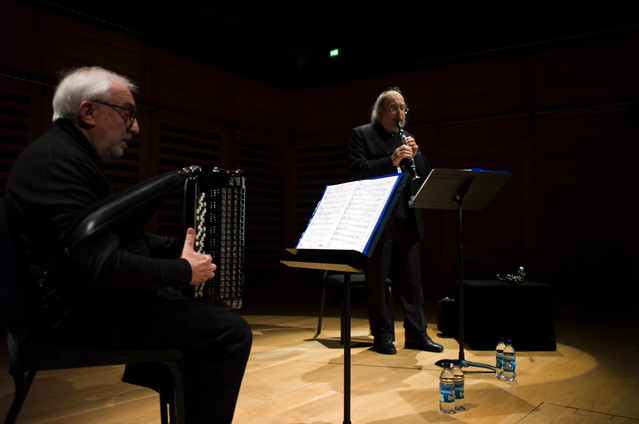
Fisarmonica is not a single fixed style, but a broad family of accordion-based music that has threaded the soundtracks of countless cultures. If you listen closely, the instrument’s bellows and free reeds unlock a spectrum from intimate tangos to bustling folk dances, from churchlike salves of sound to electroacoustic experiments. For music lovers, “fisarmonica” signals a living conversation between tradition and invention.
Origins and evolution. The modern accordion was born in the early 19th century in Central Europe, with Vienna often cited as a manufacturing and innovation hub. In 1829 Cyrill Demian produced one of the first commercially viable models, giving the instrument a distinctive keyboard-and-bellows personality. Around the same era, the bandoneon was developed in Germany by Heinrich Band, a variant whose compact, button-driven layout would become central to tango aesthetics in Argentina and Uruguay. From these roots, the instrument spread like wildfire across continents, spawning regional dialects that earned their own identities.
Two structural strands define the soundscape. The piano accordion, with its keyboard layout on one side, became a backbone of European folk and popular music, and later a staple in jazz, classical, and contemporary world music. The button-based variants—diatonic, chromatic, and especially the bandoneon family—carved out voices in dance halls and street corners alike, while also reaching the concert stage through dedicated virtuosi. In many places, the fisarmonica bridges rural tradition and urban modernity, making it a tool for both communal celebrations and experimental ensembles.
Regional flavors you can chase through history. In France, the musette style of the early 20th century wrapped waltzes, polkas, and cabaret tunes in a nasal, sparkling accordion voice that defined Parisian dance halls. In Italy, the instrument wove through folk songs, operatic-inspired showpieces, and regional dances, becoming a symbol of identity in many communities. The Balkans and Romania added polyphonic textures, heavy ornament, and a carnival-like energy. In the Americas, the bandoneon and diatonic accordions powered tango, zydeco, Cajun and "pow-wow" fused scenes, while Quebec and broader North American folk scenes embraced the instrument as a vehicle for storytelling and communal memory. The sound travels easily into contemporary settings—film scores, indie folk, and world-mudio collaborations—tested in studio and stage alike.
Ambassadors and landmark voices. Jazz players like Art Van Damme and, more recently, Richard Galliano expanded the accordion’s language into improvisation and contemporary harmony. Classical and concert traditions are represented by stellar virtuosi such as Ksenija Sidorova, who has helped redefine the instrument’s place in the recital hall. In the tangency with popular culture, the Amélie soundtrack by Yann Tiersen popularized a wistful, intimate accordion timbre to a global audience. If you’re drawn to tango, the bandoneon—though a sibling in the accordion family—remains inseparable from the rhythmic melancholy and explosive color of that genre, with names like Astor Piazzolla, Ástor’s contemporaries, and later interpreters continuing the lineage.
Where it shines today. The fisarmonica thrives in Italy, France, Argentina, Romania, Poland, Ireland, Louisiana Cajun and Zydeco circles, and in contemporary world-music collectives that cross borders and genres. The modern scene often blends archival folk, orchestral color, and electronic textures, proving the accordion’s enduring adaptability.
For enthusiasts, delving into fisarmonica is an invitation to a global sonic archive—from dusty accordion cases in village squares to the neon glow of modern concert halls. Listen for the instrument’s capacity to cradle memory, ignite dance, and carry nuanced emotion in a single breath of air.
Origins and evolution. The modern accordion was born in the early 19th century in Central Europe, with Vienna often cited as a manufacturing and innovation hub. In 1829 Cyrill Demian produced one of the first commercially viable models, giving the instrument a distinctive keyboard-and-bellows personality. Around the same era, the bandoneon was developed in Germany by Heinrich Band, a variant whose compact, button-driven layout would become central to tango aesthetics in Argentina and Uruguay. From these roots, the instrument spread like wildfire across continents, spawning regional dialects that earned their own identities.
Two structural strands define the soundscape. The piano accordion, with its keyboard layout on one side, became a backbone of European folk and popular music, and later a staple in jazz, classical, and contemporary world music. The button-based variants—diatonic, chromatic, and especially the bandoneon family—carved out voices in dance halls and street corners alike, while also reaching the concert stage through dedicated virtuosi. In many places, the fisarmonica bridges rural tradition and urban modernity, making it a tool for both communal celebrations and experimental ensembles.
Regional flavors you can chase through history. In France, the musette style of the early 20th century wrapped waltzes, polkas, and cabaret tunes in a nasal, sparkling accordion voice that defined Parisian dance halls. In Italy, the instrument wove through folk songs, operatic-inspired showpieces, and regional dances, becoming a symbol of identity in many communities. The Balkans and Romania added polyphonic textures, heavy ornament, and a carnival-like energy. In the Americas, the bandoneon and diatonic accordions powered tango, zydeco, Cajun and "pow-wow" fused scenes, while Quebec and broader North American folk scenes embraced the instrument as a vehicle for storytelling and communal memory. The sound travels easily into contemporary settings—film scores, indie folk, and world-mudio collaborations—tested in studio and stage alike.
Ambassadors and landmark voices. Jazz players like Art Van Damme and, more recently, Richard Galliano expanded the accordion’s language into improvisation and contemporary harmony. Classical and concert traditions are represented by stellar virtuosi such as Ksenija Sidorova, who has helped redefine the instrument’s place in the recital hall. In the tangency with popular culture, the Amélie soundtrack by Yann Tiersen popularized a wistful, intimate accordion timbre to a global audience. If you’re drawn to tango, the bandoneon—though a sibling in the accordion family—remains inseparable from the rhythmic melancholy and explosive color of that genre, with names like Astor Piazzolla, Ástor’s contemporaries, and later interpreters continuing the lineage.
Where it shines today. The fisarmonica thrives in Italy, France, Argentina, Romania, Poland, Ireland, Louisiana Cajun and Zydeco circles, and in contemporary world-music collectives that cross borders and genres. The modern scene often blends archival folk, orchestral color, and electronic textures, proving the accordion’s enduring adaptability.
For enthusiasts, delving into fisarmonica is an invitation to a global sonic archive—from dusty accordion cases in village squares to the neon glow of modern concert halls. Listen for the instrument’s capacity to cradle memory, ignite dance, and carry nuanced emotion in a single breath of air.