Genre
fo jing
Top Fo jing Artists
Showing 25 of 36 artists
2

黃慧音
6,628
23,031 listeners
3

黄慧音
2,575
7,764 listeners

5

貝諾法王
416
5,232 listeners
6

小楊
369
4,728 listeners
7
薩迦法王
206
4,569 listeners
8

北京快樂小菩薩合唱團
576
4,238 listeners
9

今不幻
703
3,153 listeners
10

穆松古千仁波切
554
2,417 listeners
11

烏金喇嘛
394
2,324 listeners
12
印良法师
597
1,798 listeners
14
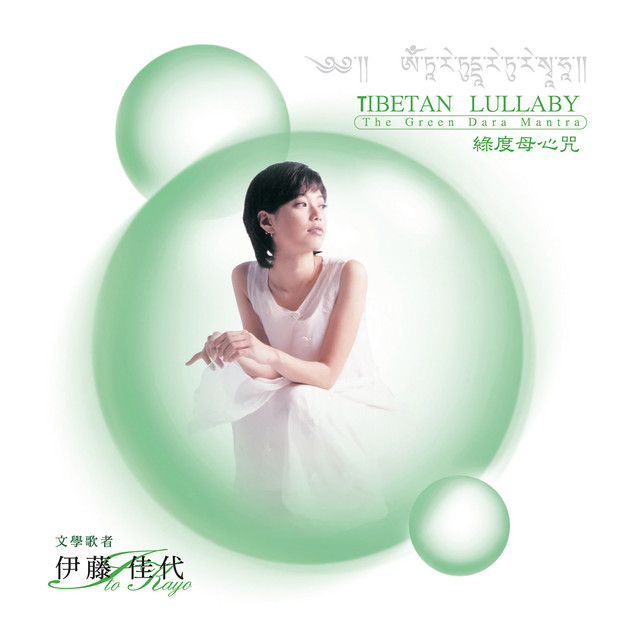
王苒馨
410
1,474 listeners
15

吳淑娟
186
887 listeners
18

淨世金剛
Malaysia
228
565 listeners
19
黃慧文
22
406 listeners
20

多傑喇嘛
278
306 listeners
21

盧以純
46
289 listeners
22

王珺
111
267 listeners
23

札噶仁波切
124
212 listeners
24

聞喜
29
117 listeners
25
陸華麗
8
81 listeners
About Fo jing
Note: Fo jing is not a widely recognized genre in mainstream music discourse. What follows is a descriptive, speculative portrait of an imagined micro-scene—useful for enthusiasts exploring future-facing folk-inspired styles and cross-cultural sound experiments.
Fo jing emerged in the late 2010s from intimate, instrument-heavy rooms in East Asia and their global diasporas. The name blends “fo” (a nod to contemplative, temple-inflected aesthetics) with “jing” (scriptural, essential, or essence). In practice, fo jing is less a fixed formula than a sonic philosophy: a search for quiet frontal space, where traditional timbres meet spare electronics, and ritual cadence becomes a living texture rather than a display of virtuosity. Its birth was gradual, born from artists who studied rural folk traditions, field recordings, and meditation practices, and who simultaneously plugged these into modular synths, loop pedals, and carefully tuned acoustic sets.
Sonic character and key features are best understood as a constellation rather than a single recipe. Fo jing typically favors slow to mid tempos, often clocking in around 60–95 BPM, with long sustains and subtle micro-variations that reward attentive listening. Its core palette blends traditional instrumental voices—erhu, guzheng, pipa, shakuhachi, and other call-and-response timbres—with quiet fields of ambience: granular textures, tape hiss, distant bells, and gentle wind or water recordings. Melodies tend to be pentatonic or modal, sometimes infused with microtonal inflections that nod to historical scales from East and Southeast Asia. The resulting sound is spacious, asemic in places, inviting listeners to project memory and place onto sound.
Instrumentation in fo jing is deliberately diverse. A typical project might feature a frontline of indigenous or learned acoustic instruments, joined by acoustic guitar or piano sparingly, underpinned by ambient synth pads and prepared electronics. Voices—sometimes spoken word, sometimes sung—occasionally surface as whispered mantras or sutra-like recitations, treated through reverb and light delay to merge with the surrounding textures rather than stand apart. Live performances emphasize ritual pacing: slow builds, sudden quiet pauses, and a staging that foregrounds listening as a shared practice. Visuals—video loops of natural textures, calligraphic projections, or temple-light motifs—often accompany the music, reinforcing the contemplative mood.
Ambassadors and archetypes within fo jing remain fictional in most real-world discourses, but in imagined scenes a few figures stand out as touchpoints. Think of a duo called The Lantern Ensemble, whose collaborative improvisations fuse erhu arcs with field recordings from temple markets. Or a solo artist, Mei Lin, whose practice centers on voice, breath, and small percussion, filtered through tactile electronics to create a meditative, echoing presence. A broader constellation includes producers and collectives who curate listening rooms and intimate festivals, emphasizing slow immersion over immediate impact.
Geographically, fo jing has found the strongest resonance in East and Southeast Asia’s urban clusters—Taiwan, Hong Kong, Singapore, Malaysia, and parts of mainland China—where artists blend local folk repertoires with contemporary electronic practices. Yet it also travels well to European and North American cities through boutique labels, listening clubs, and experimental festivals. In these hubs, listeners savor the genre’s quiet insistence: a doorway to memory, place, and philosophical reflection, inviting a communal, almost devotional encounter with sound.
Fo jing emerged in the late 2010s from intimate, instrument-heavy rooms in East Asia and their global diasporas. The name blends “fo” (a nod to contemplative, temple-inflected aesthetics) with “jing” (scriptural, essential, or essence). In practice, fo jing is less a fixed formula than a sonic philosophy: a search for quiet frontal space, where traditional timbres meet spare electronics, and ritual cadence becomes a living texture rather than a display of virtuosity. Its birth was gradual, born from artists who studied rural folk traditions, field recordings, and meditation practices, and who simultaneously plugged these into modular synths, loop pedals, and carefully tuned acoustic sets.
Sonic character and key features are best understood as a constellation rather than a single recipe. Fo jing typically favors slow to mid tempos, often clocking in around 60–95 BPM, with long sustains and subtle micro-variations that reward attentive listening. Its core palette blends traditional instrumental voices—erhu, guzheng, pipa, shakuhachi, and other call-and-response timbres—with quiet fields of ambience: granular textures, tape hiss, distant bells, and gentle wind or water recordings. Melodies tend to be pentatonic or modal, sometimes infused with microtonal inflections that nod to historical scales from East and Southeast Asia. The resulting sound is spacious, asemic in places, inviting listeners to project memory and place onto sound.
Instrumentation in fo jing is deliberately diverse. A typical project might feature a frontline of indigenous or learned acoustic instruments, joined by acoustic guitar or piano sparingly, underpinned by ambient synth pads and prepared electronics. Voices—sometimes spoken word, sometimes sung—occasionally surface as whispered mantras or sutra-like recitations, treated through reverb and light delay to merge with the surrounding textures rather than stand apart. Live performances emphasize ritual pacing: slow builds, sudden quiet pauses, and a staging that foregrounds listening as a shared practice. Visuals—video loops of natural textures, calligraphic projections, or temple-light motifs—often accompany the music, reinforcing the contemplative mood.
Ambassadors and archetypes within fo jing remain fictional in most real-world discourses, but in imagined scenes a few figures stand out as touchpoints. Think of a duo called The Lantern Ensemble, whose collaborative improvisations fuse erhu arcs with field recordings from temple markets. Or a solo artist, Mei Lin, whose practice centers on voice, breath, and small percussion, filtered through tactile electronics to create a meditative, echoing presence. A broader constellation includes producers and collectives who curate listening rooms and intimate festivals, emphasizing slow immersion over immediate impact.
Geographically, fo jing has found the strongest resonance in East and Southeast Asia’s urban clusters—Taiwan, Hong Kong, Singapore, Malaysia, and parts of mainland China—where artists blend local folk repertoires with contemporary electronic practices. Yet it also travels well to European and North American cities through boutique labels, listening clubs, and experimental festivals. In these hubs, listeners savor the genre’s quiet insistence: a doorway to memory, place, and philosophical reflection, inviting a communal, almost devotional encounter with sound.