Genre
gangster rap
Top Gangster rap Artists
Showing 25 of 729 artists


About Gangster rap
Gangster rap is a subgenre of hip hop that codified street realism into some of the most influential and controversial records of the late 1980s and 1990s. Born from the tough neighborhoods of the American West Coast, it turned everyday street life—hustling, gang culture, police scrutiny, and survival—into cinematic, high-energy storytelling set to hard-hitting beats and dense, confessive lyrics. Its emergence marked a shift from party-oriented rap to narratives that confronted violence, poverty, and systemic neglect with unflinching honesty.
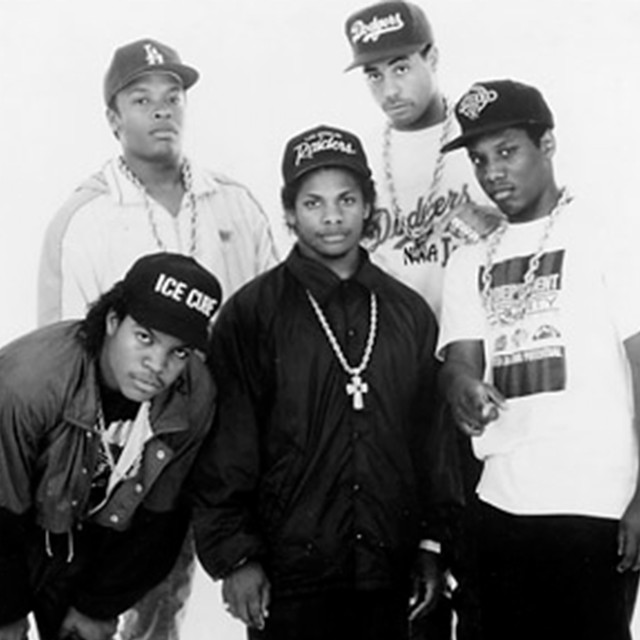
The roots trace to the late 1980s. Ice-T’s Rhyme Pays (1987) and his subsequent work helped popularize the idea that rap could speak from the vantage point of the urban edge. But gangster rap truly exploded with N.W.A—the collective including Dr. Dre, Ice Cube, Eazy-E, and MC Ren—whose 1988 album Straight Outta Compton and the politics of tracks like Fuck tha Police brought police brutality and street intimidation into the mainstream debate. The sound was lean, urgent, and abrasive, with minimalist, looping production that could handle brutal anecdotes as well as social critique. The West Coast style—glossy with synths, guitar licks, and later the G-funk influence—became a cultural force.
Across the next decade, the genre broadened in scope and reach. Dr. Dre’s The Chronic (1992) popularized a luxurious, sample-rich version of gangsta rap known as G-funk, shaping the sound of West Coast rap for years. Snoop Dogg, Tupac Shakur, and later artists like Nate Dogg became ambassadors of the era, delivering street narratives that connected with huge audiences. East Coast counterparts—Notorious B.I.G. with Ready to Die (1994) and Mobb Deep with The Infamous (1995)—offered equally hard-edged perspectives, underscoring a national dialogue about crime, power, and urban life. The late 1990s also saw Southern voices emerge, notably the Geto Boys from Houston with Mind Playing Tricks on Me (1991) and later acts that carried the genre into new regional flavors.
Key artists and ambassadors include Ice-T, N.W.A (Eazy-E, Dr. Dre, Ice Cube, MC Ren), Tupac Shakur, Snoop Dogg, Dr. Dre, The Notorious B.I.G., 50 Cent, and later figures like Eminem, Lil Wayne, and Game. Their records defined a template: first-person or close third-person storytelling, stark realism, and production that could range from sparse street rhythms to expansive, cinematic textures. The genre’s themes—street life, hustle, violence, loyalty, police scrutiny, and the lure and hazard of street success—remain its core.
Globally, gangster rap is most popular in the United States, especially in the California basin, New York’s urban centers, and growing pockets of the South. It has also influenced and found audiences in Canada, the United Kingdom, France, Germany, Australia, and beyond, feeding the international appetite for hard-edged, narrative-driven hip hop. Controversy—charges of misogyny, glorification of crime, and calls for censorship—has accompanied its ascent, shaping debates about art, reality, and representation. For music fans, gangster rap remains a powerful case study in how a regional sound can become a global shorthand for grit, ambition, and the complexities of American urban life.
The roots trace to the late 1980s. Ice-T’s Rhyme Pays (1987) and his subsequent work helped popularize the idea that rap could speak from the vantage point of the urban edge. But gangster rap truly exploded with N.W.A—the collective including Dr. Dre, Ice Cube, Eazy-E, and MC Ren—whose 1988 album Straight Outta Compton and the politics of tracks like Fuck tha Police brought police brutality and street intimidation into the mainstream debate. The sound was lean, urgent, and abrasive, with minimalist, looping production that could handle brutal anecdotes as well as social critique. The West Coast style—glossy with synths, guitar licks, and later the G-funk influence—became a cultural force.
Across the next decade, the genre broadened in scope and reach. Dr. Dre’s The Chronic (1992) popularized a luxurious, sample-rich version of gangsta rap known as G-funk, shaping the sound of West Coast rap for years. Snoop Dogg, Tupac Shakur, and later artists like Nate Dogg became ambassadors of the era, delivering street narratives that connected with huge audiences. East Coast counterparts—Notorious B.I.G. with Ready to Die (1994) and Mobb Deep with The Infamous (1995)—offered equally hard-edged perspectives, underscoring a national dialogue about crime, power, and urban life. The late 1990s also saw Southern voices emerge, notably the Geto Boys from Houston with Mind Playing Tricks on Me (1991) and later acts that carried the genre into new regional flavors.
Key artists and ambassadors include Ice-T, N.W.A (Eazy-E, Dr. Dre, Ice Cube, MC Ren), Tupac Shakur, Snoop Dogg, Dr. Dre, The Notorious B.I.G., 50 Cent, and later figures like Eminem, Lil Wayne, and Game. Their records defined a template: first-person or close third-person storytelling, stark realism, and production that could range from sparse street rhythms to expansive, cinematic textures. The genre’s themes—street life, hustle, violence, loyalty, police scrutiny, and the lure and hazard of street success—remain its core.
Globally, gangster rap is most popular in the United States, especially in the California basin, New York’s urban centers, and growing pockets of the South. It has also influenced and found audiences in Canada, the United Kingdom, France, Germany, Australia, and beyond, feeding the international appetite for hard-edged, narrative-driven hip hop. Controversy—charges of misogyny, glorification of crime, and calls for censorship—has accompanied its ascent, shaping debates about art, reality, and representation. For music fans, gangster rap remains a powerful case study in how a regional sound can become a global shorthand for grit, ambition, and the complexities of American urban life.