Genre
hungarian classical piano
Top Hungarian classical piano Artists
Showing 16 of 16 artists




About Hungarian classical piano
Hungarian classical piano is a vibrant lineage that fuses deep national character with the universal language of the keyboard. It grew out of 19th‑century Hungary’s Romantic nationalism and flourished through the 20th century, evolving from dazzling virtuosity into a thoughtful synthesis of folk-inflected melody, rigorous technique, and modernist exploration. At its heart lies the piano as a vehicle for Hungary’s storied soundscape—gypsy-inspired brilliance, dance rhythms, and a longing that shifts between tenderness and tempest.
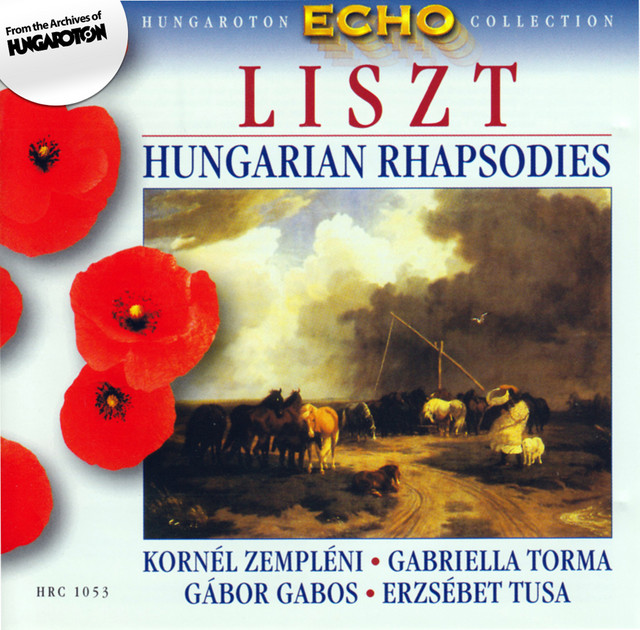
The birth of the tradition is most inseparable from Franz Liszt (1811–1886), a towering figure whose prodigious technique and charismatic showmanship made the piano the epicenter of continental music. Although Liszt’s career carried him across Europe, his Hungarian roots informed a distinctive approach: fluid virtuosity, orchestral texturing in piano transcriptions, and a fearless command of rhetoric. His Hungarian Rhapsodies, especially No. 2, popularized a Magyar idiom within a grand Romantic idiom, while his symphonic transcriptions and concert paraphrases broadened the piano’s expressive possibilities. Liszt’s example set the template for a national piano voice that could duel with the concert hall’s fire and still echo folk mood.
In the early to mid‑20th century, two other Hungarians—Béla Bartók (1881–1945) and Zoltán Kodály (1882–1967)—shaped the genre’s modern face. Bartók’s piano output is a cornerstone of 20th‑century repertoire, from blistering showpieces to the introspective solitude of Mikrokosmos, a 153‑piece pedagogical suite that also serves as a compact survey of modern harmony, rhythm, and ethnomusicology. His approach is marked by meticulous folk‑song research, ethnographic sensitivity, and a relentless clarity of form that redefines what “Hungarian” can sound like in a concert hall. Kodály complemented this with a dual vocation as composer and ethnomusicologist; his Dances of Galánta and his broader pedagogy helped codify a sense of Hungarian musical identity and method, influencing generations of pianists through both repertoire and teaching.
Ernő Dohnányi (Ernst von Dohnányi) also anchors the tradition: a virtuoso pianist and composer who bridged late Romantic warmth with early modern clarity, he helped cultivate a robust Hungarian piano school in Budapest and beyond. His recordings and concert repertoire kept the piano at the center of Hungarian musical life, a link between Liszt’s bravura and Bartók’s intellect.
Today’s ambassadors include contemporary virtuosi and educators who keep the flame alive in concert halls and conservatories across Hungary, Central Europe, and the world. András Schiff—born in Budapest and long associated with the Hungarian piano tradition—embodies a bridge to Bach, Beethoven, and Chopin while carrying the lineage forward. Zoltán Kocsis, another pivotal figure, championed Bartók’s cycle and preserved the Hungarian approach through performance and scholarship. The genre remains especially cherished in Hungary and nearby regions, with a strong international following in North America, Western Europe, and Japan, where Liszt’s virtuosity and Bartók’s modern voice have long captivated audiences.
In sum, Hungarian classical piano is a living conversation between the heartland’s folk energy and the concert hall’s formal discipline—an art form that speaks in spellbinding color, intricate rhythm, and a soul‑searching sense of rhythm and melody.
The birth of the tradition is most inseparable from Franz Liszt (1811–1886), a towering figure whose prodigious technique and charismatic showmanship made the piano the epicenter of continental music. Although Liszt’s career carried him across Europe, his Hungarian roots informed a distinctive approach: fluid virtuosity, orchestral texturing in piano transcriptions, and a fearless command of rhetoric. His Hungarian Rhapsodies, especially No. 2, popularized a Magyar idiom within a grand Romantic idiom, while his symphonic transcriptions and concert paraphrases broadened the piano’s expressive possibilities. Liszt’s example set the template for a national piano voice that could duel with the concert hall’s fire and still echo folk mood.
In the early to mid‑20th century, two other Hungarians—Béla Bartók (1881–1945) and Zoltán Kodály (1882–1967)—shaped the genre’s modern face. Bartók’s piano output is a cornerstone of 20th‑century repertoire, from blistering showpieces to the introspective solitude of Mikrokosmos, a 153‑piece pedagogical suite that also serves as a compact survey of modern harmony, rhythm, and ethnomusicology. His approach is marked by meticulous folk‑song research, ethnographic sensitivity, and a relentless clarity of form that redefines what “Hungarian” can sound like in a concert hall. Kodály complemented this with a dual vocation as composer and ethnomusicologist; his Dances of Galánta and his broader pedagogy helped codify a sense of Hungarian musical identity and method, influencing generations of pianists through both repertoire and teaching.
Ernő Dohnányi (Ernst von Dohnányi) also anchors the tradition: a virtuoso pianist and composer who bridged late Romantic warmth with early modern clarity, he helped cultivate a robust Hungarian piano school in Budapest and beyond. His recordings and concert repertoire kept the piano at the center of Hungarian musical life, a link between Liszt’s bravura and Bartók’s intellect.
Today’s ambassadors include contemporary virtuosi and educators who keep the flame alive in concert halls and conservatories across Hungary, Central Europe, and the world. András Schiff—born in Budapest and long associated with the Hungarian piano tradition—embodies a bridge to Bach, Beethoven, and Chopin while carrying the lineage forward. Zoltán Kocsis, another pivotal figure, championed Bartók’s cycle and preserved the Hungarian approach through performance and scholarship. The genre remains especially cherished in Hungary and nearby regions, with a strong international following in North America, Western Europe, and Japan, where Liszt’s virtuosity and Bartók’s modern voice have long captivated audiences.
In sum, Hungarian classical piano is a living conversation between the heartland’s folk energy and the concert hall’s formal discipline—an art form that speaks in spellbinding color, intricate rhythm, and a soul‑searching sense of rhythm and melody.