Genre
icelandic classical
Top Icelandic classical Artists
Showing 14 of 14 artists







About Icelandic classical
Icelandic classical is not a single school but a living umbrella for concert music written by Icelandic composers or inspired by Icelandic sensibilities. It spans late Romantic echoes, modernist experiments, and the expansive, often austere textures that have become associated with the island’s landscapes and folklore. As a scene, it grew from Reykjavik’s halls and the country’s growing orchestral life into a bridge between national identity and international modernism.
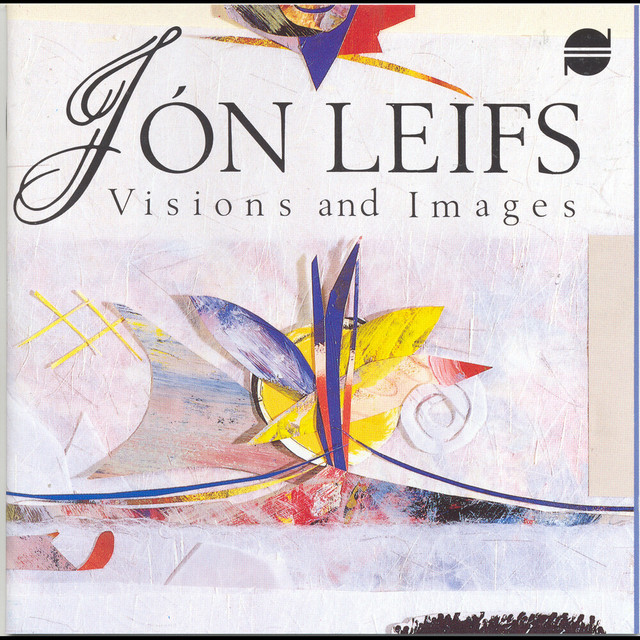
Origins and evolution: The first generation to put Iceland on the classical map included bold modernists such as Jón Leifs, whose orchestral color and fearless approach to timbre pushed Icelandic music in directions rarely heard at the time. In the second half of the 20th century, composers like Atli Heimir Sveinsson and his contemporaries expanded the language, blending Icelandic motifs with European modernism. The establishment of the Icelandic Symphony Orchestra and a robust festival and education network gave these composers a platform and nurtured a distinct voice within the Nordic sphere.
21st-century flowering: The last two decades have seen an international breakout of Icelandic voices in concert music and beyond. Anna Þorvaldsdóttir writes large, shimmering textures for strings and wind that have been taken up by major ensembles worldwide. Ólafur Arnalds sits at a crossroads between neoclassical chamber music and ambient electronics, composing intimate piano and string-centered pieces that still carry a Northern aura. Jóhann Jóhannsson bridged concert music and cinema, crafting carefully sculpted scores and concert works that traveled to audiences far from Reykjavik. Hildur Guðnadóttir has become a global ambassador of the Icelandic voice in film and television scores, earning an Academy Award, an Emmy, and a Grammy for work that is both intimate and luminous. These artists exemplify a broader tendency: a love of clarity of line, a fascination with resonance and space, and a willingness to blend acoustic instruments with electronics or Minimalist textures.
Geography and reception: Icelandic classical has found particular resonance in Iceland and the Nordic countries, where the landscape and weather have long provided a model for musical austerity and beauty. It has also found a strong audience in Europe’s major capitals—London, Berlin, Paris, Amsterdam—and in North America, where orchestras and universities program Icelandic pieces and host residencies and premieres. Festivals, orchestras, and competitions across the globe now commission and perform music by Icelandic composers, helping to spread its sensibility far from the island’s shores. The genre remains deeply tied to national identity, but its ambassadors work globally, remixing traditional melodic memory with contemporary technique.
Musical characteristics and listening: Icelandic classical often favors generous space and clarity of texture, with shimmering strings, delicate piano lines, and carefully placed percussion. Many composers draw on Iceland’s geothermal, volcanic, and folkloric imagery, translating landscape into musical time. The idiom ranges from neo-Romantic lyricism to austere modernism, and to richly colored orchestral soundscapes. An ongoing dialogue with electronics appears in the works of Ólafur Arnalds, Anna Thorvaldsdottir, and Hildur Guðnadóttir, while Jóhann Jóhannsson blurred lines between concert music and film music. Performances occur in traditional concert spaces, as well as festivals and multimedia events, inviting listeners to experience Icelandic sensibilities in a global setting.
Origins and evolution: The first generation to put Iceland on the classical map included bold modernists such as Jón Leifs, whose orchestral color and fearless approach to timbre pushed Icelandic music in directions rarely heard at the time. In the second half of the 20th century, composers like Atli Heimir Sveinsson and his contemporaries expanded the language, blending Icelandic motifs with European modernism. The establishment of the Icelandic Symphony Orchestra and a robust festival and education network gave these composers a platform and nurtured a distinct voice within the Nordic sphere.
21st-century flowering: The last two decades have seen an international breakout of Icelandic voices in concert music and beyond. Anna Þorvaldsdóttir writes large, shimmering textures for strings and wind that have been taken up by major ensembles worldwide. Ólafur Arnalds sits at a crossroads between neoclassical chamber music and ambient electronics, composing intimate piano and string-centered pieces that still carry a Northern aura. Jóhann Jóhannsson bridged concert music and cinema, crafting carefully sculpted scores and concert works that traveled to audiences far from Reykjavik. Hildur Guðnadóttir has become a global ambassador of the Icelandic voice in film and television scores, earning an Academy Award, an Emmy, and a Grammy for work that is both intimate and luminous. These artists exemplify a broader tendency: a love of clarity of line, a fascination with resonance and space, and a willingness to blend acoustic instruments with electronics or Minimalist textures.
Geography and reception: Icelandic classical has found particular resonance in Iceland and the Nordic countries, where the landscape and weather have long provided a model for musical austerity and beauty. It has also found a strong audience in Europe’s major capitals—London, Berlin, Paris, Amsterdam—and in North America, where orchestras and universities program Icelandic pieces and host residencies and premieres. Festivals, orchestras, and competitions across the globe now commission and perform music by Icelandic composers, helping to spread its sensibility far from the island’s shores. The genre remains deeply tied to national identity, but its ambassadors work globally, remixing traditional melodic memory with contemporary technique.
Musical characteristics and listening: Icelandic classical often favors generous space and clarity of texture, with shimmering strings, delicate piano lines, and carefully placed percussion. Many composers draw on Iceland’s geothermal, volcanic, and folkloric imagery, translating landscape into musical time. The idiom ranges from neo-Romantic lyricism to austere modernism, and to richly colored orchestral soundscapes. An ongoing dialogue with electronics appears in the works of Ólafur Arnalds, Anna Thorvaldsdottir, and Hildur Guðnadóttir, while Jóhann Jóhannsson blurred lines between concert music and film music. Performances occur in traditional concert spaces, as well as festivals and multimedia events, inviting listeners to experience Icelandic sensibilities in a global setting.