Genre
israeli folk
Top Israeli folk Artists
Showing 17 of 17 artists






12

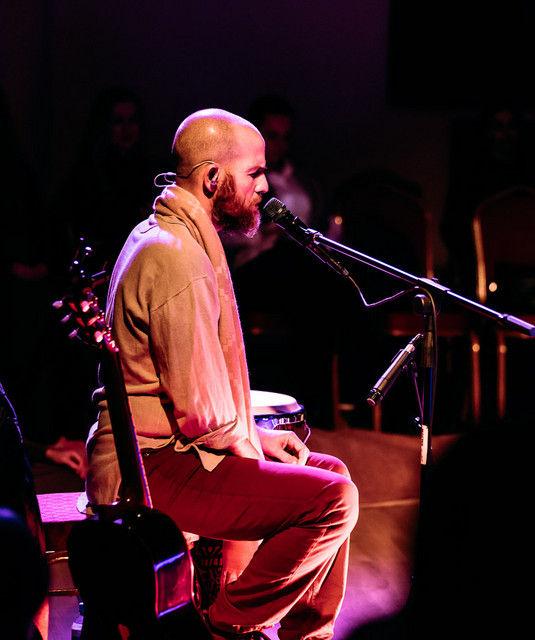
ניר פופליקר
1,940
5,720 listeners

14
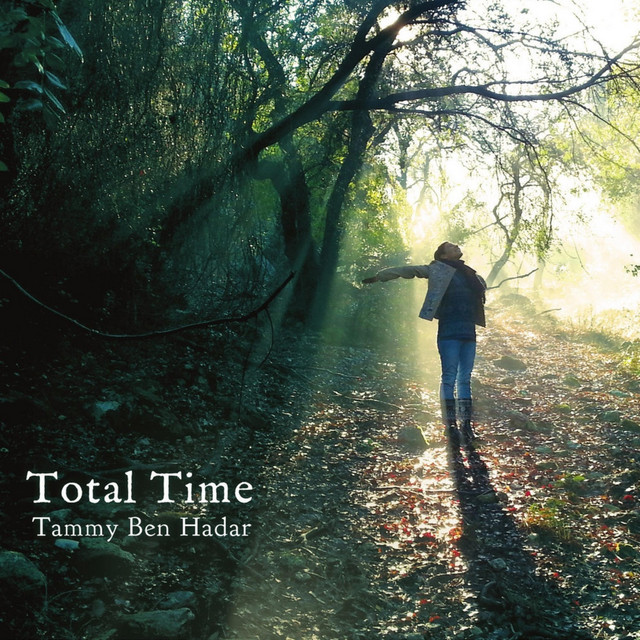
תמי בן הדר
892
2,724 listeners


About Israeli folk
Israeli folk is a living thread running through the country’s modern soundscape, a genre that grew from the communal song pools of the early Israeli state to become a nuanced blend of traditional melodies, Hebrew lyricism, and contemporary storytelling. Its birth is usually placed in the late 1940s to early 1950s, when a generation of composers and performers began shaping a distinctly Israeli voice out of older Jewish laments, liturgical tunes, and diaspora songs. The kibbutz movement, the army’s entertainment troupes, radio, and later television helped spread a repertoire that could be sung in mass and shared across generations.
Musically, Israeli folk often centers on acoustic guitar-driven melodies and lyric-driven narratives, but it is not a single, monolithic sound. It absorbs Mediterranean and Middle Eastern influences, North African sufi inflections, and European folk simplicity, trading polished polish for immediacy and memory. The lyrics frequently address the land and memory, longing and labor, love and social conscience, with a strong sense of place—cities like Jerusalem, the sea at Tel Aviv, the hills of Galilee—woven into the music. The genre also serves as a bridge between generations: it preserves traditional modes while inviting reformulation by younger artists.
Among the genre’s ambassadors and touchstones, several names stand out as defining voices. Naomi Shemer is regarded as the unofficial poet laureate of Israeli folk; her songs—most famously Jerusalem of Gold (Yerushalayim Shel Zahav, 1967)—became anthemic, crystallizing collective identity at a pivotal historical moment. Chava Alberstein emerged as one of the most expressive interpreters of Hebrew folk song, bringing acoustic intimacy and sharp lyrical focus to a broad audience. Shlomo Artzi and Yehoram Gaon helped fuse folk with broader popular forms, making the genre a staple of modern Israeli listening habits. Meir Ariel’s poetic, sometimes enigmatic lyrics, and his keyboard of minimalist melodies, left a lasting footprint on the folk-rock continuum. Arik Einstein, a towering figure who moved fluidly between folk, pop, and rock, became a cultural touchstone whose warmth and storyteller’s voice resonated across decades. Ehud Banai, Beit, and other contemporary singer-songwriters have kept the tradition vital by weaving personal storytelling with socially aware themes.
Geographically, Israeli folk remains strongest in Israel, where it emerged to soundtrack national rituals, holidays, and ordinary life. Abroad, it finds pockets of enthusiastic listeners in Jewish and Israel-focused communities—especially in the United States, Canada, the United Kingdom, parts of Western Europe, and Australia—where folkian songs are traded in cultural centers, community concerts, and world-music circles. Festivals and archival projects frequently spotlight early recordings alongside new interpretations, underscoring the genre’s evolving identity rather than its pastiche.
In essence, Israeli folk is both archive and itinerary: a catalog of songs that record the country’s social memory, and a living practice that continues to adapt, revise, and roams between the old and the new. For music enthusiasts, it offers a gateway to the human voice—intimate, resilient, and widely communal—set against a land with a history as audible as it is written.
Musically, Israeli folk often centers on acoustic guitar-driven melodies and lyric-driven narratives, but it is not a single, monolithic sound. It absorbs Mediterranean and Middle Eastern influences, North African sufi inflections, and European folk simplicity, trading polished polish for immediacy and memory. The lyrics frequently address the land and memory, longing and labor, love and social conscience, with a strong sense of place—cities like Jerusalem, the sea at Tel Aviv, the hills of Galilee—woven into the music. The genre also serves as a bridge between generations: it preserves traditional modes while inviting reformulation by younger artists.
Among the genre’s ambassadors and touchstones, several names stand out as defining voices. Naomi Shemer is regarded as the unofficial poet laureate of Israeli folk; her songs—most famously Jerusalem of Gold (Yerushalayim Shel Zahav, 1967)—became anthemic, crystallizing collective identity at a pivotal historical moment. Chava Alberstein emerged as one of the most expressive interpreters of Hebrew folk song, bringing acoustic intimacy and sharp lyrical focus to a broad audience. Shlomo Artzi and Yehoram Gaon helped fuse folk with broader popular forms, making the genre a staple of modern Israeli listening habits. Meir Ariel’s poetic, sometimes enigmatic lyrics, and his keyboard of minimalist melodies, left a lasting footprint on the folk-rock continuum. Arik Einstein, a towering figure who moved fluidly between folk, pop, and rock, became a cultural touchstone whose warmth and storyteller’s voice resonated across decades. Ehud Banai, Beit, and other contemporary singer-songwriters have kept the tradition vital by weaving personal storytelling with socially aware themes.
Geographically, Israeli folk remains strongest in Israel, where it emerged to soundtrack national rituals, holidays, and ordinary life. Abroad, it finds pockets of enthusiastic listeners in Jewish and Israel-focused communities—especially in the United States, Canada, the United Kingdom, parts of Western Europe, and Australia—where folkian songs are traded in cultural centers, community concerts, and world-music circles. Festivals and archival projects frequently spotlight early recordings alongside new interpretations, underscoring the genre’s evolving identity rather than its pastiche.
In essence, Israeli folk is both archive and itinerary: a catalog of songs that record the country’s social memory, and a living practice that continues to adapt, revise, and roams between the old and the new. For music enthusiasts, it offers a gateway to the human voice—intimate, resilient, and widely communal—set against a land with a history as audible as it is written.