Genre
musiikkia lapista
Top Musiikkia lapista Artists
Showing 25 of 33 artists








About Musiikkia lapista
Musiikkia lapista is a concept that evokes the stark beauty and hard-won resilience of the Arctic north. It is not a single fixed genre with a rigid formula, but a family of sound worlds that spring from Lapland—the vast cultural space where Finnish, Swedish, Norwegian, and Sámi identities meet. At its core lies a conversation between ancient voice traditions and contemporary sonic experimentation, producing music that feels at once ancestral and forward-looking.
Origins and birth of the sound
The roots run deep in the Sámi tradition of joik (yoik), one of the oldest indigenous vocal practices in Europe. Joik is not about storytelling in the conventional sense; it is a musical portrait of a person, place, or animal, often delivered with a direct, piercing timbre and a reflective, chant-like quality. For centuries, joik has carried memory, place, and identity across generations in the Lapland region. In the late 20th century, as Sámi cultural revival gained momentum and world-music circuits opened to northern voices, composers and performers began fusing joik with rock, jazz, ambient textures, and electronic production. The result was a niche yet rapidly expanding field—what many listeners now recognize as musiikkia lapista: a northern music language that speaks in both tradition and experimentation.
Key artists and ambassadors
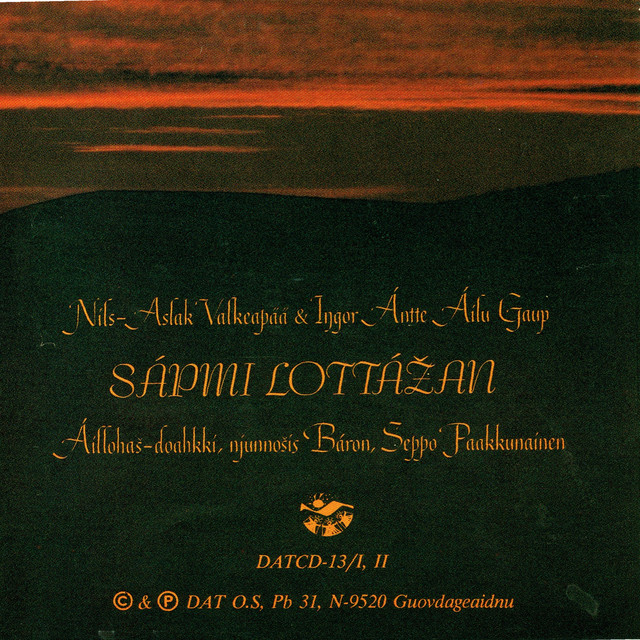
- Áillohaš (Nils-Aslak Valkeapää) stands as a foundational figure. A poet-musician who fused joik with modern literary and musical forms, he helped inaugurate a mode of Lapland music that could travel beyond village performances and into concert halls and festivals.
- Mari Boine is often cited as the international ambassador of Sámi sound. Her work blends the haunting power of joik with folk, jazz, and rock textures, bringing icy northern imagery to global stages.
- Wimme Saari embodies the contemporary joik-inflected sound, delivering sparse, naturalistic vocal lines over drone-like atmospheres and electronic backdrops.
- Sofia Jannok uses bilingual Sámi and Swedish lyrics to weave environmental advocacy, tradition, and pop-songcraft into a luminous, radio-friendly yet deeply rooted sound.
- Jon Henrik Fjällgren operates at the intersection of joik and modern pop, drawing wide audiences in Sweden and beyond while staying deeply connected to Sámi heritage.
Musical traits and atmosphere
Musiikkia lapista often features the distinctive, solemn timbre of traditional joik voices, sometimes layered or processed for a modern effect. Drones, sparse percussion, and field-recorded textures of wind, frost, and distant reindeer bells create landscapes you can hear in your headphones as well as in your mind. Electronics—glacial pads, subtle glitches, ambient washes—function as the aurora in the track: a luminous, shifting phenomenon that enhances rather than overrides the voice. Thematically, the music frequently invokes nature, memory, reindeer herding, reindeer bells, winter nights, and the vast open spaces of Lapland.
Where it’s popular
The strongest audiences are in Nordic countries—Finland, Sweden, Norway—where Sámi culture and Lapland landscapes are part of everyday life and national imagination. Beyond the Nordic sphere, musiikkia lapista finds listeners among world music communities in Germany, the Netherlands, the UK, Canada, and the United States, especially at festivals and in specialized radio shows that celebrate indigenous and northern-inspired music. If you’re drawn to music that sounds like a breath of cold air turning into sound, musiikkia lapista offers a compelling, emotionally expansive gateway to Lapland’s sonic horizon.
Origins and birth of the sound
The roots run deep in the Sámi tradition of joik (yoik), one of the oldest indigenous vocal practices in Europe. Joik is not about storytelling in the conventional sense; it is a musical portrait of a person, place, or animal, often delivered with a direct, piercing timbre and a reflective, chant-like quality. For centuries, joik has carried memory, place, and identity across generations in the Lapland region. In the late 20th century, as Sámi cultural revival gained momentum and world-music circuits opened to northern voices, composers and performers began fusing joik with rock, jazz, ambient textures, and electronic production. The result was a niche yet rapidly expanding field—what many listeners now recognize as musiikkia lapista: a northern music language that speaks in both tradition and experimentation.
Key artists and ambassadors
- Áillohaš (Nils-Aslak Valkeapää) stands as a foundational figure. A poet-musician who fused joik with modern literary and musical forms, he helped inaugurate a mode of Lapland music that could travel beyond village performances and into concert halls and festivals.
- Mari Boine is often cited as the international ambassador of Sámi sound. Her work blends the haunting power of joik with folk, jazz, and rock textures, bringing icy northern imagery to global stages.
- Wimme Saari embodies the contemporary joik-inflected sound, delivering sparse, naturalistic vocal lines over drone-like atmospheres and electronic backdrops.
- Sofia Jannok uses bilingual Sámi and Swedish lyrics to weave environmental advocacy, tradition, and pop-songcraft into a luminous, radio-friendly yet deeply rooted sound.
- Jon Henrik Fjällgren operates at the intersection of joik and modern pop, drawing wide audiences in Sweden and beyond while staying deeply connected to Sámi heritage.
Musical traits and atmosphere
Musiikkia lapista often features the distinctive, solemn timbre of traditional joik voices, sometimes layered or processed for a modern effect. Drones, sparse percussion, and field-recorded textures of wind, frost, and distant reindeer bells create landscapes you can hear in your headphones as well as in your mind. Electronics—glacial pads, subtle glitches, ambient washes—function as the aurora in the track: a luminous, shifting phenomenon that enhances rather than overrides the voice. Thematically, the music frequently invokes nature, memory, reindeer herding, reindeer bells, winter nights, and the vast open spaces of Lapland.
Where it’s popular
The strongest audiences are in Nordic countries—Finland, Sweden, Norway—where Sámi culture and Lapland landscapes are part of everyday life and national imagination. Beyond the Nordic sphere, musiikkia lapista finds listeners among world music communities in Germany, the Netherlands, the UK, Canada, and the United States, especially at festivals and in specialized radio shows that celebrate indigenous and northern-inspired music. If you’re drawn to music that sounds like a breath of cold air turning into sound, musiikkia lapista offers a compelling, emotionally expansive gateway to Lapland’s sonic horizon.