Genre
persian neo-traditional
Top Persian neo-traditional Artists
Showing 25 of 27 artists




About Persian neo-traditional
Persian neo-traditional is a contemporary currentscape within Iranian and Persian-speaking music that reimagines the country’s classical and folk repertoires for the late 20th and 21st centuries. Born from a desire to honor radif and dastgah—the system of modal improvisation at the heart of traditional Persian music—while also speaking to global audiences and younger listeners, it emerged chiefly in the late 1990s and early 2000s. The movement took shape in Iran’s independent and underground scenes, where artists found room to experiment beyond strict academic performance and censorship boundaries, and it grew in parallel with vibrant diaspora communities in North America and Europe. In this sense, Persian neo-traditional is as much a transnational attitude as a local one: it infuses age-old sensibilities with contemporary textures, ideas, and technologies.
What makes Persian neo-traditional distinctive is the way it preserves core modalities and poetic vocabularies of Persian music while inviting new timbres, rhythms, and collaborative formats. You’ll hear traditional instruments—setar, tar, tanbour, santur, kamancheh—played alongside electric guitars, synths, sampled textures, and sometimes jazz-inflected harmonies. Melodic frameworks often remain rooted in the dyes of the radif and the dastgah system, but composers and performers push them into microtonal explorations, modal juxtapositions, and spacious, minimalist or electro-acoustic textures. Lyrically, the genre ranges from reverent classical Persian poetry and Sufi-inflected mysticism to intimate, personal, or politically resonant contemporary writing. The result is music that can feel both ancient and newly minted in the same breath.
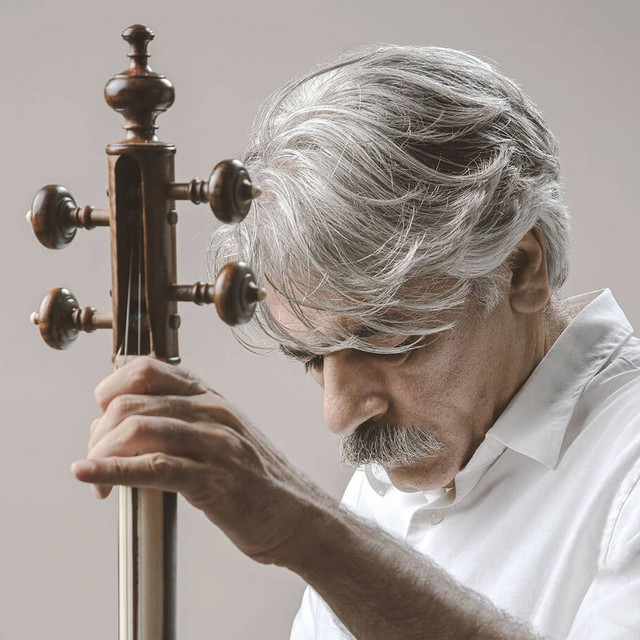
The genre’s ambassadors are a small but influential cohort. Mohsen Namjoo is frequently cited as a pivotal figure in Persian neo-traditional: an artist who grafted radical, improvisatory approaches onto Persian musical foundations and helped bring the conversation about fusion into wider view both in Iran and among the global Persian-speaking diaspora. Another widely respected voice connected with the broader modern Persian-Mediterranean and world-music dialogues is Kayhan Kalhor, whose cross-cultural projects—most notably with the Silk Road Ensemble—demonstrate how Persian instrumental thinking can converse with global textures without losing its distinctive voice. Together, they symbolize a lineage of artists who insist that tradition can be a living, evolving language rather than a museum piece.
Geographically, Persian neo-traditional has found its strongest homes in Iran’s underground and in diaspora hubs. In Iran, the scene remains more niche and often operates under constraints, yet it quietly informs younger generations of composers and performers. Among international audiences, it has a solid foothold in the United States, Canada, the United Kingdom, Germany, Sweden, and the Netherlands, where concert venues, film scores, and collaborations with world-music labels have helped disseminate the genre. Iran-born musicians in Europe and North America frequently blur borders—performing solo recitals, duo collaborations, or large-ensemble projects that blend traditional improvisation with jazz, electronic music, and indie-rock sensibilities.
For enthusiasts, Persian neo-traditional offers a doorway into a living dialogue between the canonical and the contemporary. It invites attentive listening to how ancient modal logic meets modern production, and how poetic Persian speech can ride on textures that feel both timeless and urgently new. Whether heard in intimate live settings or on innovative studio releases, this genre remains a compelling testament to music as a bridge across time and culture.
What makes Persian neo-traditional distinctive is the way it preserves core modalities and poetic vocabularies of Persian music while inviting new timbres, rhythms, and collaborative formats. You’ll hear traditional instruments—setar, tar, tanbour, santur, kamancheh—played alongside electric guitars, synths, sampled textures, and sometimes jazz-inflected harmonies. Melodic frameworks often remain rooted in the dyes of the radif and the dastgah system, but composers and performers push them into microtonal explorations, modal juxtapositions, and spacious, minimalist or electro-acoustic textures. Lyrically, the genre ranges from reverent classical Persian poetry and Sufi-inflected mysticism to intimate, personal, or politically resonant contemporary writing. The result is music that can feel both ancient and newly minted in the same breath.
The genre’s ambassadors are a small but influential cohort. Mohsen Namjoo is frequently cited as a pivotal figure in Persian neo-traditional: an artist who grafted radical, improvisatory approaches onto Persian musical foundations and helped bring the conversation about fusion into wider view both in Iran and among the global Persian-speaking diaspora. Another widely respected voice connected with the broader modern Persian-Mediterranean and world-music dialogues is Kayhan Kalhor, whose cross-cultural projects—most notably with the Silk Road Ensemble—demonstrate how Persian instrumental thinking can converse with global textures without losing its distinctive voice. Together, they symbolize a lineage of artists who insist that tradition can be a living, evolving language rather than a museum piece.
Geographically, Persian neo-traditional has found its strongest homes in Iran’s underground and in diaspora hubs. In Iran, the scene remains more niche and often operates under constraints, yet it quietly informs younger generations of composers and performers. Among international audiences, it has a solid foothold in the United States, Canada, the United Kingdom, Germany, Sweden, and the Netherlands, where concert venues, film scores, and collaborations with world-music labels have helped disseminate the genre. Iran-born musicians in Europe and North America frequently blur borders—performing solo recitals, duo collaborations, or large-ensemble projects that blend traditional improvisation with jazz, electronic music, and indie-rock sensibilities.
For enthusiasts, Persian neo-traditional offers a doorway into a living dialogue between the canonical and the contemporary. It invites attentive listening to how ancient modal logic meets modern production, and how poetic Persian speech can ride on textures that feel both timeless and urgently new. Whether heard in intimate live settings or on innovative studio releases, this genre remains a compelling testament to music as a bridge across time and culture.