Genre
russian orchestra
Top Russian orchestra Artists
Showing 17 of 17 artists






About Russian orchestra
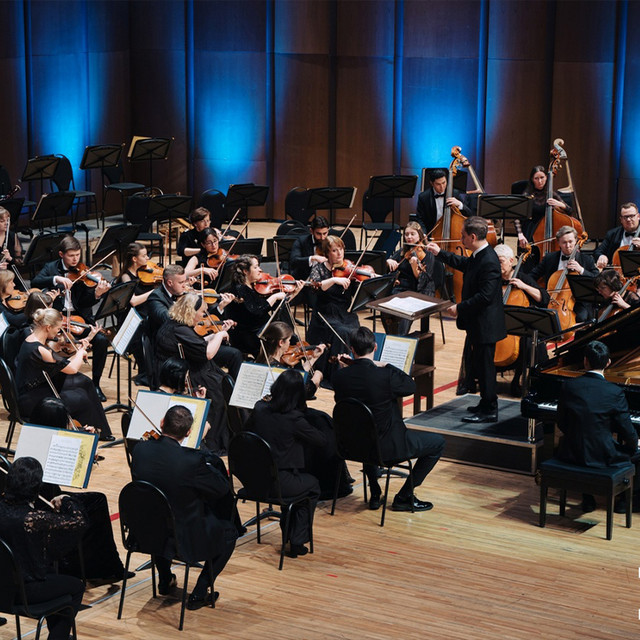
Russian orchestra is not a single group, but a sweeping tradition within classical music that grew out of Russia’s large concert life and its composers’ push to fuse national character with symphonic form. It’s defined by grand, color-rich orchestrations, expansive structural vision, and a storytelling impulse that ranges from fairy-tale canvases to stark social satire. For music enthusiasts, it offers a worldview as much as a sound.
Origins and birth of the tradition
Russian orchestral music began to crystallize in the 19th century as Russia built a serious public concert culture in Moscow and Saint Petersburg. Mikhail Glinka is often regarded as the father of a distinctly Russian musical language, but the real birth of a Russian orchestral identity came with the Mighty Handful (Balakirev, Cui, Mussorgsky, Rimsky-Korsakov, Borodin). They sought to translate folklore, history, and the Russian soul into symphonic form, sometimes breaking away from Western models to assert a homegrown idiom. This nationalist impulse found popular reckonings in later decades, with Pyotr Ilyich Tchaikovsky bridging Russian sentiment and continental romance, and in the late 19th century with Rimsky-Korsakov’s lush coloristic textures and Mussorgsky’s vivid theatricality.
Key works and ambassadors
The core repertoire of the Russian orchestra ranges from late Romantic epic to modernist labyrinths. Tchaikovsky’s symphonies and concertos remain touchstones for sweeping feeling and architectural momentum. Rimsky-Korsakov’s Scheherazade and Capriccio Espagnol are paragons of orchestral color and narrative drive. Mussorgsky’s Pictures at an Exhibition (in its acclaimed orchestral reimagining by Maurice Ravel) represents the raw theatrical imagination of the Russian idiom. In the 20th century, the scene became even more varied: Prokofiev combined razor-sharp wit with propulsion and modern idioms; Shostakovich fused personal sorrow and public gravitas into compact symphonies with razor-sharp orchestration; Stravinsky’s early Russian period culminated in the riotous Firebird and the revolutionary Rite of Spring, which reshaped 20th-century orchestral language.
Ambassadors and leading ensembles
Over the decades, certain conductors and ensembles have acted as ambassadors. Valery Gergiev, associated with the Mariinsky (Kirov) Theatre, has been a tireless advocate for Russian orchestral music on global stages. Evgeny Mravinsky’s long stewardship of the Leningrad (Saint Petersburg) Philharmonic helped define Soviet-era symphonic performance. Gennady Rozhdestvensky and Yuri Temirkanov are others whose recordings and concerts expanded the reach of Russian orchestral repertoire. The major carriers of this tradition include the Mariinsky Orchestra, the Saint Petersburg Philharmonic, the Bolshoi Theatre Orchestra, and the Moscow Philharmonic, as well as the broader ecosystem of the Russian National Orchestra and various regional ensembles.
Where it flourishes
In its homeland, the Russian orchestra remains central to cultural life in Russia and the former Soviet states. Internationally, it enjoys enduring popularity across Europe (Germany, France, the UK, Austria, Italy), North America (the United States and Canada), and Asia (notably Japan and Korea), where audiences prize the literature’s emotional breadth, technical prowess, and the sensory richness of Russian orchestration. Players are known for disciplined technique, expansive orchestral color, and a readiness to embrace monumental forms and intense contrasts.
If you listen with curiosity for how a single melody can unfold into a cinematic wave of timbres, or how a brass crescendo can become a narrative engine, the Russian orchestra offers a compelling, deeply human path through the orchestra’s grand tradition.
Origins and birth of the tradition
Russian orchestral music began to crystallize in the 19th century as Russia built a serious public concert culture in Moscow and Saint Petersburg. Mikhail Glinka is often regarded as the father of a distinctly Russian musical language, but the real birth of a Russian orchestral identity came with the Mighty Handful (Balakirev, Cui, Mussorgsky, Rimsky-Korsakov, Borodin). They sought to translate folklore, history, and the Russian soul into symphonic form, sometimes breaking away from Western models to assert a homegrown idiom. This nationalist impulse found popular reckonings in later decades, with Pyotr Ilyich Tchaikovsky bridging Russian sentiment and continental romance, and in the late 19th century with Rimsky-Korsakov’s lush coloristic textures and Mussorgsky’s vivid theatricality.
Key works and ambassadors
The core repertoire of the Russian orchestra ranges from late Romantic epic to modernist labyrinths. Tchaikovsky’s symphonies and concertos remain touchstones for sweeping feeling and architectural momentum. Rimsky-Korsakov’s Scheherazade and Capriccio Espagnol are paragons of orchestral color and narrative drive. Mussorgsky’s Pictures at an Exhibition (in its acclaimed orchestral reimagining by Maurice Ravel) represents the raw theatrical imagination of the Russian idiom. In the 20th century, the scene became even more varied: Prokofiev combined razor-sharp wit with propulsion and modern idioms; Shostakovich fused personal sorrow and public gravitas into compact symphonies with razor-sharp orchestration; Stravinsky’s early Russian period culminated in the riotous Firebird and the revolutionary Rite of Spring, which reshaped 20th-century orchestral language.
Ambassadors and leading ensembles
Over the decades, certain conductors and ensembles have acted as ambassadors. Valery Gergiev, associated with the Mariinsky (Kirov) Theatre, has been a tireless advocate for Russian orchestral music on global stages. Evgeny Mravinsky’s long stewardship of the Leningrad (Saint Petersburg) Philharmonic helped define Soviet-era symphonic performance. Gennady Rozhdestvensky and Yuri Temirkanov are others whose recordings and concerts expanded the reach of Russian orchestral repertoire. The major carriers of this tradition include the Mariinsky Orchestra, the Saint Petersburg Philharmonic, the Bolshoi Theatre Orchestra, and the Moscow Philharmonic, as well as the broader ecosystem of the Russian National Orchestra and various regional ensembles.
Where it flourishes
In its homeland, the Russian orchestra remains central to cultural life in Russia and the former Soviet states. Internationally, it enjoys enduring popularity across Europe (Germany, France, the UK, Austria, Italy), North America (the United States and Canada), and Asia (notably Japan and Korea), where audiences prize the literature’s emotional breadth, technical prowess, and the sensory richness of Russian orchestration. Players are known for disciplined technique, expansive orchestral color, and a readiness to embrace monumental forms and intense contrasts.
If you listen with curiosity for how a single melody can unfold into a cinematic wave of timbres, or how a brass crescendo can become a narrative engine, the Russian orchestra offers a compelling, deeply human path through the orchestra’s grand tradition.