Genre
santoor
Top Santoor Artists
Showing 19 of 19 artists


About Santoor
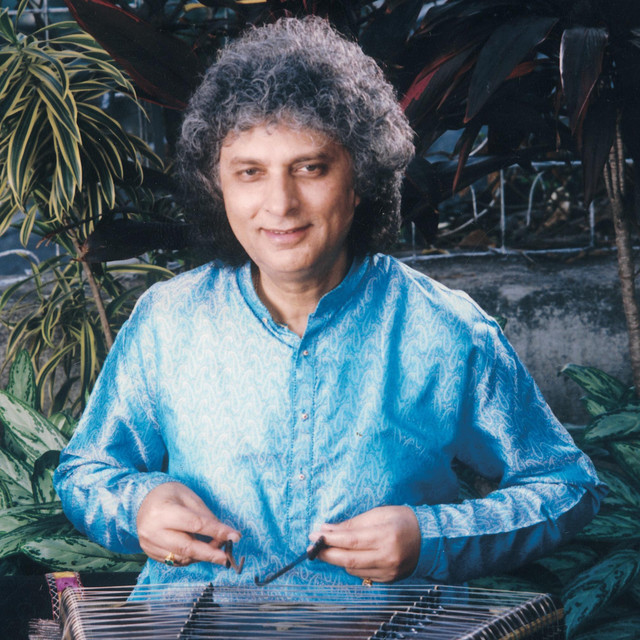
Santoor, sometimes spelled santur, is a keyboardless, hammer-struck string instrument that has become a distinctive sonic world within several musical traditions. Its name comes from Persian, where santur means “thousand strings” or “instrument of many strings,” even though most modern variants carry a few dozen to well over a hundred strings. The instrument’s bright, shimmering overtones and rapid, fluttering runs make it instantly recognizable, whether heard in a meditative raga reading, a virtuosic classical exposition, or a contemporary fusion piece.
Origins and the birth of the genre
The santur lineage traces back to ancient hammered dulcimers common across the Middle East and South Asia. In Iran, the instrument evolved into a central pillar of Persian classical music by medieval times, with builders and players refining its tonal palette and repertoire within the dastgah system. In the Indian subcontinent, the santoor was absorbed into the Hindustani tradition, particularly in Kashmir, where local luthiers and musicians adapted it into a vehicle for raga-based performance. What many listeners recognize as the modern Hindustani santoor genre began to crystallize in the mid-20th century, when the instrument was confidently used as a solo voice within classical frameworks rather than solely as an accompanying timbre.
Key ambassadors and turning points
- Brij Bhushan Kabra: Often credited with introducing the santoor to mainstream Hindustani classical music in the 1960s, Kabra popularized a version of the instrument that could sustain improvisation within raga structures. His pioneering recordings and performances laid the groundwork for the instrument’s acceptance as a serious concert instrument.
- Pandit Shivkumar Sharma: A defining figure in Hindustani santoor, Sharma expanded the instrument’s expressive range and technical vocabulary. His collaborations, such as those with renowned flutist Hariprasad Chaurasia on projects that Highlighted the instrument’s classical potential, helped elevate the santoor to international audiences. Sharma’s approach blended precision, lyricism, and virtuosic play, influencing countless students and listeners.
- Rahul Sharma: Son of Shivkumar Sharma, Rahul has carried the tradition forward into the late 20th and early 21st centuries, melding classic santoor technique with contemporary film music, fusion, and world-music collaborations. His work has helped introduce the instrument to new genres and younger audiences.
- Parviz Meshkatian (Iran): In the Persian tradition, Meshkatian is one of the standout santur masters whose virtuosic playing and compositions helped keep the instrument at the heart of Iranian classical music. His recordings and performances illustrate the instrument’s capacity as both an elaborate solo voice and a color within ensembles.
Geography and popularity
The santoor is most deeply rooted in three main spheres: Iran, where the santur is a staple of Persian classical music and traditional ensembles; Kashmir, where the Hindustani santoor tradition gained prominence and public visibility; and broader South Asia, where Indian artists have elevated it to a concert instrument and a platform for improvisation. Outside its cores, the instrument has enjoyed growing popularity in Europe, North America, and the Gulf, especially among listeners drawn to world music, fusion projects, and film-score contexts. In all these contexts, the santoor offers a luminous, glassy timbre that rewards subtle microtonal shading, intricate melodic invention, and introspective or ecstatic expression.
Listening guide and appeal
For enthusiasts, start with the Brahmavikasa blend: Shivkumar Sharma with Hariprasad Chaurasia in Call of the Valley for a pristine example of Hindustani santoor in a pastoral, raga-driven setting. Then explore Brij Bhushan Kabra’s early recordings to hear the instrument’s more rustic, exploratory side. Contemporary fusion and Indian-film collaborations by Rahul Sharma show how the santoor can inhabit modern soundscapes without losing its core identity. The genre’s allure lies in its glittering textures, meditative space, and a lineage that ties ancient instrument-making to living, evolving music.
Origins and the birth of the genre
The santur lineage traces back to ancient hammered dulcimers common across the Middle East and South Asia. In Iran, the instrument evolved into a central pillar of Persian classical music by medieval times, with builders and players refining its tonal palette and repertoire within the dastgah system. In the Indian subcontinent, the santoor was absorbed into the Hindustani tradition, particularly in Kashmir, where local luthiers and musicians adapted it into a vehicle for raga-based performance. What many listeners recognize as the modern Hindustani santoor genre began to crystallize in the mid-20th century, when the instrument was confidently used as a solo voice within classical frameworks rather than solely as an accompanying timbre.
Key ambassadors and turning points
- Brij Bhushan Kabra: Often credited with introducing the santoor to mainstream Hindustani classical music in the 1960s, Kabra popularized a version of the instrument that could sustain improvisation within raga structures. His pioneering recordings and performances laid the groundwork for the instrument’s acceptance as a serious concert instrument.
- Pandit Shivkumar Sharma: A defining figure in Hindustani santoor, Sharma expanded the instrument’s expressive range and technical vocabulary. His collaborations, such as those with renowned flutist Hariprasad Chaurasia on projects that Highlighted the instrument’s classical potential, helped elevate the santoor to international audiences. Sharma’s approach blended precision, lyricism, and virtuosic play, influencing countless students and listeners.
- Rahul Sharma: Son of Shivkumar Sharma, Rahul has carried the tradition forward into the late 20th and early 21st centuries, melding classic santoor technique with contemporary film music, fusion, and world-music collaborations. His work has helped introduce the instrument to new genres and younger audiences.
- Parviz Meshkatian (Iran): In the Persian tradition, Meshkatian is one of the standout santur masters whose virtuosic playing and compositions helped keep the instrument at the heart of Iranian classical music. His recordings and performances illustrate the instrument’s capacity as both an elaborate solo voice and a color within ensembles.
Geography and popularity
The santoor is most deeply rooted in three main spheres: Iran, where the santur is a staple of Persian classical music and traditional ensembles; Kashmir, where the Hindustani santoor tradition gained prominence and public visibility; and broader South Asia, where Indian artists have elevated it to a concert instrument and a platform for improvisation. Outside its cores, the instrument has enjoyed growing popularity in Europe, North America, and the Gulf, especially among listeners drawn to world music, fusion projects, and film-score contexts. In all these contexts, the santoor offers a luminous, glassy timbre that rewards subtle microtonal shading, intricate melodic invention, and introspective or ecstatic expression.
Listening guide and appeal
For enthusiasts, start with the Brahmavikasa blend: Shivkumar Sharma with Hariprasad Chaurasia in Call of the Valley for a pristine example of Hindustani santoor in a pastoral, raga-driven setting. Then explore Brij Bhushan Kabra’s early recordings to hear the instrument’s more rustic, exploratory side. Contemporary fusion and Indian-film collaborations by Rahul Sharma show how the santoor can inhabit modern soundscapes without losing its core identity. The genre’s allure lies in its glittering textures, meditative space, and a lineage that ties ancient instrument-making to living, evolving music.