Genre
streichquartett
Top Streichquartett Artists
Showing 12 of 12 artists




About Streichquartett
Streichquartett, or string quartet, is the quintessential chamber-music ensemble and repertoire in Western classical music. It is a compact, four-player conversation: two violin parts above, a middle voice for viola, and a cello anchoring the bass. The genre is defined not only by its four equal voices but by a dedicated repertoire that progresses from salon flirtations to high-art, even monumental statements.
Origins and birth of the form sit in mid-18th-century Vienna, where audiences and composers alike gravitated toward intimate yet ambitious music-making. Joseph Haydn is widely regarded as the father of the string quartet, having refined the model into a professional genre. His Op. 20 set of quartets, published in the 1770s, demonstrated the potential of two violins, viola, and cello to engage in witty dialogue, dramatic contrast, and formal ingenuity. From there, the quartet became a proving ground for melodic invention and structural experimentation.
Looking back, some of the most celebrated milestones in the genre come from Mozart and Beethoven. Mozart’s late quartets—rich in lyric beauty, psychological nuance, and compact architectural mastery—expanded the expressive palette and raised expectations for what a quartet could endure in one of the most intimate acoustic settings. Beethoven pushed the medium toward epic proportions: the late quartets explore transcendence, ambiguity, and quartet-writing as a total, unified musical argument. These works transformed the quartet from a mere social pastime into a serious vehicle for philosophical and emotional inquiry.
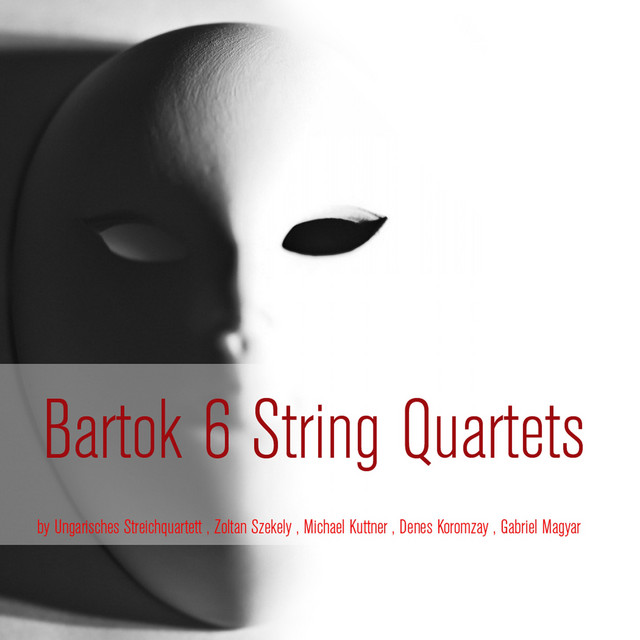
In the Romantic era, composers such as Schubert, Mendelssohn, and Brahms continued the tradition, blending songful melody with intricate counterpoint and tenser, more personal rhetoric. The 20th century brought a widening of vocabulary. Béla Bartók’s six string quartets—the core of his chamber-music legacy—fuse folk-inflected language with rigorous modernist technique and architecture. Claude Debussy and Maurice Ravel in France offered exquisite timbral writing and impressionistic color, while Prokofiev and Shostakovich in Russia, and Janáček in Bohemia, pushed the quartet into more modern, often more claustrophobic or cryptic territories. The American quartet tradition—embodied by ensembles such as the Juilliard String Quartet or the Emerson String Quartet—has also helped keep the form vital, pairing classic masterworks with contemporary composer voices.
Geographically, the genre remains strongest in Central and Eastern Europe—Austria, Germany, the Czech Republic, and Hungary—where a dense concert culture, prolific national schools, and acclaimed string-quartet ensembles have historical depth. It is equally cherished in Russia, the United States, the United Kingdom, and East Asia, where festivals, conservatories, and recording projects continue to nurture new generations of quartet players and composers.
For listeners, the streichquartett offers a spectrum: architectural clarity and polyphonic delicacy, intimate songlike moments, explosive conversations, and often a sense that every instrument speaks with equal weight. It is music of dialogue, refinement, and enduring modernity—a genre that still invites invention while honoring a rich, centuries-long tradition.
Origins and birth of the form sit in mid-18th-century Vienna, where audiences and composers alike gravitated toward intimate yet ambitious music-making. Joseph Haydn is widely regarded as the father of the string quartet, having refined the model into a professional genre. His Op. 20 set of quartets, published in the 1770s, demonstrated the potential of two violins, viola, and cello to engage in witty dialogue, dramatic contrast, and formal ingenuity. From there, the quartet became a proving ground for melodic invention and structural experimentation.
Looking back, some of the most celebrated milestones in the genre come from Mozart and Beethoven. Mozart’s late quartets—rich in lyric beauty, psychological nuance, and compact architectural mastery—expanded the expressive palette and raised expectations for what a quartet could endure in one of the most intimate acoustic settings. Beethoven pushed the medium toward epic proportions: the late quartets explore transcendence, ambiguity, and quartet-writing as a total, unified musical argument. These works transformed the quartet from a mere social pastime into a serious vehicle for philosophical and emotional inquiry.
In the Romantic era, composers such as Schubert, Mendelssohn, and Brahms continued the tradition, blending songful melody with intricate counterpoint and tenser, more personal rhetoric. The 20th century brought a widening of vocabulary. Béla Bartók’s six string quartets—the core of his chamber-music legacy—fuse folk-inflected language with rigorous modernist technique and architecture. Claude Debussy and Maurice Ravel in France offered exquisite timbral writing and impressionistic color, while Prokofiev and Shostakovich in Russia, and Janáček in Bohemia, pushed the quartet into more modern, often more claustrophobic or cryptic territories. The American quartet tradition—embodied by ensembles such as the Juilliard String Quartet or the Emerson String Quartet—has also helped keep the form vital, pairing classic masterworks with contemporary composer voices.
Geographically, the genre remains strongest in Central and Eastern Europe—Austria, Germany, the Czech Republic, and Hungary—where a dense concert culture, prolific national schools, and acclaimed string-quartet ensembles have historical depth. It is equally cherished in Russia, the United States, the United Kingdom, and East Asia, where festivals, conservatories, and recording projects continue to nurture new generations of quartet players and composers.
For listeners, the streichquartett offers a spectrum: architectural clarity and polyphonic delicacy, intimate songlike moments, explosive conversations, and often a sense that every instrument speaks with equal weight. It is music of dialogue, refinement, and enduring modernity—a genre that still invites invention while honoring a rich, centuries-long tradition.