Genre
swiss contemporary classical
Top Swiss contemporary classical Artists
Showing 25 of 36 artists









About Swiss contemporary classical
Swiss contemporary classical is the living branch of a national musical lineage that grew out of Switzerland’s rich late-20th-century arts scene and its multilingual, highly educated cultural fabric. It does not point to a single sound but to a continuum of practices—from intricate counterpoint and abstract textures to expanded techniques, electronic integration, and cross-arts collaborations. If you approach it with curiosity, you’ll hear a music that values precision and clarity, yet is deeply attentive to emotion, politics, and the subtleties of space and silence.
Birth and evolution
In the wake of World War II, Swiss composers joined the wider European modernist reorientation, then diversified in the subsequent decades. The new language often merged rigorous formal thinking with expressive depth, yielding works that could feel austere or intimate, sometimes both at once. Institutions across the country—universities, conservatories, and residencies—fostered experimentation, while composers formed networks with international colleagues. By the late 20th century and into the 21st, a recognizably Swiss voice appeared in orchestral, chamber, vocal, and electroacoustic music, shaped by the country’s cantonal variety, its festivals, and its commitment to public music as a shared cultural enterprise.
Key artists and ambassadors
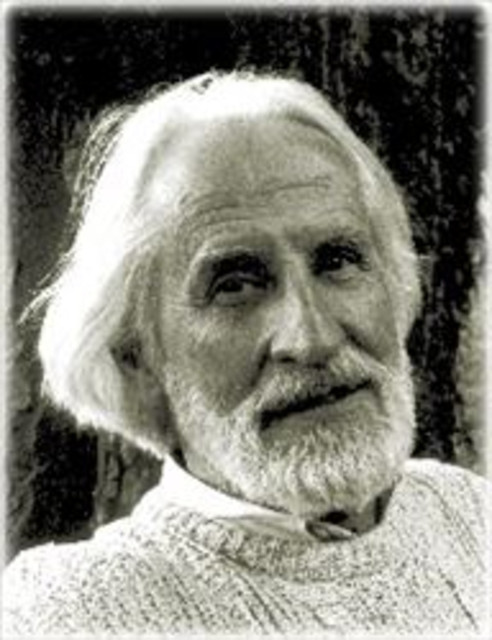
A few figures stand as touchstones for Swiss contemporary classical, not because they define a single idiom, but because they helped shape the terrain and inspired younger generations to push boundaries. Klaus Huber, a towering presence who spent substantial time shaping European new music and mentoring younger composers, is often cited as an essential bridge between postwar experimentation and later Swiss voices. Michael Jarrell, a Swiss-born composer based in Geneva, became a central figure in the generation that followed, producing orchestral, chamber, and vocal works that blend rigor with lyrical clarity. His music is widely performed and recorded, making the Swiss contemporary scene audible far beyond its borders.
In addition to individual composers, institutional ambassadors are crucial. Basel Sinfonietta and ICTUS are two ensembles regularly associated with contemporary music in Switzerland, commissioning new works and presenting them to both local audiences and international guests. Pro Helvetia and other Swiss cultural funds have supported tours, residencies, and co-commissions, helping Swiss composers reach global stages while bringing international works to Swiss audiences. The Swiss scene also thrives through festivals, seminars, and academic programs that emphasize collaboration among composers, performers, and poets or visual artists.
Where it’s popular
Swiss contemporary classical draws its strongest audiences in Switzerland and in neighboring German-, French-, and Italian-speaking regions, where audiences are accustomed to a broad spectrum of modern music. It also maintains a steady presence in Europe’s new-music circuits—Germany, France, Austria, and the broader Nordic area—through festivals and touring ensembles. Outside Europe, it reaches discerning listeners and specialist concertgoers in North America and Asia via dedicated festivals, residency programs, and recording projects. The genre’s appeal lies in its balance of intellectual rigor and emotive immediacy, its openness to collaboration across disciplines, and its willingness to address contemporary themes with sound alone.
If you’re exploring Swiss contemporary classical, start with a listening path that moves from precise, angular textures to more expansive, lyrical statements, and then explore ensembles’ programs that pair Swiss premieres with international premieres. You’ll hear a tradition that is distinctly Swiss in its craft and its collaborative spirit, yet universally attentive to the questions and possibilities of modern music.
Birth and evolution
In the wake of World War II, Swiss composers joined the wider European modernist reorientation, then diversified in the subsequent decades. The new language often merged rigorous formal thinking with expressive depth, yielding works that could feel austere or intimate, sometimes both at once. Institutions across the country—universities, conservatories, and residencies—fostered experimentation, while composers formed networks with international colleagues. By the late 20th century and into the 21st, a recognizably Swiss voice appeared in orchestral, chamber, vocal, and electroacoustic music, shaped by the country’s cantonal variety, its festivals, and its commitment to public music as a shared cultural enterprise.
Key artists and ambassadors
A few figures stand as touchstones for Swiss contemporary classical, not because they define a single idiom, but because they helped shape the terrain and inspired younger generations to push boundaries. Klaus Huber, a towering presence who spent substantial time shaping European new music and mentoring younger composers, is often cited as an essential bridge between postwar experimentation and later Swiss voices. Michael Jarrell, a Swiss-born composer based in Geneva, became a central figure in the generation that followed, producing orchestral, chamber, and vocal works that blend rigor with lyrical clarity. His music is widely performed and recorded, making the Swiss contemporary scene audible far beyond its borders.
In addition to individual composers, institutional ambassadors are crucial. Basel Sinfonietta and ICTUS are two ensembles regularly associated with contemporary music in Switzerland, commissioning new works and presenting them to both local audiences and international guests. Pro Helvetia and other Swiss cultural funds have supported tours, residencies, and co-commissions, helping Swiss composers reach global stages while bringing international works to Swiss audiences. The Swiss scene also thrives through festivals, seminars, and academic programs that emphasize collaboration among composers, performers, and poets or visual artists.
Where it’s popular
Swiss contemporary classical draws its strongest audiences in Switzerland and in neighboring German-, French-, and Italian-speaking regions, where audiences are accustomed to a broad spectrum of modern music. It also maintains a steady presence in Europe’s new-music circuits—Germany, France, Austria, and the broader Nordic area—through festivals and touring ensembles. Outside Europe, it reaches discerning listeners and specialist concertgoers in North America and Asia via dedicated festivals, residency programs, and recording projects. The genre’s appeal lies in its balance of intellectual rigor and emotive immediacy, its openness to collaboration across disciplines, and its willingness to address contemporary themes with sound alone.
If you’re exploring Swiss contemporary classical, start with a listening path that moves from precise, angular textures to more expansive, lyrical statements, and then explore ensembles’ programs that pair Swiss premieres with international premieres. You’ll hear a tradition that is distinctly Swiss in its craft and its collaborative spirit, yet universally attentive to the questions and possibilities of modern music.