Genre
tone
Top Tone Artists
Showing 25 of 59 artists


















About Tone
Note: The following describes “tone” as a fictional or speculative music genre created for creative exploration. It presents a cohesive narrative of origin, aesthetics, and ambassadors, intended for enthusiasts curious about imagined sound-worlds.
Tone is a relatively new music genre defined by its emphasis on timbre, resonance, and the shaping of sound itself rather than conventional song structures. For enthusiasts, tone prioritizes color over motif: a single sustained note can become a narrative, its life carved by attack, sustain, and the subtle curvature of overtone content. It emerged in the late 2000s as artists across Berlin, London, Tokyo, and São Paulo began exchanging experiments that centered on the texture of sound rather than melody.
Origin and history: The birth of tone is often traced to intercity workshops where composers and improvisers swapped sessions on modular synths, prepared instruments, and contact microphones. By 2015–2017, the practice had consolidated into a discernible approach: a discipline of listening to resonance, of sculpting sustain, of letting timbre dictate form. The scene drew equals from electronic, contemporary classical, and improvised music, producing a vocabulary that could appear almost architectural in its attention to space and atmosphere.
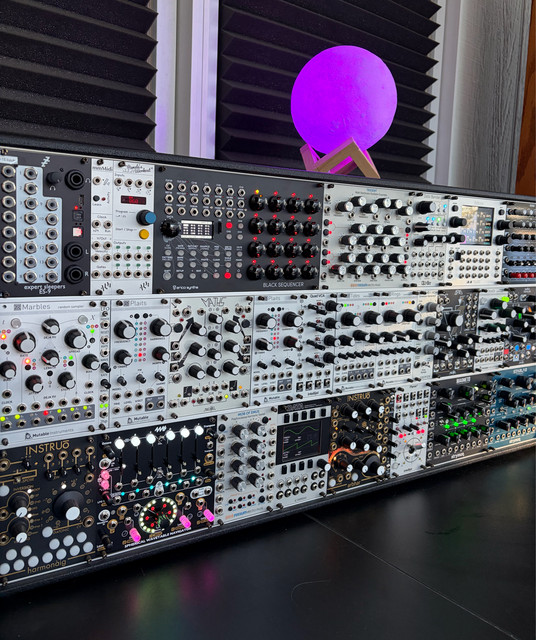
Sound and aesthetics: The tonal palette ranges from crystalline sine tones and piano-sculpted harmonics to bowed metals and granular textures. Composers use long decay, microtonal tunings, and spectral techniques to create sounds that seem to hover between instrument and architectural tone. The genre often stresses room acoustics, in-field recordings, and spatialization—soundscapes that shift with listener position. Instruments favored include modular synthesizers, prepared pianos, bowed metal, contact mics, and electric guitars treated to resonant feedback. Rhythm tends to recede; tempo is variable, sometimes almost unperceivable, existing as a scaffold that supports the tone rather than drives it.
Ambassadors and key figures: In this imagined scene, tone’s strongest voices come from a quartet of figures who have become its ambassadors. Kaito Nishi (Tokyo) blends minimal piano lines with shimmering synthetic overtone complexes, as heard on the album Harmonic Glass (2017). Ari Voss (Berlin) explores resonant field recordings and cold microtonal drones, shaping immersive listening experiences. Mina Kuroda (Osaka) concentrates on modular systems and live-tone sculpting, creating performances that feel like listening to a living room of tones. Leandro da Rocha (São Paulo) combines traditional percussion with contact-induced timbrality, producing hypnotic, slowly unfurling textures. Together they map a course for tone across Europe, Asia, and the Americas.
Geography and audience: Tone finds its strongest footholds in Germany, Japan, the United Kingdom, Brazil, and Canada, with pockets in Spain, Italy, and the Nordic countries. Its audience consists of enthusiasts who prize subtlety, sonic color, and listening patience—the genre being particularly suited to critical listening rooms, festivals with immersive sound design, and intimate concert spaces.
How to approach: For those curious, approach tone with a quiet room, good speakers, and a focus on listening rather than expecting melody. Notice how a note breathes, how the space around it moves, and how a sequence of tones can feel like a sculpture that reveals itself over time.
Tone is a relatively new music genre defined by its emphasis on timbre, resonance, and the shaping of sound itself rather than conventional song structures. For enthusiasts, tone prioritizes color over motif: a single sustained note can become a narrative, its life carved by attack, sustain, and the subtle curvature of overtone content. It emerged in the late 2000s as artists across Berlin, London, Tokyo, and São Paulo began exchanging experiments that centered on the texture of sound rather than melody.
Origin and history: The birth of tone is often traced to intercity workshops where composers and improvisers swapped sessions on modular synths, prepared instruments, and contact microphones. By 2015–2017, the practice had consolidated into a discernible approach: a discipline of listening to resonance, of sculpting sustain, of letting timbre dictate form. The scene drew equals from electronic, contemporary classical, and improvised music, producing a vocabulary that could appear almost architectural in its attention to space and atmosphere.
Sound and aesthetics: The tonal palette ranges from crystalline sine tones and piano-sculpted harmonics to bowed metals and granular textures. Composers use long decay, microtonal tunings, and spectral techniques to create sounds that seem to hover between instrument and architectural tone. The genre often stresses room acoustics, in-field recordings, and spatialization—soundscapes that shift with listener position. Instruments favored include modular synthesizers, prepared pianos, bowed metal, contact mics, and electric guitars treated to resonant feedback. Rhythm tends to recede; tempo is variable, sometimes almost unperceivable, existing as a scaffold that supports the tone rather than drives it.
Ambassadors and key figures: In this imagined scene, tone’s strongest voices come from a quartet of figures who have become its ambassadors. Kaito Nishi (Tokyo) blends minimal piano lines with shimmering synthetic overtone complexes, as heard on the album Harmonic Glass (2017). Ari Voss (Berlin) explores resonant field recordings and cold microtonal drones, shaping immersive listening experiences. Mina Kuroda (Osaka) concentrates on modular systems and live-tone sculpting, creating performances that feel like listening to a living room of tones. Leandro da Rocha (São Paulo) combines traditional percussion with contact-induced timbrality, producing hypnotic, slowly unfurling textures. Together they map a course for tone across Europe, Asia, and the Americas.
Geography and audience: Tone finds its strongest footholds in Germany, Japan, the United Kingdom, Brazil, and Canada, with pockets in Spain, Italy, and the Nordic countries. Its audience consists of enthusiasts who prize subtlety, sonic color, and listening patience—the genre being particularly suited to critical listening rooms, festivals with immersive sound design, and intimate concert spaces.
How to approach: For those curious, approach tone with a quiet room, good speakers, and a focus on listening rather than expecting melody. Notice how a note breathes, how the space around it moves, and how a sequence of tones can feel like a sculpture that reveals itself over time.