Genre
southern gothic
Top Southern gothic Artists
Showing 25 of 824 artists











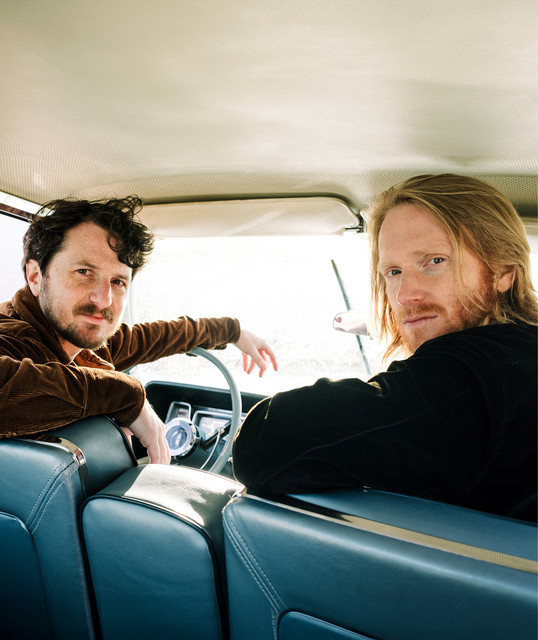

About Southern gothic
Southern Gothic is not a fixed genre so much as a mood, a storytelling approach, and a sonic palette that turns the American South’s daylight into shadows. It braids together country, blues, gospel, folk, and a dab of rock to create music that feels haunted by memory, sin, and the weight of history. The result is intimate yet cinematic: songs that unfold like short stories set on porches, in decaying towns, or along rain-washed back roads, where mortality, mystery, and moral ambiguity linger just beyond the chorus.
Origins and birth
The aesthetic has roots in the literary Southern Gothic tradition (Faulkner, O’Connor, McCullers), but in music it crystallized in the late 1980s and 1990s with the rise of alt-country and Americana. Critics began calling certain records and live convulsions “southern gothic” for their willingness to tell dark, precise stories about faith, violence, family secrets, and decay—while still honoring the region’s musical backbone. It’s a synthesis: the warm brightness of a fiddle or steel guitar tempered by minor keys, reverbed guitars, and voices that sound weathered by life. The approach treats guitar licks and vocal cadences as narrative devices, not just hooks.
Sound and atmosphere
Expect instrumentation that can range from hushed acoustic confessionals to powerfully desolate electric dirges. Slide guitar and dobro drift beside Mississippi-influenced blues, while organ and piano shade into gospel harmonies. The tempo often rests in the twilight—mid-tempo, cinematic crescendos, then quiet, almost whispered moments. Lyrically, the hallmark is specificity: place, memory, and a sense of looming consequence. The best songs feel like intimate portraits—small-town legends, ruined courthouses, a church bell after the storm—carried by a voice that can traverse tenderness, grit, and fear in a single line.
Ambassadors and key voices
- Johnny Cash and his descendants in spirit: a lifelong archive of moral tales, dark humor, and stark storytelling.
- Townes Van Zandt: spare, fatalistic lyrics wrapped in spare, stark country folk.
- Lucinda Williams: confessional, literate songs packed with weathered emotion and Southern texture.
- Gillian Welch and Dave Rawlings: intimate, acoustic narratives that retain a haunted, almost spectral feel.
- The Handsome Family: gothic Americana in lyrical form; songs like “Far from Any Road” epitomize the mood.
- Drive-By Truckers: a modern anchor for the sound’s rock edge, especially on works like Southern Rock Opera, which leans into myth, memory, and moral conflict.
- Sixteen Horsepower and Wovenhand: bands that push the darkness into Appalachian-tinged and ritualistic textures.
Together, these artists embody a lineage that treats the South’s myths, sins, and saints with a patient, cinematic density.
Geography and reception
Southern Gothic music is most deeply rooted in the United States, particularly the South and the broader Americana scenes that embrace dark storytelling. It also travels well in the Anglophone world—Britain, Ireland, and Canada—where audiences relish the fusion of page-turner lyrics with rootsy textures. In the streaming era, its appeal extends to global listeners drawn to moody, narrative-driven music that feels both intimate and epic.
In short, Southern Gothic is a living mood in sound: a narrative-driven blend of roots and rock, conjured by weathered voices, candid storytelling, and instruments that murmur and mourn. It’s as much about the space between notes as the notes themselves, inviting listeners to lean in and listen for what towns, churches, and roadways have never quite forgiven.
Origins and birth
The aesthetic has roots in the literary Southern Gothic tradition (Faulkner, O’Connor, McCullers), but in music it crystallized in the late 1980s and 1990s with the rise of alt-country and Americana. Critics began calling certain records and live convulsions “southern gothic” for their willingness to tell dark, precise stories about faith, violence, family secrets, and decay—while still honoring the region’s musical backbone. It’s a synthesis: the warm brightness of a fiddle or steel guitar tempered by minor keys, reverbed guitars, and voices that sound weathered by life. The approach treats guitar licks and vocal cadences as narrative devices, not just hooks.
Sound and atmosphere
Expect instrumentation that can range from hushed acoustic confessionals to powerfully desolate electric dirges. Slide guitar and dobro drift beside Mississippi-influenced blues, while organ and piano shade into gospel harmonies. The tempo often rests in the twilight—mid-tempo, cinematic crescendos, then quiet, almost whispered moments. Lyrically, the hallmark is specificity: place, memory, and a sense of looming consequence. The best songs feel like intimate portraits—small-town legends, ruined courthouses, a church bell after the storm—carried by a voice that can traverse tenderness, grit, and fear in a single line.
Ambassadors and key voices
- Johnny Cash and his descendants in spirit: a lifelong archive of moral tales, dark humor, and stark storytelling.
- Townes Van Zandt: spare, fatalistic lyrics wrapped in spare, stark country folk.
- Lucinda Williams: confessional, literate songs packed with weathered emotion and Southern texture.
- Gillian Welch and Dave Rawlings: intimate, acoustic narratives that retain a haunted, almost spectral feel.
- The Handsome Family: gothic Americana in lyrical form; songs like “Far from Any Road” epitomize the mood.
- Drive-By Truckers: a modern anchor for the sound’s rock edge, especially on works like Southern Rock Opera, which leans into myth, memory, and moral conflict.
- Sixteen Horsepower and Wovenhand: bands that push the darkness into Appalachian-tinged and ritualistic textures.
Together, these artists embody a lineage that treats the South’s myths, sins, and saints with a patient, cinematic density.
Geography and reception
Southern Gothic music is most deeply rooted in the United States, particularly the South and the broader Americana scenes that embrace dark storytelling. It also travels well in the Anglophone world—Britain, Ireland, and Canada—where audiences relish the fusion of page-turner lyrics with rootsy textures. In the streaming era, its appeal extends to global listeners drawn to moody, narrative-driven music that feels both intimate and epic.
In short, Southern Gothic is a living mood in sound: a narrative-driven blend of roots and rock, conjured by weathered voices, candid storytelling, and instruments that murmur and mourn. It’s as much about the space between notes as the notes themselves, inviting listeners to lean in and listen for what towns, churches, and roadways have never quite forgiven.