Genre
viola
Top Viola Artists
Showing 25 of 25 artists









About Viola
There isn’t a formal music category simply called “viola” in the way there are clearly defined genres like jazz or techno. What enthusiasts often describe as “viola music” is the idiom built around the viola as a distinct voice in classical and contemporary music: a repertoire, a performance tradition, and a community centered on the instrument’s warm, midrange color and expressive potential. If you look at it that way, a 500-word sketch of the viola as a genre-like phenomenon reveals a surprisingly robust and global culture.
Origins and birth of the voice
The viola’s lineage begins in the 16th century with the viol family and the viola da braccio, which evolved into the modern viola in Italy. By the Baroque era, the instrument had become a staple of ensembles and chamber music, supplying the inner voices, harmonic ballast, and expressive melodic lines that give string music its characteristic depth. Tuning and size place the viola a fifth below the violin, yielding an unmistakable alto sonority that blends, sustains, and sometimes soars with remarkable lyricism. Over the centuries, composers gradually wrote more for the viola as a solo voice as well as a co-equal partner in quartets, concertos, and larger works, gradually turning the instrument into a central pillar of Western classical idioms.
Key repertoire and ambassadors
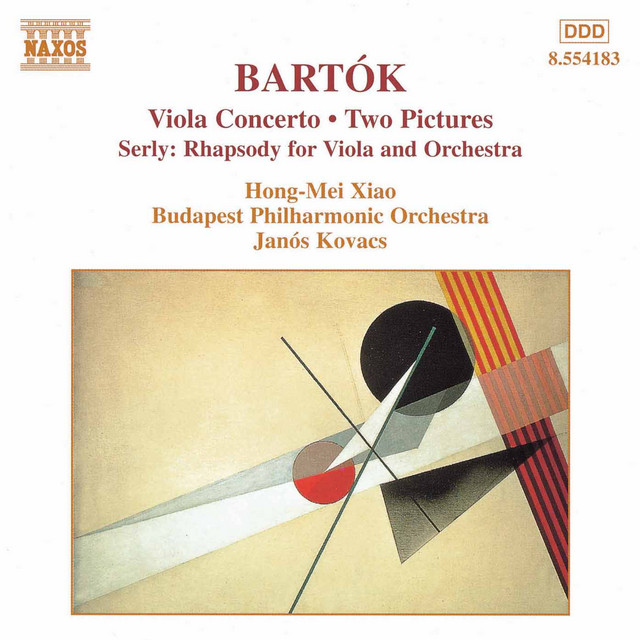
If viola music has a “genre-identity,” it’s defined by a core repertoire and by artists who champion the instrument. Notable milestone works include Hindemith’s Der Schwanendreher, which foregrounds the viola’s expressive capacity in a neo-Baroque frame, and Bartók’s Viola Concerto, a late-20th-century cornerstone that expands the viola’s technical and emotional range (completed by Tibor Serly after Bartók’s death). In the mid-20th century, William Primrose and, earlier, Lionel Tertis—two pioneering violists—cultivated a broad solo literature for the instrument and helped persuade composers to write more for viola, while also elevating the instrument’s concert status.
Today’s ambassadors read like a roll call of virtuosic improvisers and educators: Yuri Bashmet, Nobuko Imai, Kim Kashkashian, Tabea Zimmermann, and many others have carried the viola’s voice into major concert halls, festivals, and recording studios. These artists not only perform but also commission new works, premiere premieres, and mentor generations of players, expanding the instrument’s footprint across genres and cultures.
Geography and audience
Viola-centric activity is strongest in Europe, the United States, and Japan, where chamber music and orchestral traditions generate vibrant violist communities. Europe remains historically central—Italy, the United Kingdom, Germany, and Russia each host storied schools and orchestral scenes that continually nurture viola literature. In North America and parts of Asia, conservatories, viola societies, and international competitions (such as the Primrose International Viola Competition, named after the great violist William Primrose) sustain a lively ecosystem of performers, pedagogy, and new music.
Contemporary currents
Today, viola music thrives on cross-genre collaboration: contemporary composers write for extended techniques and electronics, violists commission new concertos, and chamber groups emphasize intimate dialogue within string quartets and larger ensembles. The instrument’s timbre—warm, intimate, sometimes biting in a sul ponticello or warm in legato lines—offers a flexible palette for both solemn and exuberant expression.
If you seek a distinct, living “viola genre,” look to the ongoing dialog between violists and composers across the world—the continual expansion of repertoire, the distinctive solo and ensemble idiom, and the community that keeps the viola at the heart of modern concert music.
Origins and birth of the voice
The viola’s lineage begins in the 16th century with the viol family and the viola da braccio, which evolved into the modern viola in Italy. By the Baroque era, the instrument had become a staple of ensembles and chamber music, supplying the inner voices, harmonic ballast, and expressive melodic lines that give string music its characteristic depth. Tuning and size place the viola a fifth below the violin, yielding an unmistakable alto sonority that blends, sustains, and sometimes soars with remarkable lyricism. Over the centuries, composers gradually wrote more for the viola as a solo voice as well as a co-equal partner in quartets, concertos, and larger works, gradually turning the instrument into a central pillar of Western classical idioms.
Key repertoire and ambassadors
If viola music has a “genre-identity,” it’s defined by a core repertoire and by artists who champion the instrument. Notable milestone works include Hindemith’s Der Schwanendreher, which foregrounds the viola’s expressive capacity in a neo-Baroque frame, and Bartók’s Viola Concerto, a late-20th-century cornerstone that expands the viola’s technical and emotional range (completed by Tibor Serly after Bartók’s death). In the mid-20th century, William Primrose and, earlier, Lionel Tertis—two pioneering violists—cultivated a broad solo literature for the instrument and helped persuade composers to write more for viola, while also elevating the instrument’s concert status.
Today’s ambassadors read like a roll call of virtuosic improvisers and educators: Yuri Bashmet, Nobuko Imai, Kim Kashkashian, Tabea Zimmermann, and many others have carried the viola’s voice into major concert halls, festivals, and recording studios. These artists not only perform but also commission new works, premiere premieres, and mentor generations of players, expanding the instrument’s footprint across genres and cultures.
Geography and audience
Viola-centric activity is strongest in Europe, the United States, and Japan, where chamber music and orchestral traditions generate vibrant violist communities. Europe remains historically central—Italy, the United Kingdom, Germany, and Russia each host storied schools and orchestral scenes that continually nurture viola literature. In North America and parts of Asia, conservatories, viola societies, and international competitions (such as the Primrose International Viola Competition, named after the great violist William Primrose) sustain a lively ecosystem of performers, pedagogy, and new music.
Contemporary currents
Today, viola music thrives on cross-genre collaboration: contemporary composers write for extended techniques and electronics, violists commission new concertos, and chamber groups emphasize intimate dialogue within string quartets and larger ensembles. The instrument’s timbre—warm, intimate, sometimes biting in a sul ponticello or warm in legato lines—offers a flexible palette for both solemn and exuberant expression.
If you seek a distinct, living “viola genre,” look to the ongoing dialog between violists and composers across the world—the continual expansion of repertoire, the distinctive solo and ensemble idiom, and the community that keeps the viola at the heart of modern concert music.